

Could a stressful period from months ago explain why more hair is coming out now? Stress-related hair loss in women often shows up as increased, diffuse shedding across the scalp, beginning two to three months after a stressful event or physical change. You may notice it most when washing or brushing your hair, rather than as a single bald patch.
It’s understandable to connect a change in your hair with a difficult time, but timing and pattern alone can’t confirm the cause. This article explains what stress-related shedding may look like, how it differs from other types of hair loss, and when to seek medical evaluation. You’ll also learn why shedding can be delayed and what to expect from regrowth, so you can assess the change with clearer information and less guesswork.
Key Takeaways
- Telogen effluvium can increase shedding across the scalp, but other causes may create similar changes.
- Sudden or patchy loss, or shedding that continues beyond three to six months, is a reason to seek medical evaluation.
- Hair may begin to recover after the underlying trigger is addressed, though visible fullness can take time to return.
- Stress can be one possible factor; hormonal changes and nutrition may also contribute to shedding.
- A personalized scalp assessment can help clarify the pattern and guide next steps, including whether regenerative hair treatments may fit your needs.
What does stress hair loss look like in women?
Stress-related shedding often means increased hair fall across the scalp rather than loss in one isolated area. Two patterns to distinguish are telogen effluvium, which may follow stress, and alopecia areata, an immune-related condition that can cause patchy hair loss.
Telogen Effluvium
Telogen effluvium is temporary, diffuse shedding that occurs when more hair follicles than usual enter the resting, or telogen, phase. Hair may shed across the scalp, making your part look wider or your ponytail feel less full, without creating one distinct bald patch.
A typical cycle includes a growth phase, a short transition, and a resting phase. About 80% to 90% of follicles are usually in the growth phase. With telogen effluvium, significant stress can shift more hairs into resting, followed by shedding during washing, brushing, or gentle handling.
Acute and Chronic Telogen Effluvium
Acute telogen effluvium lasts fewer than six months, while chronic telogen effluvium lasts longer than six months. This distinction describes the course of shedding, but duration alone doesn’t identify the cause. A stressful event may precede acute shedding, while persistent loss warrants assessment for other contributing factors.
People typically shed about 50-100 hairs daily; telogen effluvium may raise that amount, sometimes up to 300. These figures aren’t a diagnosis or a precise home test. Notice whether shedding has changed from your own baseline and whether it continues over time.
Telogen Effluvium and Pattern Hair Loss
Telogen effluvium describes a shift in the hair cycle and usually presents as widespread shedding. Pattern hair loss is a separate possibility when thinning follows a recognizable distribution or develops gradually. The distinction matters because stress may coincide with another cause rather than explain every change.
Compare the timeline and pattern. Diffuse shedding that begins after a stressful period may fit telogen effluvium, while a persistent change in distribution needs careful evaluation. Alopecia areata has a different cause: the immune system attacks hair follicles, and loss can appear in patches.
Stress, Shedding, and Its Timing
Stress-related shedding commonly begins about three months after a stressful event or period, not necessarily during it. This delay can make the connection difficult to recognize. A mouse study found that chronic stress affected signals between cells around follicles, but more research is needed before applying those findings to people.
A consultation can help distinguish stress-related shedding from alopecia areata or another pattern of hair loss. The appropriate approach depends on an individualized assessment.
When to seek dermatological care
Arrange a medical evaluation if shedding is sudden, patchy, or noticeably heavier during washing or combing. Hair loss can sometimes signal an underlying condition, so don’t automatically attribute it to emotional stress. A clinician can assess your scalp, hair-loss pattern, and relevant health history to consider possible causes.
Persistent shedding also deserves attention. Have a dermatologist evaluate hair loss that continues longer than three to six months. Seek care sooner for distinct bald patches, scalp symptoms, or hair loss alongside signs of illness. These details can help distinguish telogen effluvium from alopecia areata, pattern hair loss, or another cause.
Can stress-related hair loss be prevented? Not always, but stress-management habits and gentle hair care may support overall well-being. Consistent sleep, regular movement, balanced meals, and practices such as breathing exercises or meditation are practical steps. Adults generally need seven to nine hours of sleep each night.
Self-care is useful, but it doesn’t replace an evaluation when shedding is persistent or unusual. Record when the change began and whether it is diffuse or patchy. Note recent stress, illness, medication changes, or major dietary shifts. Sharing these details at an appointment can help a clinician understand the timeline and choose an appropriate assessment.
Handle fragile hair gently while shedding is active. Use a wide-tooth comb, avoid tight styles that pull at the roots, and limit vigorous brushing when hair is wet. A gentle scalp massage may feel soothing, but it isn’t a proven way to stop shedding or make follicles grow faster. Stop if it causes discomfort.
Reducing stress may address one possible contributor, but it doesn’t establish the cause of hair loss. Try a manageable routine, such as a brief breathing practice or regular walk, rather than adding pressure with an unrealistic plan. Nutritious meals with protein and a variety of foods support general health. If your diet is restrictive, discuss it with a healthcare professional.
If the shedding continues beyond three to six months, or you notice sudden patches, seek a dermatological assessment rather than relying on self-care alone. A scalp analysis can help clarify the visible pattern and guide next steps. A thoughtful evaluation considers the scalp and personal history, not just the amount of hair in a brush.
Will my hair grow back if I lose it due to stress?
With telogen effluvium, stress-related shedding is often temporary, and regrowth can follow once the underlying trigger is addressed. Recovery reflects the hair cycle, so reduced shedding and fuller-looking hair don’t necessarily happen at the same time.
Hair Regrowth Expectations
After a stressful event, follicles that shifted into a resting phase can return to active growth. Hair may begin growing again a few months after stress levels return to normal, but early regrowth can be difficult to spot. New strands start short and need time to add visible coverage.
Shedding and regrowth can overlap. You may still notice loose hairs as shorter strands appear along your hairline or part. That combination doesn’t automatically mean your follicles have stopped producing hair. A changing pattern, however, can point to another cause, including a different form of alopecia.
Track changes consistently instead of judging recovery by one wash or photograph. For example, compare the same part in similar lighting over time. This makes gradual changes easier to see and helps distinguish new growth from differences in styling.
Hair Regrowth Prognosis
Telogen effluvium commonly resolves without treatment within six to eight months after its cause is addressed. This is a general recovery window, not a promise that everyone will follow the same course. Ongoing stress or another contributing factor can affect how long shedding continues.
Regrowth depends partly on whether the shedding is truly temporary telogen effluvium. Pattern hair loss and alopecia areata involve different processes, so their outlook and care may differ. If shedding persists or becomes patchy, an assessment can clarify the pattern before you assume stress is the cause.
Hair density can take longer to look familiar than it takes for shedding to ease. Regrowth after stress may take several months to a year. Because of the hair growth cycle, visible fullness often changes gradually rather than returning all at once.
Hair Regrowth Timelines
Think of recovery as a sequence: the trigger is addressed, excessive shedding eases, and new hair grows long enough to add coverage. Hair may start returning a few months after stress levels normalize. The delay between these stages can make progress feel slower than expected.
Keep notes on when the stressful event occurred, when shedding began, and when it changes. A record showing less shedding alongside short new hairs can offer a clearer picture than daily checks. Don’t interpret one day’s hair fall as proof that recovery has stalled.
If shedding continues beyond the expected recovery window, returns, or develops into distinct patches, seek a medical evaluation. A clinician can consider whether another cause is affecting your follicles. This distinction matters because stress-related shedding and other types of alopecia don’t follow the same recovery course.
Identifying stress as a possible cause
Stress is one possible cause of increased shedding, but timing alone can’t establish why more hair is falling out. Stress-related hair loss often follows a stressful period with a delay, so compare when the stress began with when shedding changed. A timeline can help reveal a possible connection without treating coincidence as proof.
Start with a simple record: note approximately when shedding began, whether it affects your whole scalp or specific areas, and any major changes beforehand. These may include emotional stress, illness, changes in hormone levels, or poor nutrition. Telogen effluvium can follow different physical or emotional triggers, so stress isn’t the only factor to consider.
Research offers a possible biological explanation, with an important limitation. In mice, chronic stress hormones affected dermal papilla cells beneath hair follicles and reduced signals involving Gas6, a molecule that can activate follicle stem cells. The findings suggest a pathway for stress and hair growth, but mouse results need further research before they can be applied confidently to people.
Look for a pattern rather than focusing on one alarming moment. More hair in the shower, on a brush, or on clothing may indicate a change in shedding, but these signs don’t identify its cause. Consider whether the change is diffuse or patchy and whether it began after a clear trigger. Patchy loss may point to another condition, such as alopecia areata.
Consider other possible causes alongside stress. Changes in hormone levels and poor nutrition can contribute to telogen effluvium. Hair loss may also relate to pattern hair loss, which can appear in a different distribution from diffuse shedding. More than one factor can be involved, so identifying a stressful period shouldn’t end the investigation.
- Build a timeline: Write down when shedding began and note relevant stress, illness, or dietary changes.
- Describe the pattern: Record whether thinning seems widespread or appears in distinct patches.
- Consider other factors: Note changes in hormones, nutrition, or overall health that occurred around the same time.
These observations help a clinician interpret your history alongside scalp findings. Diffuse shedding after a stressful period may fit telogen effluvium, while ongoing or patchy loss may need another explanation. Careful assessment matters because addressing stress alone may not resolve shedding if another cause is also affecting your follicles.
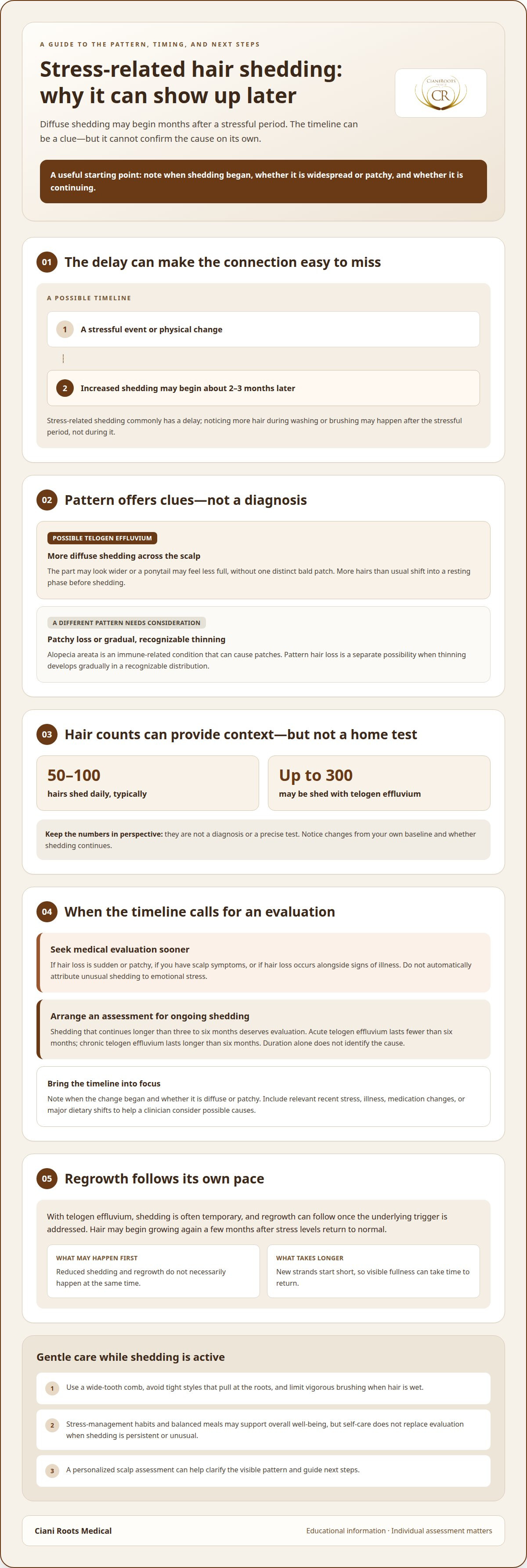
Signs of stress-related hair loss
A common sign is increased shedding across the scalp rather than a clearly defined bald spot. You may notice more strands on your pillow, in the shower, or on a brush. Your part may look wider, or your ponytail may feel smaller. Changes can appear gradually, so compare the overall pattern instead of judging one wash.
The hair growth cycle helps explain why the change may seem sudden. A trigger such as emotional stress can shift more follicles into a resting phase. Later, those hairs shed, even after the stressful period has passed. This delay can make the timing confusing, especially when anxiety or a difficult life event is no longer part of daily life.
Look for diffuse thinning rather than focusing on one area. Reduced fullness at the crown and temples alongside increased shedding may fit a widespread pattern. Distinct smooth patches can suggest alopecia areata, while gradual changes in distribution may point to pattern hair loss. Appearance offers clues, but it can’t confirm the cause on its own.
- More loose strands: Notice a clear increase during brushing, washing, or changing pillowcases.
- Less overall fullness: Check whether a familiar part looks wider or a usual hairstyle feels thinner.
- Short new hairs: Fine hairs near the hairline may be regrowth, while uneven short pieces can also reflect breakage.
- Defined patches: Distinct areas of loss differ from diffuse thinning and deserve medical assessment.
A hair that falls with a small pale bulb at its root may have completed its growth cycle; a broken strand lacks that bulb. This difference can help describe what you’re seeing, but it doesn’t establish stress as the trigger. Avoid repeatedly tugging at your hair to test it, as that won’t identify the underlying cause.
Use specific examples to describe the change: “my part looks wider,” “I’m seeing more strands after washing,” or “one patch appeared.” Note whether thinning is widespread or localized, and whether it continues to change. Sudden or patchy loss, or persistent shedding, warrants professional evaluation rather than an assumption that emotional stress is the cause.
If these signs are changing your hair’s appearance, a professional assessment can help clarify the pattern and discuss appropriate next steps. Schedule a complimentary consultation.
Ciani Roots Medical
Ciani Roots Medical serves patients in Vacaville and Alamo with personalized hair-loss care. If you’re unsure whether stress explains your hair changes, a consultation and scalp analysis can help assess your concerns and shape an individualized plan. Depending on your needs, care may include medical hair-loss management or regenerative hair treatments.
If shedding continues or your hair pattern changes, contact Ciani Roots Medical to discuss your concerns and arrange a consultation.
Choose a thoughtful next step
Hair changes can feel personal, and deciding what to do next doesn’t mean choosing a treatment before understanding the cause. Use what you’ve noticed to start a conversation about your goals, scalp health, and shedding pattern. This keeps care focused on your individual needs rather than assumptions about stress-related hair loss.
At Ciani Roots Medical, personalized regenerative hair-loss treatments are considered within an individualized plan. When appropriate, that plan may include Acorn Secretome, a personalized regenerative product created from your own stored cells and biology. A consultation can help clarify whether these options align with your concerns and what a considered path forward may involve.
Take the next step at your own pace. Schedule a complimentary consultation and start a conversation about care tailored to your hair and scalp. With a clearer understanding of your needs, you can move forward with confidence and care.
Frequently Asked Questions
Can anxiety cause my hair to fall out?
Anxiety may be associated with hair changes and can also contribute to hair-pulling behavior called trichotillomania. People may pull their hair to cope with uncomfortable feelings such as tension, boredom, or frustration. This differs from diffuse shedding: repeated pulling can leave uneven areas or broken hairs. If pulling feels difficult to control, discuss it with a healthcare professional who can help address both the behavior and its effects.
How can I tell if my hair is thinning or if I’m just paranoid?
Use consistent comparisons rather than relying on memory. Photograph your part in similar lighting and with the same hairstyle, then compare it later. You can also collect shed hairs over three days to notice whether the amount seems different from your usual experience. These observations can help you describe a concern, but they can’t diagnose its cause or replace an examination.
What helps regrow hair lost from stress?
The most useful first step is identifying what may be contributing to the change. Poor nutrition and hormone shifts can also play a role, so don’t assume emotional strain is the only factor. Eat balanced meals, and ask a physician before taking a multivitamin or other supplement. If a medical factor is involved, care should address it rather than rely on a general hair-growth product.
What is telogen effluvium?
Telogen effluvium is a hair-shedding condition in which an unusually large number of follicles enter a resting phase. The term describes a change in the hair cycle, not its trigger. Physical changes and emotional strain are among the possible preceding factors. Identifying the condition doesn’t automatically reveal why it began, so a clinician may consider your health history and other possible contributors.
What should I do if stress is causing my hair to fall out?
Choose manageable steps that support general well-being without putting extra strain on your hair. Regular movement, relaxation practices such as meditation, and consistent sleep can be part of a stress-management routine. Handle your hair gently when drying and styling, and avoid tight hairstyles that pull. If you’re taking supplements or considering medication, discuss them with a physician rather than starting them based on shedding alone.
What symptoms should I mention, and how might a clinician assess them?
Describe any scalp discomfort, broken hairs, or urge to pull, as well as changes in your health or routine. These details can help distinguish concerns such as alopecia areata, in which the immune system attacks hair follicles and can cause patchy loss. A clinician may examine your scalp and perform a pull test. Assessment considers the full picture, not one observation alone.
How long can shedding continue, and when might regrowth become visible?
Regrowth can be difficult to judge at first because short new hairs may blend into existing hair. Changes in length, styling, and lighting can also affect how full your hair appears. Instead of comparing daily, take occasional photographs under similar conditions. If the overall pattern keeps changing or new areas appear, bring your observations to a healthcare professional for further assessment.
Which treatments may help, and what evidence supports them?
No single treatment is appropriate for every cause of hair loss. Ciani Roots Medical provides medical hair-loss management and regenerative options, with care tailored to individual needs. Not every patient receives or needs every treatment. A treatment discussion should distinguish between addressing a contributing medical factor and using a hair-restoration approach. Ask what a proposed option is intended to address, how progress will be assessed, and what other factors may affect the plan.
Article by
Adriane McDonald BSN,RN
Adriane McDonald, BSN, RN, is a hair restoration specialist with nearly 40 years of experience working with men and women experiencing hair loss and thinning. As the Founder and Practice Director of Ciani Roots Medical, she works alongside the practice’s Medical Director to provide personalized hair restoration, scalp health, regenerative therapies, and advanced skin rejuvenation.
Her approach combines extensive hands-on experience with detailed scalp analysis, medical collaboration, and individualized treatment planning. Adriane is currently completing advanced training toward certification in trichology, further expanding her expertise in hair and scalp health.
Disclaimer
This content is provided for general educational and informational purposes only and is not intended to serve as medical advice, diagnosis, or treatment. Individual needs, treatment recommendations, and results vary. A consultation and appropriate evaluation are necessary to determine which treatment options may be suitable for you. Viewing or interacting with this content does not establish a healthcare professional-patient relationship with Ciani Roots Medical.
Individual results may vary, and no specific outcome can be guaranteed. Before-and-after images, testimonials, or treatment experiences represent individual results and should not be considered a guarantee of similar results.


