
A fuller brush after giving birth can feel alarming, but the shedding often reflects a temporary shift in the hair cycle. Postpartum hair loss usually begins about three months after birth, and hair often regains its fullness by the time a child turns one. The change can be unsettling, especially when you’re already adjusting to life with a newborn.
It’s understandable to wonder whether the shedding is expected or whether another health factor is involved. Hormonal changes are a common cause of post partum hair loss, but stress, nutrition, and other health concerns can also contribute. Noticing the timing and pattern can help you understand what may be happening and when to seek medical advice.
This article explains why shedding can increase after pregnancy, which health factors may contribute, and when to consult a healthcare provider. You’ll also learn how balanced nutrition and hydration support hair health, and how gentle care can help limit breakage while your hair’s growth cycle recovers.
Key Takeaways
- Shedding that begins a few months after childbirth often reflects a temporary shift in the hair-growth cycle.
- Hormonal changes are a common cause, while stress, nutrition, genetics, and thyroid health may also affect shedding.
- Pay attention to whether hair loss persists or your usual fullness hasn’t returned over time, and discuss ongoing concerns with a healthcare provider.
- A balanced diet with iron-containing foods and adequate hydration can support overall health while hair recovers.
- Personalized scalp analysis can help clarify contributing factors and inform next steps when shedding remains concerning.
What is postpartum hair loss?
Postpartum hair loss is often a temporary increase in shedding called telogen effluvium. Its timing and pattern can help distinguish it from other causes and indicate when to seek an evaluation.
Postpartum Shedding and Telogen Effluvium
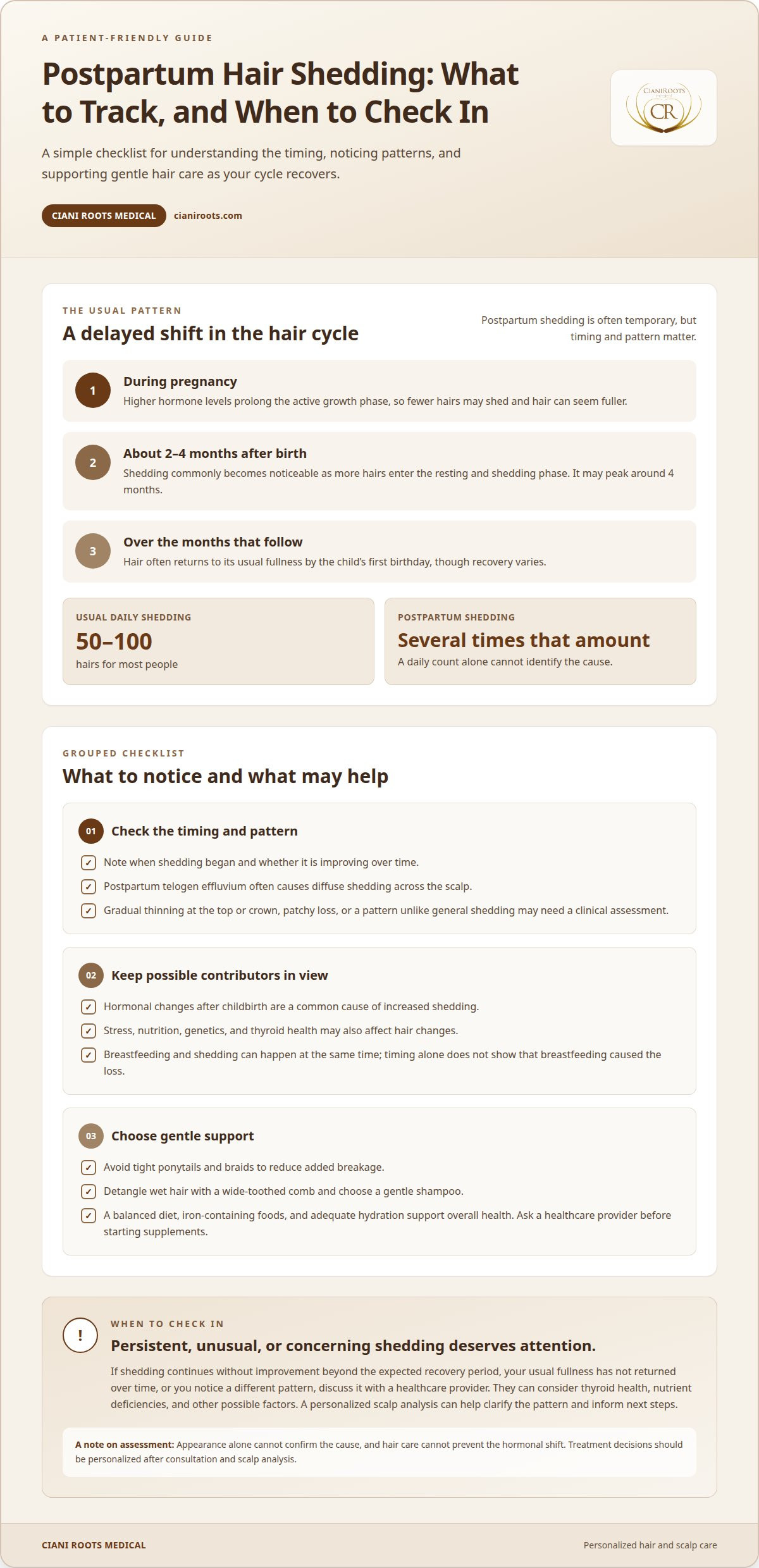
Telogen effluvium is increased shedding after more hairs shift into the resting phase of the growth cycle. Most people shed about 50 to 100 hairs daily; postpartum shedding can be several times that amount. This diffuse shedding may be noticeable in the shower, on a brush, or across clothing. The change can look dramatic, but the daily count alone cannot identify its cause.
Hormonal Causes of Hair Loss
During pregnancy, higher hormone levels extend the active growth phase, so fewer hairs shed each day. After childbirth, estrogen levels fall, and more hairs enter the shedding phase. This delayed response explains why postpartum hair loss often appears after delivery rather than immediately. The shift is a normal hair-cycle response, although other health factors can contribute and may need attention if the pattern is unusual.
When Shedding Starts and Ends
Shedding commonly begins about two to four months after giving birth and may peak around four months. The delay reflects the time between a change in the hair cycle and visible shedding, so it may not match the day hormone levels shift. Hair often returns to its usual fullness by the child’s first birthday, though recovery varies. If shedding continues without improvement beyond then, discuss it with a healthcare provider.
Distinguishing Postpartum Shedding from Other Hair Loss
Postpartum telogen effluvium usually causes diffuse shedding across the scalp, while female pattern hair loss more often appears as gradual thinning at the top or crown. These patterns can overlap, so appearance alone cannot confirm the cause. Patchy loss, persistent thinning, or continued shedding after the expected recovery period can point to another issue. If the pattern differs from general shedding, a clinical assessment can help clarify it.
Thyroid Health and Gentle Hair Care
Postpartum thyroiditis can disrupt thyroid hormone levels, and thyroid dysfunction may contribute to hair changes. If shedding is persistent or excessive, discuss thyroid health with a healthcare provider, who may consider thyroid imbalances or nutrient deficiencies. Hair care cannot prevent the hormonal shift, but gentle habits can reduce added breakage: avoid tight ponytails and braids, detangle wet hair with a wide-toothed comb, and choose a gentle shampoo. A balanced diet supports hair health; ask a provider before starting supplements.
Hormonal changes during and after pregnancy
Pregnancy changes the timing of hair growth, and childbirth brings a different hormonal environment. These shifts help explain why shedding may become noticeable after delivery.
Hormonal Shifts and the Hair Cycle
During pregnancy, higher hormone levels prolong hair’s active growth phase. As a result, fewer strands shed each day, and hair may seem fuller. Estrogen reaches its highest levels in the third trimester. This affects the hair cycle rather than permanently changing each follicle, helping explain why the pattern can shift again after birth.
Telogen effluvium describes shedding that occurs when more hairs enter the resting phase at the same time. During pregnancy, the extended growth phase can delay the usual release of strands. The difference becomes noticeable later, when the hair cycle catches up. A change in fullness after delivery can reflect the timing of hair-cycle phases, not sudden loss of every affected follicle.
Hormonal Changes After Childbirth
After childbirth, estrogen levels drop significantly, prompting more hairs to enter the shedding phase. Because those hairs don’t fall immediately, the visible change can lag behind delivery. This delay can make shedding feel unexpected, even when the hormonal shift began earlier. It is one common hormonal cause of postpartum shedding.
Other causes can contribute alongside this transition. Thyroid dysfunction, for example, can affect hair, and postpartum thyroiditis may disrupt thyroid hormone levels after delivery. If shedding feels excessive, continues without improvement, or occurs with other new symptoms, discuss it with a healthcare provider. They can consider whether thyroid function or another health factor needs attention.
Breastfeeding and Hair Shedding
Breastfeeding and postpartum shedding may occur at the same time, but timing alone cannot show that breastfeeding caused the hair loss. Hormonal changes after childbirth are a recognized explanation for increased shedding. Breastfeeding doesn’t rule out other contributors, so persistent or unusual hair changes deserve attention in their own right.
Nutrition and overall health also matter during recovery. A balanced diet supports hair health, while stress can add to shedding. If you’re breastfeeding and considering supplements or hair-loss treatments, discuss them with a healthcare provider first. This is especially important if shedding seems excessive, your hair pattern changes, or you have concerns about thyroid health. The cause, rather than breastfeeding alone, helps guide appropriate next steps.
Stress, nutrition, genetics, and thyroid conditions
Postpartum shedding can overlap with stress, nutrition changes, inherited hair patterns, or thyroid problems. Normal shedding doesn’t require medical treatment, while care for another cause depends on the diagnosis and whether you’re breastfeeding.
Stress, Genetics, and Thyroid Conditions
Stress can intensify shedding, so consider whether a stressful period or major change coincided with increased hair fall. A family history of gradual thinning can also provide context, especially if your hair pattern looks different from diffuse postpartum shedding. Genetics may influence the pattern, but doesn’t establish the cause on its own.
Thyroid dysfunction is another possible contributor to postpartum hair loss. Postpartum thyroiditis can disrupt thyroid hormone levels, and a healthcare provider may consider thyroid testing if shedding is persistent or excessive. Mention relevant health changes, family history, and when the hair loss began during an appointment. These details help distinguish a temporary cycle shift from a factor that may need medical attention.
Rapid weight loss can also affect hair. Losing 20 pounds or more in a few months may trigger temporary shedding. A sudden change in eating or weight after childbirth is worth mentioning, rather than assuming estrogen explains every change. Several factors can occur together, so the timeline and pattern both matter.
Nutrients and Supplements for Hair Health
A balanced diet with essential nutrients supports hair health, but no single food makes hair grow thicker overnight. Iron is one example: lean meats, spinach, and legumes provide it. Vitamin C helps the body absorb iron and supports collagen production. Pairing spinach or legumes with a vitamin C source can support nutrient intake through meals.
Nutrition isn’t a substitute for identifying a deficiency or thyroid problem. If meals have become irregular, note examples such as skipping lunch or relying on a narrow range of foods. Share these changes with a healthcare provider, who can assess whether nutrition could be contributing. The goal is to support overall health, not promise a particular hair result.
Be cautious with nutritional supplements. A supplement isn’t automatically appropriate just because shedding has started, and taking more than needed doesn’t identify or correct the cause. Talk with a healthcare provider before starting any new supplement, especially while breastfeeding. They can consider your health, diet, and any suspected nutrient deficiency before advising you.
For treatment questions, distinguish normal postpartum shedding from hair loss linked to an underlying issue. Normal shedding has no medical treatment; if a thyroid imbalance or nutrient deficiency is suspected, evaluation can guide care. Discuss any medication or other treatment with a provider who can account for the cause and breastfeeding status.
When to consult a healthcare provider
Postpartum shedding often settles as the hair cycle recovers, but its timeline can help guide decisions. Speak with a healthcare provider if hair loss continues for more than six months, feels excessive, or differs from diffuse shedding. Note when it began and whether your hair is gradually becoming fuller. These details help explain the pattern and whether another cause needs attention.
A primary care provider can assess persistent or excessive shedding and consider possible contributing factors, including thyroid imbalances and nutrient deficiencies. Mention thyroid concerns, changes in diet, or rapid weight loss, along with when shedding started. Timing matters because estrogen levels shift after childbirth, while other health changes can overlap with that transition.
Book an appointment sooner if hair loss is continuing without improvement, or if you’re concerned about its pattern. For example, diffuse shedding across the scalp differs from gradual thinning focused at the top or crown. A provider can review the distribution, duration, and health history together. No single detail, including the amount of hair on a brush, identifies the cause by itself.
A dermatologist can assess hair that hasn’t returned to its usual fullness within nine to twelve months after delivery. If the first year postpartum passes without improvement, arrange an evaluation rather than assuming the change is only hormonal. A clinician can distinguish ongoing telogen effluvium from female pattern hair loss or another condition, and consider whether thyroid function or nutrient status needs review.
Before an appointment, write down the delivery date, when shedding began, and how its pattern has changed. Include relevant changes such as stopping birth control pills, recovering from an illness or surgery, or experiencing substantial stress. These events can provide context for hair loss. Bring a list of medications and supplements so the healthcare provider can review them alongside your symptoms and health history.
Discuss any treatment before starting it, especially while breastfeeding or if a thyroid problem is possible. Normal postpartum shedding doesn’t require treatment, but care differs when a medical condition contributes. A doctor can assess the suspected cause and discuss suitable options. If shedding continues beyond six months or your hair remains less full near the first birthday, these milestones offer a clear reason to seek guidance.
Diet and hydration for hair growth
After giving birth, regular meals and hydration can support overall health while your hair’s growth cycle recovers. Food provides essential nutrients, but it can’t instantly stop shedding or make new strands return. Build balanced meals around foods you already eat rather than relying on a single ingredient. For example, include iron-containing foods and a source of vitamin C.
Iron is essential for healthy hair growth, and lean meats, spinach, and legumes are useful sources. Vitamin C helps your body absorb iron and supports collagen production. Pairing these foods is straightforward: add spinach or beans to a meal with a vitamin C-rich food. These choices support nutrient intake, but don’t establish whether a deficiency is causing hair changes.
Hydration supports general wellbeing during postpartum recovery, especially as daily routines change. Keep water within reach during a feeding or meal, and drink when thirsty. Needs vary with activity, climate, and personal health, so a fixed amount isn’t appropriate for everyone. Hydration supports the body, but drinking extra water doesn’t treat telogen effluvium or guarantee faster hair growth.
Stress and disrupted routines can make regular eating and drinking harder after a baby arrives. A simple plan can help: keep easy meal ingredients available, such as spinach, legumes, lean meat, and fruit or vegetables containing vitamin C. If a full meal is difficult, choose a nourishing option that fits your day. The goal is steady nutrition, not a perfect menu or a promise of thicker hair.
Supplements need individual consideration. Don’t assume that a product marketed for hair growth will address postpartum shedding or correct a specific deficiency. Talk with a healthcare provider before starting any new supplement, particularly while breastfeeding. A provider can consider your diet, symptoms, and health history before advising whether testing or a supplement makes sense. Taking more without knowing the cause may not help.
Food and fluids support health, but they don’t replace medical evaluation when shedding continues or your hair doesn’t begin returning to its usual fullness. A dermatologist can assess persistent changes and consider whether another factor needs attention. If it helps, keep a simple note of meals, supplements, and changes in shedding to describe your concerns at an appointment. This provides useful context without requiring you to track every strand.
If ongoing thinning raises questions about personalized hair care, EXPLORE YOUR OPTIONS for a medically guided discussion of possible next steps.
Ciani Roots Medical
Ciani Roots Medical offers personalized hair-loss support in Vacaville and Alamo, including consultation and scalp analysis to help inform next steps.
For ongoing concerns, medical hair-loss management and medication support may be considered when appropriate. CR signature regenerative hair-loss treatments are another option, guided by individual needs rather than a one-size-fits-all approach.
Schedule a complimentary consultation with Ciani Roots Medical to discuss your hair concerns.
Take a thoughtful next step for your hair
If ongoing shedding leaves you unsure what support makes sense, a personalized discussion can help clarify your next step. Ciani Roots Medical offers the CR Signature Protocol™ for hair loss, as well as LASEmd® Ultra Skin Rejuvenation for skin concerns.
Acorn Secretome is a personalized regenerative product created from your own stored cells or biology. Which approach may suit you depends on your needs and treatment plan. Not every patient receives or needs every treatment.
To explore a thoughtful next step, schedule a complimentary consultation. You deserve individualized guidance as you consider your hair goals.
Frequently Asked Questions
What is postpartum alopecia?
Postpartum alopecia is a term for hair shedding or thinning noticed after pregnancy. It describes a change in hair, not a diagnosis of its underlying cause. The term may refer to temporary shedding associated with the hair cycle, but other patterns can also become noticeable during this period. Describing what you see, such as reduced overall volume or a more visible part, can help clarify the concern.
When should I see my healthcare provider?
Consider speaking with a healthcare provider if the change worries you or doesn’t follow the pattern you expected. To make the conversation useful, describe where thinning is most visible, how it affects your daily routine, and whether your overall hair volume seems different. A few dated photographs taken in similar lighting can show how your hair’s appearance changes over time without requiring you to count individual hairs.
Who can experience hair thinning after pregnancy?
People who have given birth can notice changes in hair density, whether their hair was previously thick or fine. Changes may be more apparent with certain styles, partings, or lighting, so one mirror check may not show the whole picture. If you had thinning before pregnancy, mention that history too. It helps distinguish a new change from a pattern that was already present.
When does postpartum hair loss start and how long does it last?
The timing and recovery can differ from person to person, so a single observation may not reveal the overall course. Note when you first noticed a change and whether your hair seems to be stabilizing, improving, or continuing to thin. Hair length and styling affect perceived fullness, so compare photographs taken with similar partings and lighting.
What causes hair loss after pregnancy?
Pregnancy-related hormonal shifts can be one reason for increased shedding, but they aren’t the only possible explanation. A provider may also consider changes in general health, nutrition, stress, or thyroid function. These influences can overlap, making it difficult to identify a cause from timing alone. Mention relevant health changes and any thinning that began before pregnancy to give the assessment clearer context.
When should you see a doctor about postpartum hair loss?
Arrange a medical discussion if thinning is progressing, differs from your usual pattern, or remains a concern. Before the appointment, note any recent medication or supplement changes and whether you experienced an illness or major change in your health. You can also ask whether further evaluation is appropriate. This information helps focus the conversation on your individual history rather than a general description of postpartum shedding.
How can you reduce or manage postpartum hair loss?
Focus on avoiding added strain and breakage while monitoring the change. Choose a loose style instead of one that pulls, and handle wet hair gently when detangling. If styling makes thinning feel more noticeable, changing your part or choosing a lighter, less tightly secured style may help you feel more comfortable. These are practical appearance and hair-care measures, not ways to identify the cause.
Do postpartum hair loss vitamins or supplements work, and are they safe while breastfeeding?
Vitamins or supplements aren’t a guaranteed solution for shedding, and whether one is appropriate depends on your health and nutrient needs. While breastfeeding, discuss a specific product with a healthcare provider before taking it. Bring the container or a clear list of its ingredients, along with any other supplements or medications you use. That gives the provider concrete information to consider instead of relying on the product’s hair-growth claims.
Article by
Adriane McDonald BSN,RN
Adriane McDonald, BSN, RN, is a hair restoration specialist with nearly 40 years of experience working with men and women experiencing hair loss and thinning. As the Founder and Practice Director of Ciani Roots Medical, she works alongside the practice’s Medical Director to provide personalized hair restoration, scalp health, regenerative therapies, and advanced skin rejuvenation.
Her approach combines extensive hands-on experience with detailed scalp analysis, medical collaboration, and individualized treatment planning. Adriane is currently completing advanced training toward certification in trichology, further expanding her expertise in hair and scalp health.
Disclaimer
This content is provided for general educational and informational purposes only and is not intended to serve as medical advice, diagnosis, or treatment. Individual needs, treatment recommendations, and results vary. A consultation and appropriate evaluation are necessary to determine which treatment options may be suitable for you. Viewing or interacting with this content does not establish a healthcare professional-patient relationship with Ciani Roots Medical.
Individual results may vary, and no specific outcome can be guaranteed. Before-and-after images, testimonials, or treatment experiences represent individual results and should not be considered a guarantee of similar results.


