
Smoother-looking skin doesn’t always start with stronger exfoliation. If you’re wondering how to improve skin texture on your face in Dixon, a thoughtful combination of gentle skincare, consistent sun protection, and professional care tailored to your skin is a practical place to start.
Uneven texture can appear as roughness, bumps, enlarged pores, dry patches, dullness, fine lines, or acne marks. It’s understandable to want a clear, lasting improvement, but adding too many active products at once can leave skin irritated rather than smoother.
This guide explains what may contribute to uneven facial texture and how daily skincare and sun protection can support healthier-looking skin. You’ll also learn how exfoliation and professional treatments may fit into a personalized plan, and why the right choice depends on your skin’s needs and tolerance. A measured approach helps you focus on useful steps without overwhelming your skin.
Key Takeaways
- Uneven texture can appear as roughness, bumps, enlarged pores, dry patches, dullness, fine lines, or acne marks.
- Exfoliation can support smoother-looking skin, but the right approach depends on your skin’s sensitivity and response.
- Consistent moisturizing and sun protection help support the skin barrier and protect against UV-related changes.
- Introducing too many active ingredients at once can contribute to dryness and irritation; a measured routine is easier to assess.
- A professional can assess your skin and align treatment options with your concerns and home-care routine.
How a professional may use alpha and beta hydroxy acids to improve facial skin texture
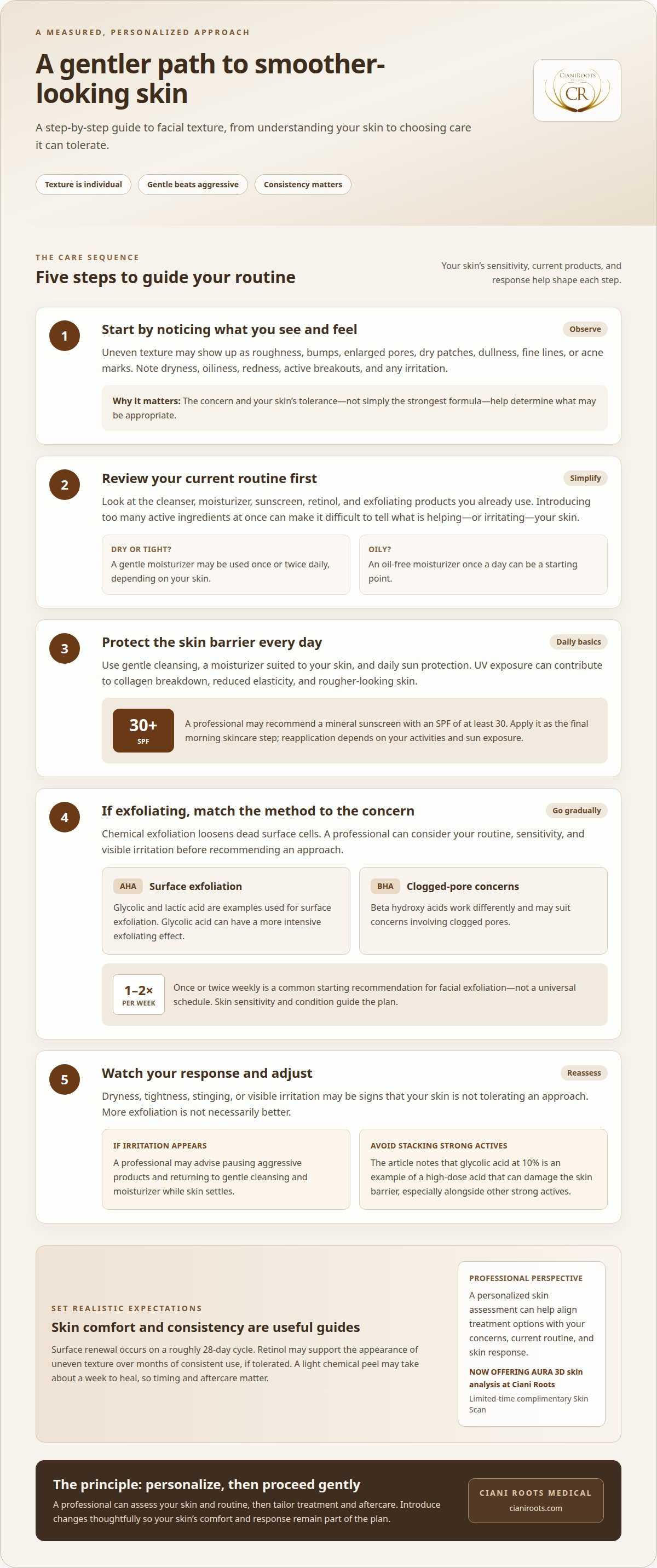
Chemical exfoliation uses acids to loosen dead surface cells, which can make roughness and dullness look less pronounced. Alpha hydroxy acids (AHAs), such as glycolic and lactic acid, are commonly used for surface exfoliation. Beta hydroxy acids (BHAs) work differently and may suit concerns involving clogged pores. A skin professional considers the concern, your current routine, sensitivity, and visible irritation before recommending an approach.
Glycolic acid has a small molecular structure and can provide a more intensive exfoliating effect; lactic acid is another AHA used in professional skincare. The right choice depends on how your skin responds, not simply on selecting the strongest formula. A professional may assess dryness, redness, active breakouts, and past reactions before tailoring treatment and aftercare. This is especially relevant if you already use an acid cleanser or other exfoliating products.
Frequency matters as much as the ingredient. Exfoliating facial skin once or twice a week is a common starting recommendation, but sensitivity and the skin’s condition influence the plan. A professional can assess whether an in-office chemical exfoliation or a lower-strength home product is more appropriate, and adjust as the surface becomes smoother. Some guidance suggests introducing a low-dose AHA cleanser once per day only after the skin feels comfortable rather than reactive.
More is not necessarily better. Glycolic acid at 10% is an example of a high-dose acid that can damage the skin barrier, especially when combined with other strong actives. Over-exfoliation may leave skin dry, tight, stinging, or visibly irritated. If those signs appear, a professional may advise pausing aggressive products and returning to gentle cleansing and moisturizer while the skin settles. After exfoliation, moisturizer can help reduce dryness and irritation.
Skin renewal takes time, so an immediate polished feel isn’t the only measure of progress. Surface shedding and renewal occur on a roughly 28-day cycle, and a professional can use changes in roughness, comfort, and visible congestion to guide adjustments. A light chemical peel may take about a week to heal, making timing and post-treatment care important. For facial texture concerns in Dixon, professional guidance can help match exfoliation strength and frequency to the skin’s tolerance, rather than escalating acids without assessing the response.
How a professional can guide daily skincare and sun protection
A professional skincare review starts with your current routine, not a generic product list. The assessment considers dryness, oiliness, irritation, pigment changes, and active ingredients already in use. This helps identify whether a cleanser, moisturizer, sunscreen, or retinol may be contributing to discomfort, and gives the professional a clearer basis for practical recommendations.
Sun protection is a daily part of a texture-focused routine because excess UV radiation can break down collagen, contributing to reduced elasticity and rougher-looking skin. A professional may recommend a mineral sunscreen with an SPF of at least 30 as the final step in the morning skincare routine. The right formula should also fit the person’s skin type and routine, so it’s more likely to be used consistently.
Application habits matter, too. A professional can explain how sunscreen fits after moisturizer and before makeup, and discuss reapplication based on your daily activities and sun exposure. Morning use helps reduce UV-related pigment and collagen loss. In Dixon, build your routine around time outdoors and regular activities, rather than treating sunscreen as a product reserved for special occasions.
Choose a moisturizer based on how your skin feels and behaves. Dry skin may benefit from moisturizing twice daily, while oily skin can start with an oil-free moisturizer once a day. A gentle moisturizer can also be used once or twice daily, depending on skin type. During an assessment, a professional can consider tightness, flaky patches, shine, and sensitivity before advising on texture and frequency.
Routine changes should be easy to understand and evaluate. A professional may suggest adjusting one product at a time, such as replacing a cleanser that leaves your face tight before adding a retinol. This makes it easier to tell whether a change improves comfort or causes irritation. Retinol may support the appearance of uneven texture over months of consistent use, if tolerated, so introduce it with attention to your skin’s response.
Moisturizer in the morning and evening can help hydrate skin and prevent dry patches, while gentle cleansing avoids unnecessary disruption. If the skin is already irritated, pausing aggressive products and using gentle cleansing with generous moisturizer can help restore a calmer baseline. For a skin assessment focused on texture and routine choices, professional skin guidance can help align daily care with your concerns.
3. What should you avoid when trying to smooth skin texture?
A moisturizer should match your skin’s needs, not simply feel rich or lightweight. During an assessment, a professional can consider oiliness, dry patches, sensitivity, and the products you already use. Dry skin may benefit from moisturizing twice daily, while oily skin can start with an oil-free moisturizer once a day. A gentle moisturizer can be applied once or twice daily, depending on skin type.
Ingredients and texture matter, too. A professional may consider a ceramide-rich moisturizer if dryness or tightness is a concern, and assess how it fits your existing routine. The goal is to choose a formula your skin tolerates and you can use consistently. A heavy-feeling product, for example, may be uncomfortable for oily skin, while a very light lotion may not feel sufficient for persistent dryness.
More products don’t necessarily mean better results. Combining exfoliants with retinoids can increase the chance of irritation, so a professional may recommend using one active ingredient at a time. This makes it easier to identify what is causing stinging, redness, or flaking, while keeping moisturizer in a supportive role instead of layering several potentially irritating products together.
Introduce harsh skincare ingredients gradually. Using too many new actives at once can strip natural oils and worsen dryness and irritation. A professional can review whether products such as lactic acid, retinol, or another exfoliant are appropriate together, then help simplify your routine if your skin becomes reactive. If irritation is present, pausing aggressive products and using gentle cleansing and moisturizer can help restore a calmer baseline.
Hydration advice should focus on your skin’s surface and routine, rather than on expecting moisturizer to erase every concern. Fine lines and rough patches may have different contributors, so product choice depends on the assessment. A professional can also discuss colloidal oatmeal, an FDA-recognized skin protectant, as an ingredient option for a routine focused on comfort.
For smoother-looking skin, consistency is more useful than frequently switching products. Keep your routine simple enough to notice changes in comfort and texture, and avoid adding a new acid while testing another active. A professional can use those observations to adjust moisturizer type and frequency. This measured approach supports skin renewal while reducing the risk of repeatedly causing dryness through unnecessary changes.
4. What does uneven skin texture look like?
Uneven facial texture can look rough, bumpy, dull, or patchy rather than consistently smooth. Enlarged pores, dryness, fine lines, wrinkles, acne, and acne scarring can all contribute to an uneven surface. You might notice roughness while cleansing or applying moisturizer, or see makeup settle into dry patches. These visible differences describe a concern, not a diagnosis; the same appearance can have different causes.
Several factors can affect texture. As skin ages, it can lose elasticity and firmness, while skin cell turnover slows. Acne and acne scarring may leave bumps, depressions, or irregular areas. Eczema and psoriasis can cause dry, rough, red, flaky patches, which differ from clogged pores or post-acne marks. Excess UV radiation can break down collagen, contributing to reduced elasticity and rougher-looking skin. A professional considers the pattern and condition of your skin barrier before suggesting a treatment direction.
Dark patches and uneven tone can accompany textural changes, so a professional may discuss vitamin C as one skincare option. A serum containing 15% vitamin C is recommended to help brighten skin and address dark patches. Product choice still depends on skin tolerance and the existing routine. For example, a professional can consider whether an active serum fits alongside retinol or exfoliating products, rather than adding several ingredients at once.
How long does skincare take to improve uneven texture? The timeline depends on the concern and the ingredients used. Retinoids may improve the look of uneven texture over months of consistent use, if tolerated. When introducing a product, allow two to four weeks before assessing your skin’s response. This can help reveal irritation or sensitivity, but may not show the full cosmetic effect.
When should you see a dermatologist about rough or changing facial skin? Seek a dermatologist’s assessment if a rough area changes or persists, or if redness and flaking concern you. Eczema and psoriasis can resemble other sources of dryness, and a professional evaluation can help distinguish the issue before you pursue texture-focused treatments.
For a more focused assessment, note where the texture appears, when it began, and which products touch that area. For instance, record whether a patch feels dry after cleansing or whether bumps cluster around acne-prone areas. These details help a professional understand the concern and consider appropriate next steps, including options for pigment, tone, and texture.
5. Improving skin texture with professional treatments and home care
A useful plan connects clinical assessment, appropriate treatment, and daily care at home. A professional first considers the visible concern, such as acne marks, dullness, rough patches, or uneven tone. Skin type, dryness, sensitivity, and current ingredients also shape the approach. For people in Dixon wondering how to improve skin texture on the face, an assessment helps distinguish texture concerns from irritation that may need gentler care first.
Professional options can include chemical exfoliation or microneedling, depending on your skin and treatment goals. Each works differently, so the choice should reflect the concern and your skin’s current condition. Microneedling may require several appointments before changes become visible. A professional can also explain recovery and aftercare, making an appointment part of a considered plan rather than a stand-alone solution.
Home care supports the plan between appointments. A professional may recommend a simple cleanser, moisturizer, and daily sunscreen, then consider an active ingredient suited to your skin type. Introducing one new product at a time for two to four weeks makes it easier to notice irritation or dryness. If retinoids fit the plan, their effect on uneven texture may develop over months of consistent use, if tolerated.
How should you choose a qualified professional for skin texture concerns in Dixon, California? Look for a clinical consultation that assesses your skin, reviews your current products, and explains why the treatment and aftercare plan suit your concern. A careful professional also discusses expected healing, possible irritation, and how progress will be evaluated.
Consistency makes a treatment plan easier to assess. Changing several products while beginning a procedure, for example, makes it difficult to identify what caused redness or dryness. A professional can sequence changes, explain which ingredient to pause, and adjust home care based on your skin’s response. This coordination matters when addressing both surface texture and uneven tone.
Improving texture isn’t simply a matter of increasing exfoliation or choosing the most intensive treatment. The relevant factors include your skin barrier, sensitivity, visible concern, and tolerance for recovery. If a plan includes an in-office treatment, aftercare should support a calm skin baseline and protect against excess sun exposure. These considerations help shape an approach to how to improve skin texture on the face in Dixon.
For a personalized approach to facial texture concerns, schedule a complimentary consultation or book a skin analysis.
Ciani Roots Medical: Pigment, Tone, Texture & Skin Renewal Treatments
Ciani Roots Medical offers Pigment, Tone, Texture & Skin Renewal Treatments for people seeking professional support with uneven tone or facial texture. A skin analysis helps shape an individualized plan around the visible concern, skin condition, and treatment goals. Depending on the assessment, Skin Rejuvination with laseMD and regenerative therapy may also be considered as part of a personalized approach.
Consider professional guidance if home care hasn’t addressed your concern or you’re unsure which treatment suits your skin. A consultation can clarify suitable options and how they may fit with daily skincare. Treatment is personalized, and outcomes vary with individual skin needs.
To discuss your skin concerns, contact Ciani Roots Medical.
Take the Next Step Toward Skin Renewal
Choosing how to improve facial skin texture in Dixon starts with understanding what matters most to you, whether that’s roughness, uneven tone, or a change in your skin’s overall appearance. A personalized skin assessment can connect those concerns with suitable care and clarify what to expect from a treatment plan.
Ciani Roots Medical offers Skin Rejuvination with laseMD and regenerative therapy, alongside Pigment, Tone, Texture & Skin Renewal Treatments. Its Acorn Secretome option is a personalized regenerative product created from a patient’s own stored cells and biology. CR signature regenerative hair loss treatments address a separate concern, hair loss, rather than facial texture.
There’s no need to have every question answered before starting a conversation. Share what you’ve noticed and what you hope to address, and the next steps can be shaped around your skin. EXPLORE YOUR OPTIONS and take a thoughtful next step toward care that feels right for you.
Frequently Asked Questions
What does uneven skin texture look like?
Uneven texture can be easiest to notice in side lighting or as your fingertips move across your cheeks and forehead. Small bumps, shallow acne marks, flaky areas, or more visible pores can create different patterns. Compare the same area under consistent lighting rather than relying on one close-up. A professional considers where changes appear and whether redness or scaling accompanies them.
Can exfoliating too much cause bad skin texture?
Yes. Excessive exfoliation can irritate skin and weaken its protective barrier, making the surface feel rough, tight, or sensitive. A professional can review products and tools in your routine, including exfoliating cleansers and scrubs, to identify overlapping sources of irritation. If discomfort begins after a routine change, pause new active products and seek guidance before adding another exfoliant.
How Many Treatments Will You Need?
The number depends on the concern, the treatment selected, and how your skin responds. A professional considers whether the goal involves acne marks, uneven tone, or surface roughness, then determines how progress should be assessed. Some procedures involve a course of appointments, while other plans focus on ongoing home care. The plan can be adjusted based on visible changes and skin tolerance.
How can a professional assess and treat tiny bumps on the forehead?
A professional examines the bumps’ appearance, distribution, and surrounding skin, then reviews products and recent routine changes. Tiny forehead bumps can have different explanations, so appearance alone shouldn’t determine treatment. For example, a professional may distinguish clogged pores from irritation before recommending an ingredient or procedure. Avoid squeezing or picking at the area, which can add irritation and make assessment harder.
What should you avoid when seeking professional care to smooth skin texture?
Avoid choosing a treatment based only on a dramatic before-and-after image or a promise of a particular result. A useful consultation should address your specific concern, current skin condition, and recovery considerations. Be cautious of plans that recommend several new active ingredients or procedures without explaining their purpose. Clear discussion of options and aftercare helps you make an informed decision without pressure.
What causes rough or uneven facial skin texture?
Common contributors include acne and acne scarring, age-related changes, sun exposure, and inflammatory skin conditions such as eczema or psoriasis. These concerns can look alike but may need different care. Flaky redness, for instance, may point to a different issue than the uneven surface left by acne. A professional considers the pattern, location, and symptoms rather than treating every rough area as clogged pores.
Which skincare ingredients may a professional recommend for facial skin texture, including retinoids, AHAs, and salicylic acid?
A professional may consider retinoids, alpha hydroxy acids such as glycolic or lactic acid, or salicylic acid, a beta hydroxy acid. The choice depends on your skin type, concern, and other products in your routine. Retinoids may improve the appearance of uneven texture over months of consistent use, if tolerated. A professional can help determine which ingredient to introduce and which combinations to avoid.
How can a professional help create a simple skincare routine for improving skin texture?
A professional can review the products you already use, identify potential conflicts, and organize a routine around your skin’s needs. Bringing product packaging or a written list makes that review more specific. The professional can outline a basic cleanser, moisturizer, and sunscreen routine, then decide whether an active ingredient fits. This stepwise plan makes it easier to notice which products your skin tolerates.

Article by
Adriane McDonald BSN,RN
Adriane McDonald, BSN, RN, is a hair restoration specialist with nearly 40 years of experience working with men and women experiencing hair loss and thinning. As the Founder and Practice Director of Ciani Roots Medical, she works alongside the practice’s Medical Director to provide personalized hair restoration, scalp health, regenerative therapies, and advanced skin rejuvenation.
Her approach combines extensive hands-on experience with detailed scalp analysis, medical collaboration, and individualized treatment planning. Adriane is currently completing advanced training toward certification in trichology, further expanding her expertise in hair and scalp health.
Disclaimer
This content is provided for general educational and informational purposes only and is not intended to serve as medical advice, diagnosis, or treatment. Individual needs, treatment recommendations, and results vary. A consultation and appropriate evaluation are necessary to determine which treatment options may be suitable for you. Viewing or interacting with this content does not establish a healthcare professional-patient relationship with Ciani Roots Medical.
Individual results may vary, and no specific outcome can be guaranteed. Before-and-after images, testimonials, or treatment experiences represent individual results and should not be considered a guarantee of similar results.


