
Could a treatment plan for early hair thinning involve more than one visit? Understanding KeraLase hair treatment cost in Dixon starts with the number of sessions and the care your scalp may need. A typical course includes six sessions, usually spaced four to six weeks apart, while the cost depends on the individualized treatment plan.
KeraLase combines LaseMD Ultra laser treatment with KeraFactor serum applied to the scalp. It may be considered for people experiencing thinning or early hair loss, but whether it fits depends on the scalp and hair assessment.
If you’re weighing the commitment, it helps to know what happens during treatment, how sessions are scheduled, when changes may become noticeable, and what can shape the overall cost. This article explains each part so you can better understand the process and what a personalized plan involves.
Key Takeaways
- KeraLase combines LaseMD Ultra laser treatment with KeraFactor serum applied to the scalp.
- Changes may become noticeable over a few months, so treatment progress is assessed over time rather than immediately.
- Scalp and hair assessment helps determine whether KeraLase may suit thinning or early hair loss.
- The overall cost depends on the individualized treatment plan and the care it involves.
Laser treatment and serum application
KeraLase pairs LaseMD Ultra laser treatment with KeraFactor serum applied to the scalp. KeraLase providers use this combined protocol; this section does not identify individual clinics in Dixon.
Combining Laser Treatment and Serum
KeraLase creates microscopic channels in the scalp, followed by the application of KeraFactor® MD. The order matters: the laser-assisted treatment comes first, then the serum is applied to the treated area. Knowing these components helps clarify what the therapy involves, while a scalp assessment determines whether it fits an individual treatment plan.
LaseMD Laser and KeraFactor Serum
LaseMD Ultra is the laser device used to create microchannels, while KeraFactor is the serum applied afterward. KeraFactor contains five bio-identical growth factors and two skin proteins. These details identify the components involved, but they don’t establish what an individual’s hair response will be. The treatment’s purpose is to apply the serum after the laser has created channels in the scalp.
The Laser and Serum Process
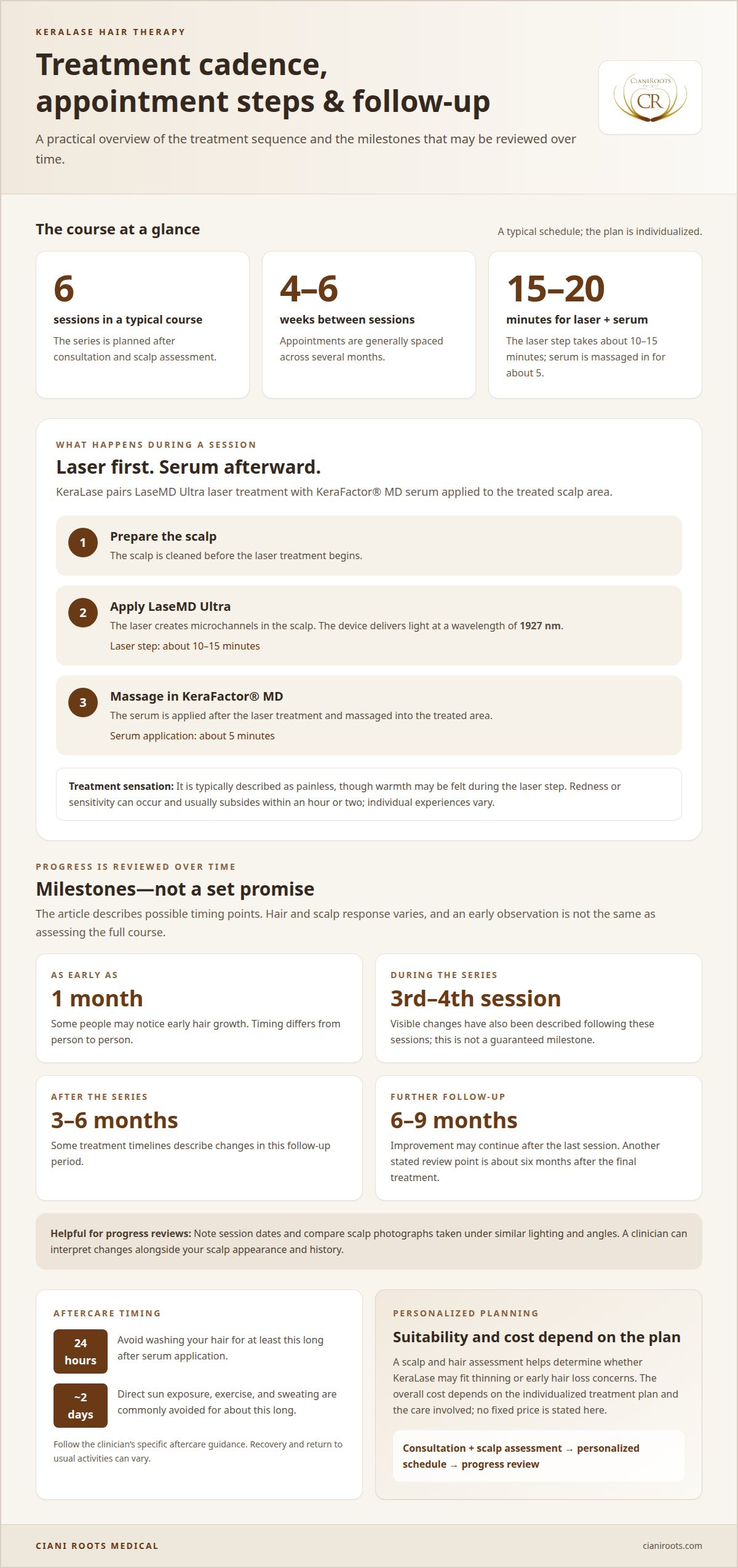
The process involves cleaning the scalp, applying LaseMD Ultra, then massaging KeraFactor serum into the treated area. The laser portion takes about 10-15 minutes in most cases, and the serum is massaged in for about 5 minutes afterward. Those steps give a clearer picture of the appointment than the treatment name alone, including how laser and serum application work together.
What the Microchannels Do
LaseMD Ultra creates microchannels in the scalp, helping KeraFactor serum absorb after application. The device delivers light at a wavelength of 1927 nm. The channels are part of the treatment process, not a separate service. For patients comparing approaches to thinning hair, this explains how the laser has a role beyond simply illuminating the scalp.
Sensation and Downtime
KeraLase treatment is typically described as painless, though some people may feel warmth during the laser step. Redness or sensitivity can occur and usually subsides within an hour or two. Many patients may return to normal activities soon after treatment, but recovery and the timing of a return to usual activities can vary. Follow the clinician’s aftercare guidance, and ask about any activity restrictions for your session.
Serum Care After Treatment
After the serum is applied, patients are advised to avoid washing their hair for at least 24 hours. This allows the post-treatment instructions to shape the rest of the day’s routine. Direct sun exposure, exercise, and sweating are also commonly avoided for about 2 days after treatment. Following the specific aftercare guidance provided for the session helps keep care consistent.
Expected timing of results
KeraLase results are assessed over months, not immediately after the laser treatment. Some people may notice early hair growth as soon as a month after treatment, while visible changes have also been described following the third or fourth treatment. These are different milestones: an early sign is not the same as judging the overall response after a treatment series, and timing varies by person.
Early observations are a starting point, not a basis for firm conclusions. Hair concerns can have multiple causes, and changes may take time to assess. A clinician can review the scalp’s appearance and your history, including the areas of thinning, as part of an individualized evaluation.
Visible changes may occur within a few months, with some treatment timelines placing noticeable results after the third or fourth session. The exact timing can depend on the person’s hair and scalp condition and the course planned. Looking at progress across multiple appointments gives a more useful picture than expecting a dramatic change after one laser treatment.
After a treatment series, the timeline continues. Some treatment timelines describe changes about 3-6 months after the series, with improvement potentially continuing for 6-9 months after the last session. Another stated milestone for optimal results is about six months following the last treatment in the package. These milestones refer to different points in follow-up; timing and outcomes vary, and not everyone will experience the same change on a set date.
Growth factors in KeraFactor serum are intended to nourish hair follicles, but the treatment timeline alone cannot predict an individual outcome. The starting pattern of thinning, scalp condition, and consistency with the planned sessions all matter when interpreting changes. “No downtime” refers to resuming normal activities after treatment; it doesn’t mean hair growth should be visible immediately.
For a practical progress review, note the treatment dates and compare scalp photographs taken under similar lighting and angles. This can make gradual changes easier to assess across the first month, later sessions, and follow-up months. A personalized scalp analysis can help interpret the pattern and discuss an appropriate treatment plan.
Recommended treatment package and schedule
A typical KeraLase course consists of six sessions, with treatments spaced four to six weeks apart. This gives the schedule a steady rhythm across several months, rather than concentrating visits close together. The exact plan follows a consultation and scalp assessment, which help relate the schedule to the person’s hair concerns and treatment goals.
The interval between sessions is part of the treatment plan, not simply a matter of convenience. Spacing appointments four to six weeks apart creates time between laser treatments while keeping the course organized. For example, a person beginning with a consultation can map out the six visits in sequence, then plan follow-up around the completed series.
Here is the general sequence:
- Consultation and scalp assessment: Discuss hair changes and assess the scalp before setting a personalized schedule.
- Initial treatment series: Plan six KeraLase sessions, generally four to six weeks apart.
- Progress review: Review the course and the scalp’s response as treatment proceeds.
- Maintenance discussion: After the initial package, maintenance treatments may be scheduled every six to 12 months.
A consultation also gives the clinician an opportunity to consider whether KeraLase fits the person’s pattern of thinning and overall hair restoration plan. The six-session framework is a typical course, not a substitute for that assessment. Scalp condition, the area being treated, and the individual treatment goals help shape how the schedule is applied.
Maintenance is a separate planning stage. The suggested interval of every six to 12 months comes after the initial package, rather than replacing sessions in the first course. Discussing maintenance after completing the series allows the plan to reflect the treatment already received and the progress observed.
Because appointments are separated by several weeks, calendar planning can make the series easier to follow. A four-to-six-week interval means the next session is scheduled in relation to the previous one, while the overall course unfolds over time. Patients can discuss appointment timing during the consultation and keep the sequence clear as the series progresses.
The term “revolutionary” can sound appealing, but it does not explain what a schedule involves. The useful details are the six-session typical course, four-to-six-week spacing, and possible maintenance every six to 12 months afterward. Together, these give patients a practical framework for understanding the commitment before deciding whether this hair restoration treatment aligns with their needs.
What does Keralase cost and how many treatments are necessary?
A typical course includes six treatments, with session timing and maintenance considered separately. The total investment depends on the treatment plan, while appointment length depends on the protocol and serum application.
Treatment Frequency and Session Length
KeraLase sessions are commonly scheduled every four to six weeks, and a typical course includes six sessions. This spacing helps patients understand the time commitment before beginning. A treatment session is described as lasting about 15, 20, or 30 minutes, depending on the treatment description and what the appointment includes.
Appointment frequency and session length are separate planning questions. The schedule describes how often appointments occur, while the appointment itself includes the laser-assisted treatment and serum application. Your clinician can explain the treatment process and plan based on your scalp and hair concerns.
Insurance Coverage and Self-Pay
Insurance coverage for KeraLase depends on the individual policy, so don’t assume the treatment will be covered. If your policy excludes it, the expense may be self-pay.
That distinction matters when planning a six-session course. Review the benefits and exclusions in your own policy before budgeting around reimbursement. Coverage decisions belong to the insurer and depend on policy terms, not simply on the treatment name or the fact that it addresses hair concerns.
Consultations, Packages, and Financing
Consultations and package terms vary by practice, and there is no single pricing or financing arrangement for every Dixon clinic. A consultation can establish whether a six-session course fits the person’s scalp, hair pattern, and goals. Package pricing and financing terms are practice-specific, so they shouldn’t be assumed from general treatment schedules.
Ask for a written treatment plan that distinguishes the initial series from any later maintenance. That makes it easier to understand what the proposed package includes and how the planned visits are structured. Financing terms, if available, depend on the practice’s arrangements.
The exact cost depends on the planned number of sessions, treatment area, and individualized care. A quote for your case gives the precise figure.
Maintenance is a separate consideration after the initial course. Recommended maintenance treatments may occur every six to 12 months after the initial package. The interval is not another six-session course; it is a later stage of care that can be discussed after the initial treatment series and progress review.
KeraFactor serum contains growth factors and proteins and is used as part of the KeraLase treatment protocol. Its use does not establish a guaranteed response or determine insurance benefits. For men and women considering treatment, the practical budgeting steps are to understand the proposed course, separate initial sessions from maintenance, and clarify policy coverage before making financial assumptions.
Candidates with thinning hair or early hair loss
KeraLase may be considered for people experiencing hair thinning or loss, but it is not suitable for every cause or pattern. A consultation and scalp analysis help evaluate your hair and scalp and determine whether the therapy may fit your personalized plan.
An assessment matters because hair loss can have multiple causes and present in different patterns. Gradual thinning, for example, may differ from shedding after childbirth or during a stressful period. Understanding the pattern helps the clinician consider whether KeraLase may be appropriate.
Early changes can be subtle, such as a widening part, less fullness, or increased visibility of the scalp. These observations provide useful context for a consultation, but do not establish the cause. A scalp and hair assessment helps guide the treatment discussion.
KeraLase combines LaseMD Ultra laser treatment with KeraFactor serum. The laser creates microchannels in the scalp, and the serum is applied afterward. KeraFactor contains growth factors and proteins; its use is intended to support scalp care. Knowing what the treatment involves can help patients understand why the scalp assessment comes before a recommendation.
Suitability is not determined by age or gender alone. Relevant factors include the pattern of thinning, scalp condition, and type of hair loss. For example, postpartum shedding and gradual thinning are distinct concerns, even when both appear as reduced fullness. A clinician reviews these details before recommending an approach.
KeraLase is not a universal solution for every form of hair loss. A consultation helps determine whether your hair and scalp findings align with the therapy. Not every patient receives or needs every treatment, and the plan should reflect individual needs.
Bring a clear account of when the thinning began and how it has changed. Details such as a widening part, diffuse shedding, or a family pattern can help structure the conversation. The clinician can assess your scalp and hair, discuss the findings, and explain whether KeraLase may fit your goals.
For people in Dixon considering hair restoration, the practical takeaway is straightforward: a scalp and hair assessment should inform the recommendation. EXPLORE YOUR OPTIONS to learn about an individualized approach to thinning and early hair loss.
Ciani Roots Medical: Keralase HAIR Therapy with LaseMD ultra and kerafactor
Ciani Roots Medical provides KeraLase® Hair Therapy, a needle-free laser-assisted treatment that creates microscopic channels in the scalp, followed by the application of KeraFactor® MD. A consultation and scalp analysis help assess your hair concerns and whether the therapy may fit an individualized plan.
The next step is a discussion of your scalp findings, hair concerns, and treatment goals. If another approach better fits those findings, your plan can be personalized accordingly. Ciani Roots Medical also offers the CR Signature Protocol™, a personalized combination approach designed for patients who may benefit from addressing hair loss through multiple treatment modalities.
To explore whether KeraLase may suit your needs, contact Ciani Roots Medical to arrange a personalized consultation.
Choose a Personalized Path Forward
Understanding the KeraLase hair treatment cost in Dixon is only one part of deciding what feels right for your hair goals. Consider what you hope to address, what level of commitment feels manageable, and whether the proposed care aligns with your priorities. A personalized conversation can help bring those considerations together without pressure to choose a particular treatment.
If you’re still weighing your options, a complimentary consultation is a practical next step. You can discuss your concerns, receive guidance on a suitable approach, and consider how regenerative hair care may fit your needs.
Schedule a complimentary consultation with Ciani Roots Medical and EXPLORE YOUR OPTIONS. A thoughtful first conversation can help you move forward with greater clarity.
Frequently Asked Questions
What is KeraLase™?
KeraLase® is a non-surgical, needle-free laser-assisted hair therapy that creates microscopic channels in the scalp, followed by the application of KeraFactor® MD. It is a professional scalp treatment, not a diagnosis or a universal solution. A consultation clarifies your concerns, the therapy’s role in a personalized plan, and how progress will be evaluated.
How Does it Work?
KeraLase® Hair Therapy creates microscopic channels in the scalp, followed by the application of KeraFactor® MD. A discussion before starting can clarify how the approach fits your scalp findings and whether other care is recommended alongside it. Not every patient receives or needs every treatment.
Is there any pain or downtime associated with KeraLase?
KeraLase is generally described as painless, though patients may notice warmth during treatment. Redness or sensitivity can occur and usually subsides within an hour or two. Aftercare matters: patients are advised to avoid washing their hair for at least 24 hours. Discuss any scalp sensitivities or concerns during the appointment so the practitioner can address them in the context of your treatment.
What is the cost of KeraLase hair treatment in Dixon, California?
The cost depends on the personalized treatment plan, rather than a single figure that applies to everyone. A consultation can clarify the proposed care and cost before you decide. If the plan includes services beyond KeraLase, ask how those are reflected in the estimate.
What is included in the quoted KeraLase treatment price?
The estimate should identify the services and appointments included in your proposed plan. Ask for the treatment components to be explained, especially if the recommendation includes care beyond KeraLase. This helps distinguish the therapy from additional services and makes the financial commitment easier to understand. The written plan should also clarify whether follow-up care is included.
How many KeraLase sessions are typically recommended, and what is the total cost?
The recommended course and total cost depend on your individual treatment plan. Use the consultation to understand the recommended care and the reasoning behind it. The estimate should outline the proposed services and associated cost, allowing you to consider the commitment before deciding whether to proceed.
What factors affect the cost of KeraLase hair treatment?
The cost depends on the care included in your personalized plan. Relevant considerations include the proposed treatment, the areas being addressed, and whether additional services are recommended. Ask for each component to be explained in the estimate so you can understand how the plan determines the amount for your case.
What results and risks should patients consider before paying for KeraLase?
Hair response varies, and no particular result can be promised. Potential temporary effects include scalp redness or sensitivity, which typically settles within an hour or two. Before committing, consider whether the treatment fits your goals, what the proposed plan includes, and how progress will be reviewed. A consultation can also clarify whether another approach should be considered for your specific hair-loss pattern.
Article by
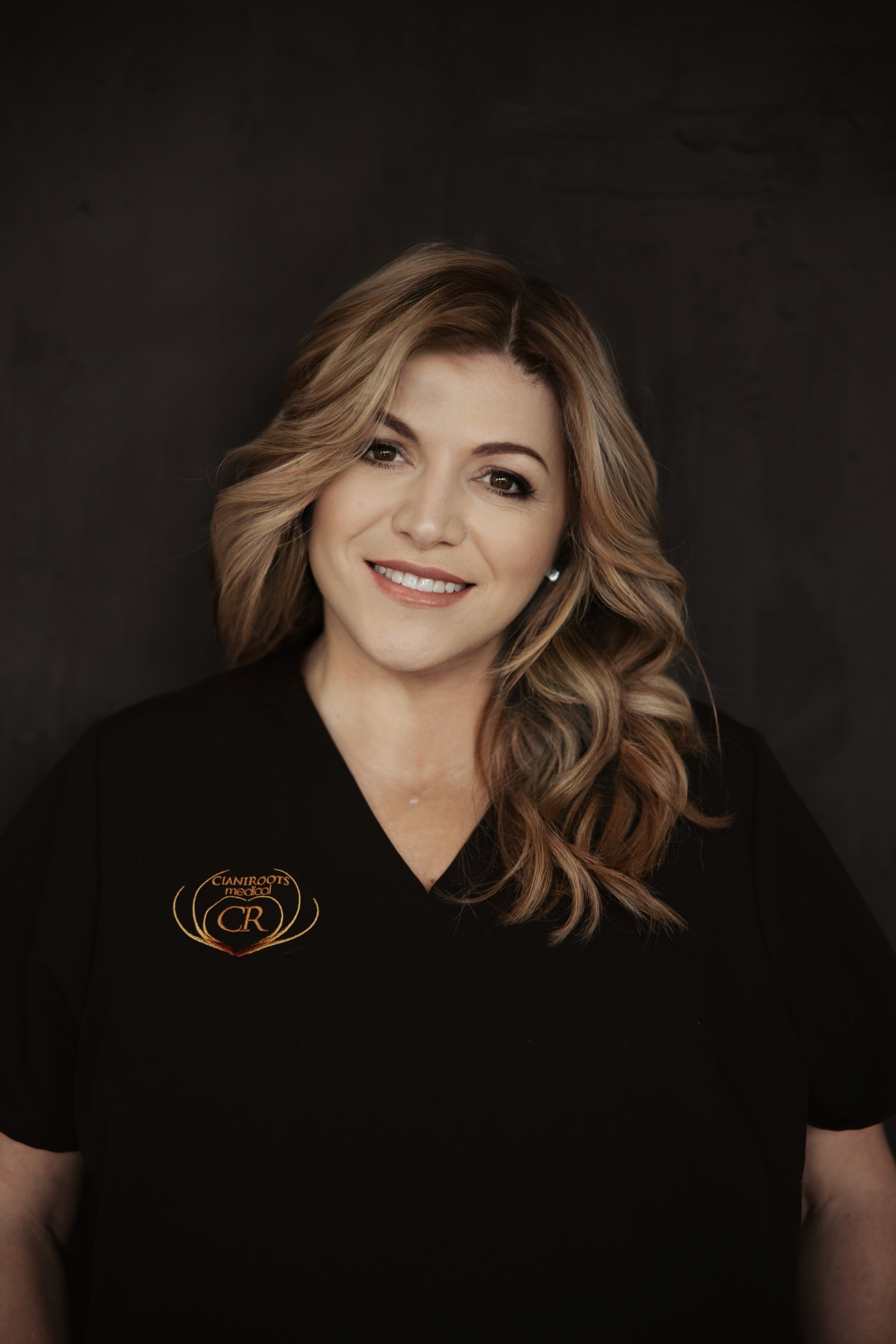
Adriane McDonald BSN,RN
Adriane McDonald, BSN, RN, is a hair restoration specialist with nearly 40 years of experience working with men and women experiencing hair loss and thinning. As the Founder and Practice Director of Ciani Roots Medical, she works alongside the practice’s Medical Director to provide personalized hair restoration, scalp health, regenerative therapies, and advanced skin rejuvenation.
Her approach combines extensive hands-on experience with detailed scalp analysis, medical collaboration, and individualized treatment planning. Adriane is currently completing advanced training toward certification in trichology, further expanding her expertise in hair and scalp health.
Disclaimer
This content is provided for general educational and informational purposes only and is not intended to serve as medical advice, diagnosis, or treatment. Individual needs, treatment recommendations, and results vary. A consultation and appropriate evaluation are necessary to determine which treatment options may be suitable for you. Viewing or interacting with this content does not establish a healthcare professional-patient relationship with Ciani Roots Medical.
Individual results may vary, and no specific outcome can be guaranteed. Before-and-after images, testimonials, or treatment experiences represent individual results and should not be considered a guarantee of similar results.


