
Personalized skin rejuvenation matches treatment choices to your skin tone, texture, sensitivity, and specific concerns. A plan may also account for lifestyle and hormonal changes that influence how your skin looks and responds to care. The aim is healthier-looking skin with an approach suited to you, not a one-size-fits-all treatment.
It’s understandable to want clearer, smoother, or more even-looking skin while being cautious about irritation or treatments that don’t suit your needs. Skin tone, sensitivity, daily routines, and hormonal shifts can all shape which options are appropriate and how a care plan develops.
This article explains how rejuvenation treatments support skin renewal, why careful assessment matters for melanin-rich and sensitive skin, and how treatment planning can be tailored to your needs. You’ll also learn how skin analysis informs treatment choices and how changes in your skin may guide adjustments over time.
Key Takeaways
- Learn how skin tone, sensitivity, and pigment concerns can influence treatment selection and the pace of care.
- See how skin analysis and a personal consultation can help shape a plan around your skin’s condition and goals.
- Understand how different rejuvenation approaches support skin renewal, texture, tone, and firmness.
- Explore how lifestyle and hormonal changes can affect skin needs and why a care plan may evolve over time.
- Find out how Ciani Roots Medical’s LaseMD and regenerative therapy can fit into an individualized skin renewal plan.
Treatment considerations for melanin-rich and sensitive skin
Melanin-rich or sensitive skin calls for treatment choices shaped by pigment response, comfort, and the concern being addressed. In the United States, treatment costs depend on the treatment type, treated area, technology, and plan; an individualized price follows a quote request.
Benefits and Risks of Personalized Plans
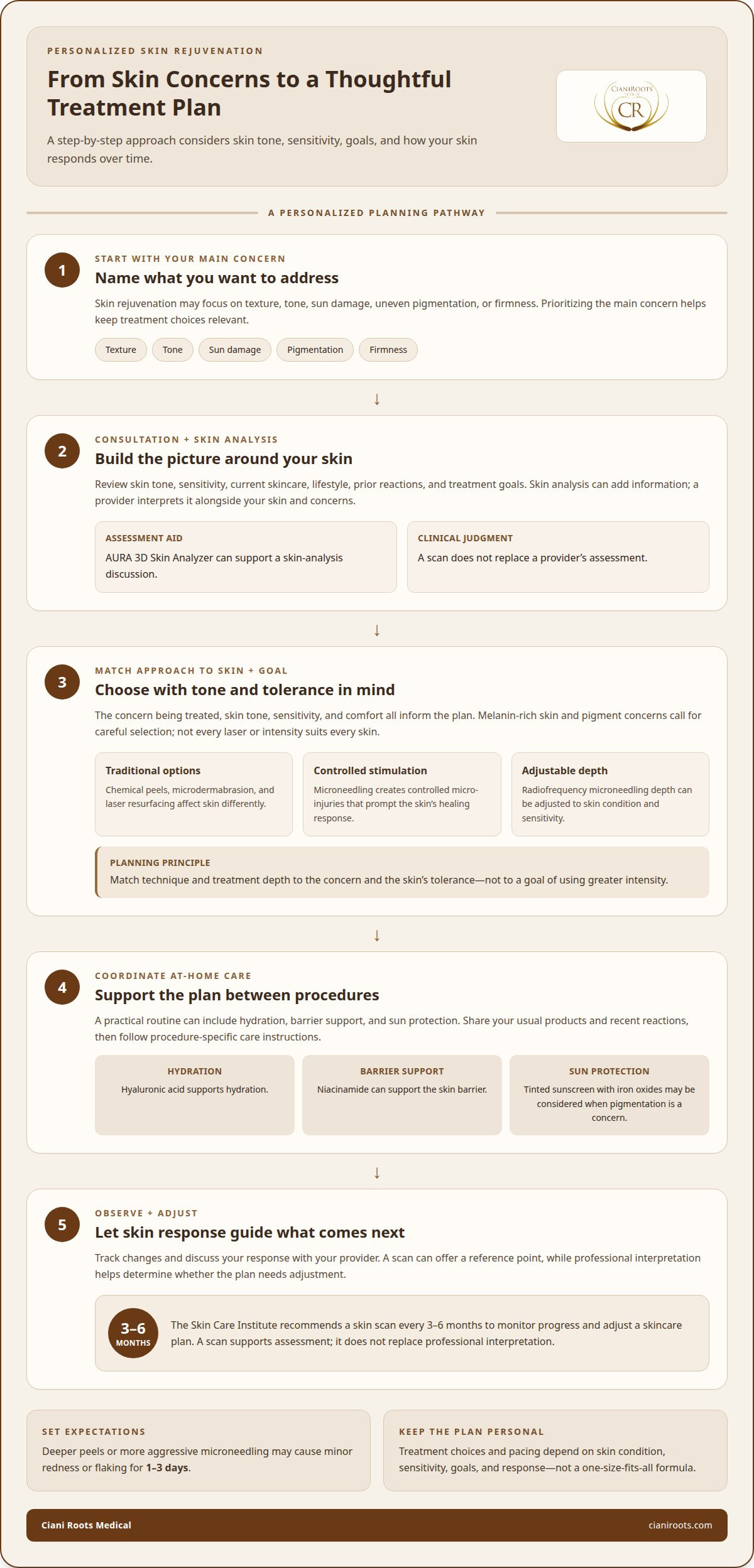
A personalized treatment plan matches procedures to skin characteristics, goals, and tolerance rather than applying one approach to every concern. This matters when sensitivity, uneven tone, and sun damage overlap, because a treatment aimed at one issue may not suit another. A measured plan can prioritize the main concern and guide adjustments as the skin responds. Deeper peels or more aggressive microneedling may cause minor redness or flaking for 1-3 days.
Treatment Goals and Traditional Options
Skin rejuvenation can address texture, tone, sun damage, or uneven pigmentation. Traditional options include chemical peels, microdermabrasion, and laser resurfacing, each of which affects the skin differently. The concern you want to address helps determine which approach belongs in a plan. For example, surface texture and melasma call for different considerations. Naming your primary concern first keeps treatment choices relevant and avoids combining procedures without a clear purpose.
Technology-Assisted Assessment and Treatment
Technology can document skin concerns and inform treatment selection, but an image or scan does not replace a provider’s assessment. AI skin analysis can generate assessment data quickly and offer a non-invasive way to support planning. A provider interprets those findings alongside your skin tone, sensitivity, and treatment goals. A scan adds information; clinical judgment connects it to an appropriate approach.
Melanin-Rich Skin, Sensitivity, and Pigment Concerns
For melanin-rich skin, pigment concerns such as melasma call for careful treatment selection and attention to sun exposure. Gentler, pigment-safe laser approaches may be considered, rather than assuming every laser suits every skin tone. Sensitivity also shapes the plan: the provider considers current irritation, past reactions, and the concern being treated. These factors help determine whether a gentler approach or a different treatment category is more suitable.
Radiofrequency Microneedling and Treatment Depth
Radiofrequency microneedling combines controlled needle penetration with radiofrequency energy to reach deeper skin layers and support tightening. Adjustable devices allow treatment depth to vary with skin condition and sensitivity. That flexibility matters when choosing how much stimulation a specific area may tolerate. The plan should match depth and technique to your concerns, not treat adjustable settings as a reason to use greater intensity.
How Does Skin Rejuvenation Work to Restore Youthful Skin?
Skin rejuvenation uses selected procedures and skincare to address concerns such as texture, tone, pigmentation, and firmness. A consultation connects your goals with your skin condition, sensitivity, daily habits, and treatment preferences.
Consultations and Personalized Skincare Regimens
A personalized consultation reviews your skin concerns, current skincare, sensitivity, lifestyle, and goals to shape a suitable plan. This matters because procedures and products should work together, not compete with your skin’s needs.
For example, a plan for uneven pigmentation may prioritize tone, while one for rough texture may focus on surface renewal. Microneedling creates controlled micro-injuries that prompt the skin’s healing response and support collagen production. Radiofrequency or ultrasound procedures can support collagen and elastin production, which contribute to firmness. A consultation connects each option to a specific goal.
Skin analysis can provide a useful reference point for that discussion. The Skin Care Institute recommends a skin scan every 3-6 months to monitor progress and adjust a skincare plan. A scan supports assessment; it doesn’t replace professional interpretation of skin condition and response.
Lifestyle Habits and At-Home Care
At-home care is the daily routine that supports treatment goals between procedures. Consistent skincare helps you track changes over time and gives your skin steady, simple care.
A practical routine can include hydration, barrier support, and sun protection. Hyaluronic acid supports hydration, while niacinamide can support the skin barrier and brighten its appearance. Tinted sunscreen with iron oxides may be considered in daily skincare recommendations, especially when pigmentation is a concern. The right combination depends on your skin’s sensitivity and the plan’s focus.
Before treatment, share your usual products, recent reactions, and main concerns during the consultation. Afterward, follow the care instructions for your procedure and use a barrier-safe routine if redness or sensitivity is an issue. This aligns at-home skincare with treatment and helps avoid unnecessary irritation.
Tailoring Plans to Skin Type, Age, and Goals
A tailored plan matches procedures and skincare to skin type, age-related changes, and desired outcomes. The same treatment may not suit every concern or stage of skin change.
Collagen production can change over time, which may be one factor to discuss when considering skin firmness. These changes can inform a discussion about firmness, but age alone doesn’t determine treatment. A plan also considers tone, texture, sensitivity, pigmentation, and lifestyle. For example, someone focused on clarity may need a different approach from someone concerned about laxity.
Products can complement procedures when they address a clear need. Peptides support collagen production, while hydration-focused ingredients such as hyaluronic acid can serve a different role. For guidance grounded in your skin’s condition and goals, book a skin analysis to discuss an individualized plan.
Personalizing skin care with a dermatologist
A dermatologist can recommend skincare products and practices based on your skin, concerns, and goals. At an appointment, explain what matters most to address, such as texture, pigmentation, or changes in facial volume. A useful discussion connects those priorities with skin condition and sensitivity, then explains how each option fits the plan. This context is more helpful than choosing procedures by trend or name alone.
To find a qualified dermatologist or licensed provider near you, start with an appointment that includes an assessment of your skin and a clear discussion of your goals. The provider should explain the reasoning behind proposed procedures, how they relate to your concerns, and what care may support them. Ask how the plan can be adjusted for sensitivity or changes in your skin. Clear, individualized explanations help you understand the approach before deciding.
Matching procedures to the concern
Different concerns call for different conversations. Chemical peels are one skin rejuvenation option, while dermaplaning removes dead skin cells and fine vellus hair from the skin’s surface. The procedure’s name alone doesn’t tell you whether it suits your skin. The appointment should connect the option to a specific goal, such as improving the appearance of uneven tone or refining surface texture.
For example, an assessment may distinguish pigmentation from texture concerns, even when both affect the same area. That matters because a plan designed around one goal may not address the other. Discuss which change matters most to you and how the proposed procedure fits that priority.
Dermal fillers and volume restoration
Dermal fillers may come up in an aesthetic discussion when facial volume is a concern. Their role differs from treatments aimed at surface texture or pigmentation, so the plan should clarify the intended goal. Ask how the proposed approach relates to the area being treated and fits alongside other skincare. The discussion should keep the desired visible change specific and realistic.
Dermaplaning and everyday skin care
Dermaplaning addresses the skin’s surface by removing dead cells and fine vellus hair. A dermatologist can help determine whether this approach fits your skin and broader goals. Your skincare plan may also include products and practices suited to your needs. For personalized skin rejuvenation, describe your current products, sensitivities, and the changes you hope to see.
Age can provide context, but it isn’t the only consideration. One example plan addresses early signs of aging and mild sun damage for a 35-year-old; another considers deeper wrinkles and hyperpigmentation for someone in their 50s. These examples show why an appointment should focus on actual skin concerns, not age alone. The dermatologist’s recommendations can then align procedures and daily care with those priorities.
How customized facials are tailored to skin needs
A customized facial is a skin-care approach adapted to concerns such as texture, hydration, or visible signs of aging. Facial treatments are a broad category, and they aren’t the same as medically directed skin rejuvenation procedures. For any skin-care plan, an assessment considers the skin’s condition, sensitivity, and goals. Dryness, for example, may call for a different approach than uneven tone.
Assessment connects a concern with an appropriate treatment category. A skincare professional may consider how your skin looks and feels, current products, and any reported sensitivity or past reactions. If uneven tone is your main concern, the plan may differ from one focused on rough texture. This keeps each step tied to a clear goal rather than combining techniques without reason.
In general skincare settings, facial protocols may combine techniques, but the choice should be guided by assessment. Chemical peels address surface concerns, while microneedling creates controlled micro-injuries that prompt the skin’s healing response and support collagen production. These are distinct procedures, not interchangeable facial steps. Skin condition and sensitivity influence whether each approach is suitable.
Most customized facial sessions last 30-60 minutes, depending on the techniques used. That range describes general facial sessions, not a medically directed laser treatment. Session length alone doesn’t indicate intensity or expected results. The selected methods and the person’s needs shape the appointment. A routine focused on hydration may differ from one involving surface renewal.
General facial-treatment schedules also vary with their goals. Fine-line treatments may be scheduled every 4-6 weeks initially, while hyperpigmentation treatments may be spaced every 3-4 weeks for a series. Texture and tone treatments may begin every 4-8 weeks, then shift to maintenance every 2-3 months. These intervals describe customized facial treatments broadly, not a schedule for every rejuvenation procedure.
Possible changes develop on different timelines. A glow and improved clarity may appear in 2-4 weeks; smoother texture and tone may take 3-6 weeks. Visible softening of fine lines may take 4-8 weeks, while significant fading of hyperpigmentation may take 6-12 weeks. These ranges describe possible timelines for customized facial treatments and illustrate why progress is assessed against the original concern.
Skin response can guide future decisions. Deeper peels or more aggressive microneedling may cause minor redness or flaking for 1-3 days. Observing that response helps inform choices about future technique and intensity. Medically directed skin rejuvenation, such as LaseMD with regenerative therapy, is a distinct option from a general spa facial; its suitability depends on an individualized consultation and skin analysis.
Personalized plans for skin tone, lifestyle, and hormonal changes
A thoughtful skin plan considers tone and texture, lifestyle, hormonal changes, and your priorities. These factors shape which concerns to address first and how treatment intensity fits your needs. Fine lines, wrinkles, uneven tone, and sensitivity may overlap, but they don’t necessarily call for the same approach. The key is matching care to your skin, not following a standard schedule.
Skin tone and ethnicity matter when choosing treatments, especially for melanin-rich skin. Pigment response and sensitivity are important considerations in deciding which procedure may suit you. Lifestyle matters, too. If you spend substantial time outdoors, your plan should give sun protection and ongoing skincare appropriate attention. If your routine is demanding, a simpler plan may be easier to maintain. These details connect treatment goals with daily life.
Hormonal changes can also affect what your plan needs to address. Rather than treating skin concerns as fixed, a personalized approach accounts for changes you report and reassesses priorities as your skin responds. For example, if pigmentation becomes the main concern while fine lines remain stable, the plan can focus on tone before revisiting other goals. This keeps treatment choices relevant without assuming every concern must be addressed at once.
Age can offer context, but the skin’s condition and goals guide the plan. One example for a 35-year-old with early collagen loss includes gentle laser treatments once a month and chemical peels once every three months to maintain clarity. That example illustrates how treatment type and timing can be paired with specific goals. It isn’t a universal schedule; skin tone, sensitivity, lifestyle, and response all influence what is appropriate.
Non-invasive options may suit people who prefer a less intensive approach, while other concerns may lead to discussion of different procedures. The decision should reflect your desired change, treatment tolerance, and how your skin responds. A plan for smoother texture, for instance, may differ from one focused on uneven tone. Tracking goals over time makes it easier to discuss what’s changing and what to address next.
At a consultation, share changes in your routine, lifestyle, and skin concerns, including any hormonal shifts you’ve noticed. This information helps shape an individualized plan and gives the provider useful context for future adjustments. To discuss care tailored to your skin tone, lifestyle, and goals, EXPLORE YOUR OPTIONS.
Ciani Roots Medical: Skin Rejuvination with laseMD and regenerative therapy
In Vacaville and Alamo, Ciani Roots Medical offers Skin Rejuvination with LaseMD and regenerative therapy for people seeking care tailored to their skin concerns. A skin analysis with the AURA 3D Skin Analyzer can inform a discussion about tone, texture, and individual goals. Treatment planning begins with a consultation and skin analysis.
For those exploring a regenerative approach, Acorn Secretome is a personalized regenerative product created from the patient’s own stored cells and biology. It may be discussed as part of treatment planning without assuming a particular outcome. Care is individualized, not based on a standard treatment sequence.
Choose a Next Step That Fits Your Skin
Your next step doesn’t need to be choosing a procedure. Start with a conversation about what you want to address, what feels comfortable, and how your skin fits into your broader care goals. A personalized skin rejuvenation plan gives those priorities a thoughtful starting point, with treatment choices shaped around your needs.
Ciani Roots Medical offers Skin Rejuvination with laseMD and regenerative therapy, as well as Acorn Secretome, a personalized regenerative product created from your own stored cells and biology. The practice also offers CR signature regenerative hair loss treatments for people addressing hair concerns alongside skin goals. These are distinct care options, considered according to the concern being discussed.
Take the time to explore an approach that feels aligned with your priorities. EXPLORE YOUR OPTIONS and begin a conversation about the care that may suit you. A considered first step can help you move forward with greater clarity.
Frequently Asked Questions
Are the results from skin rejuvenation long-lasting?
How long changes remain visible depends on the concern, treatment, and ongoing skincare. Skin continues to change, so the result of one procedure shouldn’t be considered permanent. For example, someone addressing sun-related uneven tone may have different maintenance needs from someone focused on texture. Discuss how progress will be evaluated and what everyday habits can support your goals over time.
How does skin rejuvenation reduce wrinkles and fine lines?
Some rejuvenation approaches support the skin’s renewal processes or collagen production, which can soften the appearance of fine lines and wrinkles. The mechanism depends on the procedure. Microneedling, for example, prompts a healing response, while laser treatments use light-based energy to target skin concerns. The goal is to improve the appearance of skin, not make every line disappear. Treatment selection depends on your concern and skin characteristics.
How many sessions are typically needed for noticeable results?
The number of sessions varies with the concern, procedure, and how your skin responds. A single appointment may be part of a broader plan, especially when addressing concerns that develop over time. Rather than relying on a universal session count, clarify what change will be assessed and when. This makes it easier to understand whether the approach is progressing toward your goal.
How often should I get customized facial treatments for best results?
For general customized facial treatments, schedules vary by goal. Fine-line treatments may be planned every 4-6 weeks initially, while hyperpigmentation treatments may be spaced every 3-4 weeks for a series. Texture and tone treatments may begin every 4-8 weeks, then move to maintenance every 2-3 months. These are general schedules, not a recommendation for every person or medically directed skin procedure.
Which treatments are used for skin rejuvenation, including skincare, lasers, peels, and injectables?
Skin rejuvenation broadly includes at-home skincare and procedures such as laser treatments, chemical peels, and microneedling. Injectables are another category used in some aesthetic settings, but they’re distinct from topical care and resurfacing procedures. Each option has a different purpose and suitability. A treatment discussion should connect the approach to a specific concern, such as pigmentation, texture, or fine lines, rather than treating all options as interchangeable.
How do skin rejuvenation treatments compare in results, downtime, and longevity?
Procedures differ in the concerns they target, recovery, and how changes develop. A topical routine may support ongoing skincare, while a resurfacing procedure works through a different mechanism. Some treatments can involve temporary redness or flaking, depending on technique and intensity. Compare options by their intended goal, likely recovery needs, and maintenance approach. These factors give a clearer picture than treatment names alone.
What should I expect during a skin rejuvenation consultation and treatment plan?
Expect to discuss your main skin concerns, current products, sensitivities, past reactions, and desired changes. An assessment can inform a plan that explains the purpose of each selected option and how progress will be reviewed. For instance, mention if a product has caused irritation or if pigmentation is your priority. Understanding the proposed sequence and aftercare helps you make an informed decision.
What are the risks, side effects, and contraindications of skin rejuvenation treatments?
Risks and side effects depend on the procedure, its intensity, and your skin characteristics. Some treatments may cause redness, sensitivity, or flaking, while current irritation or past reactions may affect suitability. Share relevant skin history, products, and sensitivities during the consultation. This information helps shape treatment selection and aftercare. Follow the instructions provided for the procedure you receive.
Article by
Adriane McDonald BSN,RN
Adriane McDonald, BSN, RN, is a hair restoration specialist with nearly 40 years of experience working with men and women experiencing hair loss and thinning. As the Founder and Practice Director of Ciani Roots Medical, she works alongside the practice’s Medical Director to provide personalized hair restoration, scalp health, regenerative therapies, and advanced skin rejuvenation.
Her approach combines extensive hands-on experience with detailed scalp analysis, medical collaboration, and individualized treatment planning. Adriane is currently completing advanced training toward certification in trichology, further expanding her expertise in hair and scalp health.
Disclaimer
This content is provided for general educational and informational purposes only and is not intended to serve as medical advice, diagnosis, or treatment. Individual needs, treatment recommendations, and results vary. A consultation and appropriate evaluation are necessary to determine which treatment options may be suitable for you. Viewing or interacting with this content does not establish a healthcare professional-patient relationship with Ciani Roots Medical.
Individual results may vary, and no specific outcome can be guaranteed. Before-and-after images, testimonials, or treatment experiences represent individual results and should not be considered a guarantee of similar results.


