
The most intensive laser isn’t automatically the right choice for uneven texture. Laser resurfacing is a type of laser rejuvenation that removes or ablates the outer skin layer, while non-ablative treatments work beneath the surface to stimulate collagen without removing that layer. The right laser treatment for skin texture depends on the concern being addressed, your skin tone, and how much recovery time you can accommodate.
If you’re comparing options, it can be hard to know which differences matter most. Each approach balances correction, recovery, and pigmentation considerations differently, while collagen improvements develop as skin rebuilds. This guide compares ablative, non-ablative, and fractional approaches, explains how skin tone and downtime factor into treatment, and covers how sun protection and skin-care preparation support a plan.
Key Takeaways
- Ablative and non-ablative lasers work differently, so the best fit depends on the depth and type of texture or tone concern.
- Compare CO₂, erbium, and fractional approaches by their expected correction and recovery demands.
- Skin tone and pigmentation history are important considerations when weighing laser options and settings.
- Sun protection and thoughtful skin-care preparation are essential parts of planning for treatment and recovery.
- Use your priorities for downtime and the concerns you want to address to guide a personalized treatment discussion.
How Do Laser Treatments Improve Skin Texture and Tone?
Laser resurfacing can address uneven texture, fine lines, wrinkles, and some acne scars. The method depends on whether it removes outer skin layers or stimulates collagen beneath them. This distinction helps explain why more intensive options may involve longer recovery, while gentler approaches often work gradually.
Laser resurfacing is one type of laser rejuvenation, not a name for every laser treatment. The average cost of resurfacing depends on the treatment area, laser type, intensity, and number of sessions; pricing is provided after a quote request. These factors also shape how a plan fits your skin goals and recovery preferences.
Ablative Laser Resurfacing
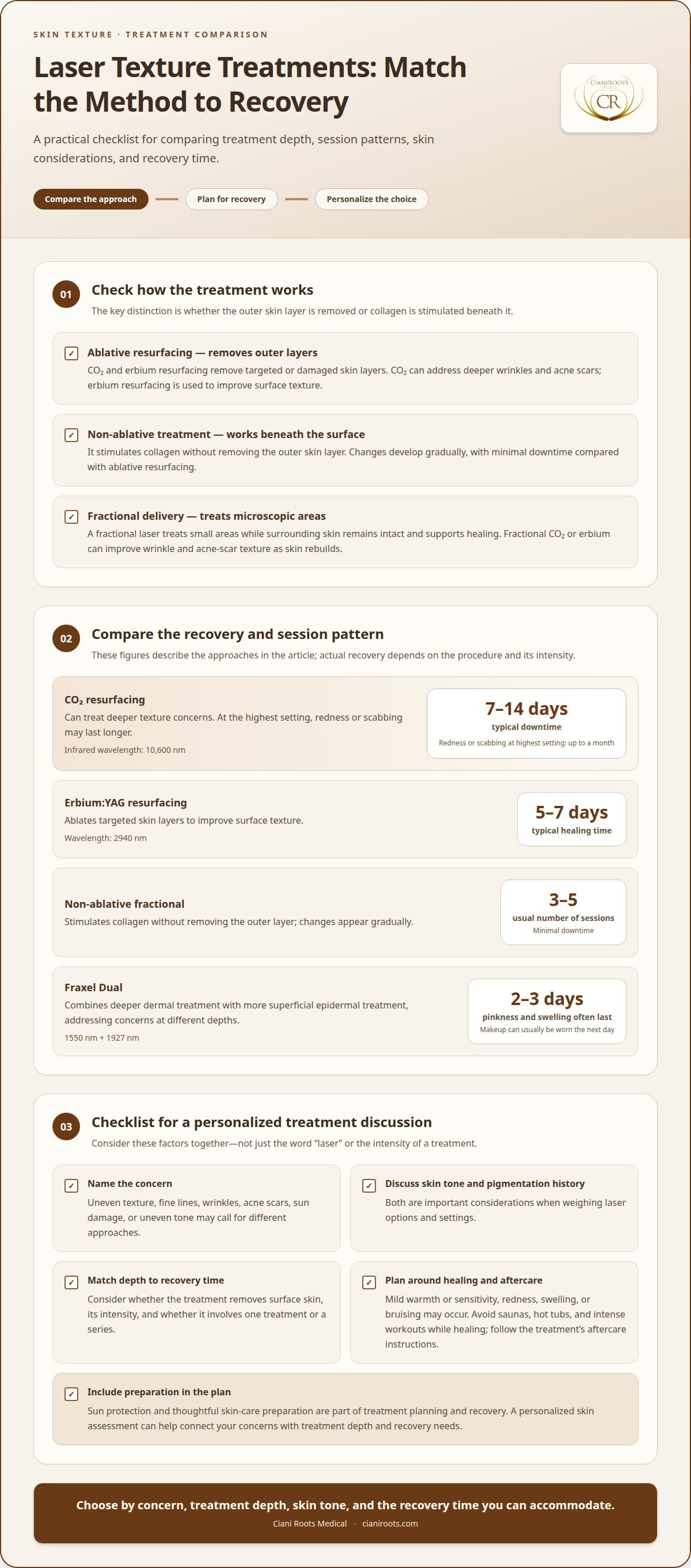
Ablative resurfacing removes outer layers of damaged skin, prompting the skin to rebuild and stimulate collagen. CO₂ lasers vaporize these layers using short bursts of high-energy light and can treat deeper wrinkles and acne scars. This approach may offer more dramatic correction, but recovery is a significant consideration. CO₂ resurfacing typically involves 7–14 days of downtime, and redness or scabbing at the highest setting may last up to a month.
Non-Ablative Laser Resurfacing
Non-ablative lasers stimulate collagen beneath the surface without removing the outer skin layer. Changes appear gradually, with minimal downtime compared with ablative resurfacing. Non-ablative fractional treatment usually requires 3–5 sessions, rather than the single treatment often used for non-fractional ablative resurfacing. The right laser treatment for skin texture depends on the concern, desired pace of change, and recovery time you can accommodate.
Laser Rejuvenation
Laser rejuvenation is the broad category; resurfacing specifically removes or ablates the outer skin layer. Non-ablative treatments can also rejuvenate skin by stimulating collagen without removing that layer. Microneedling, chemical peels, and radiofrequency are separate approaches that address texture differently. Compare options by the concern, treatment depth, skin tone, and recovery priorities, not just by the word “laser.”
| Option | How it works | Typical course or recovery |
|---|---|---|
| Ablative CO₂ | Removes damaged outer layers | Often one treatment without fractional delivery; 7–14 days of downtime is typical |
| Erbium resurfacing | Ablates skin to improve texture | Typical healing time is 5–7 days |
| Non-ablative fractional | Stimulates collagen without removing the outer layer | Usually 3–5 sessions, with minimal downtime |
| Laser rejuvenation | Umbrella term for laser approaches | Varies by the method used |
Fractional CO₂ or erbium treatment can soften wrinkles and improve acne-scar texture as skin rebuilds. The degree of change depends on treatment depth and skin response. A consultation can help tailor laser treatment for skin texture to your concern, skin tone, and recovery needs.
Choose an approach by matching the depth of your concern to the recovery time you can accommodate.
Choosing a laser based on skin concerns and recovery needs
Match the laser to the concern, treatment depth, skin tone, and recovery time you can accommodate. A fractional laser treats microscopic areas, while the surrounding skin supports healing.
A plan for sun damage or uneven tone may differ from one targeting deeper scars or wrinkles. Consider the procedure’s intensity, whether it removes surface skin, and whether the approach involves one treatment or a series. These factors shape both recovery and how collagen develops afterward.
Erbium:YAG Treatment and Recovery
Erbium:YAG resurfacing uses a 2940 nm wavelength to remove targeted skin layers and improve surface texture. Its typical healing time is 5–7 days, making recovery an important comparison with deeper CO₂ resurfacing. The choice depends on the concern’s depth and how much recovery time fits your schedule, rather than wavelength alone.
CO₂ resurfacing uses infrared light at 10,600 nm and can address more pronounced texture concerns. Fractional delivery treats small areas, supporting collagen and healing while leaving surrounding skin intact. Recovery varies with treatment intensity and area; CO₂ resurfacing typically involves 7–14 days of downtime. Discuss the planned depth and aftercare before scheduling around work or events.
Fraxel Dual combines 1550 nm light for deeper dermal treatment with 1927 nm for more superficial epidermal treatment. This pairing can address concerns at different depths, including textural changes and sun damage. Pinkness and swelling often last two or three days, and makeup can usually be worn the next day. Collagen changes develop gradually as skin rebuilds.
Common Post-Treatment Effects
After cosmetic laser treatment, mild warmth or sensitivity, redness, swelling, or bruising can occur. These effects usually fade within a few hours to a few days. How long they last depends on the procedure and its intensity, so plan around your own schedule rather than assuming every laser has the same after-effects.
While healing, avoid saunas, hot tubs, and intense workouts. Follow your treatment’s aftercare instructions, and give your skin time to recover before resuming activities that increase heat or irritation. For example, schedule more intensive resurfacing away from an important event, since redness or sensitivity may affect your plans.
At Ciani Roots, Pigment, Tone, Texture & Skin Renewal Treatments connect skin concerns with a personalized analysis and treatment plan. A skin assessment can help clarify which concerns to prioritize and how recovery needs fit your options.
Choosing a laser based on skin tone and downtime
Skin tone and recovery tolerance both shape the choice between fractional CO₂ and erbium lasers. The treatment goal matters too: a plan for acne scars may differ from one focused on facial discoloration or fine lines.
Skin-Tone-Based Laser Choices
Skin tone is one factor when choosing between CO₂ fractional and erbium resurfacing. The right approach also depends on the depth of the concern and how much downtime you can accept. A skin analysis can help connect those factors to a treatment plan, especially when several options could address the same concern.
Start by naming the change you want to address. Acne scars, for example, involve a different texture concern than brown spots from sun damage. A fractional laser creates treatment zones in small areas, while the device and intensity determine how treatment is delivered. Skin tone informs that choice alongside your goal, rather than serving as a stand-alone decision.
Ask how the proposed treatment balances correction and recovery. Ablative resurfacing removes outer skin layers and can provide more dramatic correction, but generally requires more recovery than non-ablative approaches. Non-ablative treatment stimulates collagen beneath the surface, with gradual improvement and minimal downtime. These are different trade-offs, not interchangeable settings for every skin concern.
Downtime-Based Laser Choices
Downtime-based planning begins with the calendar. Full recovery after skin resurfacing can take 1–4+ weeks, depending on technique. A fractional approach, a more intensive ablative procedure, and a non-ablative series each create different recovery demands. Consider work, social plans, and the time available for aftercare before choosing a treatment window.
Compare the options by the result you prioritize and the recovery you can manage:
- Deeper texture concerns: Ablative resurfacing may offer more dramatic correction, with more recovery to plan around.
- Gradual improvement: Non-ablative laser treatment stimulates collagen without removing the outer layer and generally involves minimal downtime.
- Targeted treatment: Fractional delivery addresses small areas, which can support healing while treating specific concerns.
A dermatologist can develop a custom plan through an in-person or virtual consultation when several treatments may fit. Bring a clear example of your main concern, such as an acne scar or uneven facial tone, and explain your recovery limits. That discussion helps weigh skin tone, treatment depth, and downtime together, rather than choosing a laser by name alone.
Pre- and post-treatment pigmentation care
Pigmentation care starts before a cosmetic laser procedure and continues as skin heals. Sun exposure, tanning, and irritating products can complicate preparation, so plan both your treatment date and skin-care routine in advance.
Before laser treatment
For cosmetic laser treatment, avoid direct sun exposure and tanning for four to six weeks before the procedure. Use broad-spectrum sunscreen with SPF 30+ before treatment, and follow the preparation plan provided for your skin. If retinoids, exfoliants, or harsh products are part of your routine, pause them a few days before the appointment as advised.
Keep preparation simple and consistent. For example, avoid adding a new exfoliant while preparing for laser skin resurfacing. Mention products that irritate your skin during the treatment discussion. This helps align the planned approach with your current routine and the pigmentation concern being addressed.
After treatment and pigmentation protection
After laser resurfacing, use sunscreen with at least SPF 30 every day. Broad-spectrum SPF 30+ protection before and after cosmetic laser treatment helps limit sun exposure during the care process. Continue avoiding direct sun and tanning for four to six weeks before and after treatment, as advised for cosmetic laser procedures.
Keep post-treatment care gentle while your skin heals. Retinoids, exfoliants, and harsh products can irritate sensitive skin, so follow your treatment-specific instructions before restarting them. This matters after ablative resurfacing, when outer skin layers have been removed, and after less intensive procedures, when the surface remains intact. Don’t add intense exfoliation to your routine simply because your skin feels ready.
Matching laser type to the concern
Pigment laser treatments target excess pigment associated with dark spots, sun damage, and uneven tone. Pico toning is another approach for pigment concerns; its full benefits take about six weeks to appear. That gradual timeline differs from the immediate recovery period, so assess tone changes after your skin has had time to respond.
Vascular lasers address a different concern. They target structures beneath the skin to reduce visible blood vessels, including spider veins and facial redness. A pigment-focused laser and a vascular treatment aren’t interchangeable, even when discoloration looks similar. The type and location of the color change help guide the approach.
Laser resurfacing can also encourage collagen production as skin rebuilds, but pigment care remains central before and after the procedure. A history of pigmentation changes, planned sun exposure, and your existing skin-care routine all shape preparation. Share those details during your consultation, then follow the recommended sun and product precautions through recovery.
How laser treatments improve skin texture and tone
Laser rejuvenation can address texture and tone through different targets. Resurfacing removes damaged outer layers, while non-ablative light stimulates collagen beneath the surface. That distinction matters: acne scars, fine lines, and brown sun spots involve different skin concerns, even when they appear together.
For rough texture or deeper wrinkles, ablative resurfacing removes outer skin layers. A CO₂ laser vaporizes those layers with short bursts of high-energy light. As skin rebuilds, collagen changes develop gradually. This approach may offer more dramatic correction than lighter laser rejuvenation, alongside more recovery. Fractional delivery treats small areas, supporting collagen while leaving surrounding skin intact.
Non-ablative treatment takes a different route. It stimulates collagen without removing the outer layer, so improvement is gradual and downtime is typically minimal. This may suit someone prioritizing a gentler approach or preferring to avoid the recovery associated with ablative resurfacing. The trade-off is that non-ablative fractional treatment usually involves a series, rather than the single treatment often used for non-fractional ablative resurfacing.
Tone concerns need a different target. Pigment lasers focus on excess pigment associated with dark spots, sun damage, and uneven skin tone. Vascular lasers target structures beneath the skin to reduce visible blood vessels, including facial redness and spider veins. These approaches address color changes, while resurfacing focuses on damaged surface layers and texture. Identifying whether a spot looks brown or red helps clarify the concern.
Expect change on different timelines. Some people notice brighter, smoother skin a few days after laser treatment, while collagen improvements appear gradually as skin rebuilds. Pico toning’s full benefits take about six weeks to appear. For acne scars, deeper wrinkles, or uneven tone, the planned treatment depth and method affect both response and recovery.
- Texture: Consider whether the concern is a shallow rough area, fine lines, or deeper acne scarring.
- Color: Distinguish brown pigment from visible redness, since each calls for a different target.
- Recovery: Weigh more intensive resurfacing against gradual collagen stimulation and lighter downtime.
The clearest takeaway is to match the laser target to the concern, then weigh correction against recovery. A skin analysis can help organize those priorities into a personalized plan. To explore skin texture and tone options, EXPLORE YOUR OPTIONS.
Ciani Roots Medical: CR signature with regenerative hair loss treatments
Ciani Roots Medical can help translate concerns about skin tone, texture, and recovery into a personalized treatment discussion. For skin concerns, Pigment, Tone, Texture & Skin Renewal Treatments and skin rejuvenation with LaseMD and regenerative therapy may be relevant options to discuss after skin analysis.
AURA 3D skin analysis can support a more informed conversation about your skin priorities. If regenerative therapy is considered, Acorn Secretome is a personalized regenerative product created from your own stored cells and biology. Your goals and skin assessment guide whether these approaches fit your plan; they aren’t a substitute for choosing a laser based on its specific resurfacing method and recovery needs.
Contact Ciani Roots Medical to discuss your skin concerns and arrange a skin analysis.
Choose a next step that fits your skin goals
A thoughtful plan begins with clarity about what you want to change and what feels manageable in your routine. Before discussing laser treatment for skin texture, consider which concern matters most, how you feel about recovery, and what questions you want answered. Bringing those priorities to a skin consultation can focus the conversation and help shape an approach around your needs.
There’s no need to decide on a device before understanding your options. A personalized discussion can help you explore how skin analysis and treatment planning may fit together, with space to talk through your goals and concerns. Take the next step when you feel ready: EXPLORE YOUR OPTIONS.
With a clear plan and personalized guidance, you can move forward at a pace that feels right for you.
Frequently Asked Questions
What is skin resurfacing?
Skin resurfacing aims to refresh the visible surface and improve concerns such as unevenness, dullness, or fine lines. The term describes a goal, not one specific device or procedure. A plan for rough cheek texture, for example, may differ from one focused on scattered discoloration. Clarifying your main concern makes the treatment discussion more specific.
First, what is laser resurfacing?
Laser resurfacing uses controlled light energy to treat selected skin concerns. The laser type, treatment area, and settings shape how the procedure is delivered. Before an appointment, note where the concern appears and whether it is mainly texture, a visible spot, or redness. Clear observations help focus the conversation on the area and outcome that matter most to you.
How do I know which laser service is right for my skin goals?
Write down your main goal and practical limits before discussing options. Note whether you want to soften a particular acne scar, improve overall tone, or address several concerns together. Also consider upcoming events and how you feel about visible redness during recovery. A skin analysis can connect these priorities with a personalized plan rather than a device chosen by name alone.
So, which laser wins?
The best fit is the approach that matches your specific concern and priorities, not necessarily the most powerful device. A useful comparison considers the treatment target, expected recovery, and whether the plan involves one procedure or a series. If you have both texture and pigmentation concerns, ask how the plan prioritizes them and whether they can be addressed together or in stages.
What routines support skin healing after cosmetic laser therapy?
Keep your routine simple and follow the specific instructions for your procedure. Record the products you use, especially retinoids, exfoliants, and stronger active ingredients, so your care plan can account for them. Avoid adding new products while your skin recovers. If you’re unsure when to resume an item, follow the post-treatment guidance you were given rather than restarting it based only on appearance.
What are the advantages of Erbium lasers?
Erbium lasers operate at a 2940 nm wavelength and are used for skin resurfacing. That wavelength provides a concrete point of comparison when discussing devices, but it doesn’t determine the right choice by itself. Ask how the proposed treatment depth relates to your concern, which area will be treated, and what recovery plan follows. Those details make the comparison more relevant than the laser name alone.
Which laser treatments improve skin texture, acne scars, and fine lines?
Laser options can address these concerns, but the pattern and depth of the concern matter. A sharply defined acne scar, for example, may call for a different discussion than fine lines spread across the face. Bring a clear description of the area and your priorities to a skin analysis. This helps identify the main target and shape a treatment plan around your goals.
How do ablative and non-ablative laser resurfacing compare for skin texture?
Compare approaches by asking what each is intended to change, how the procedure fits your skin goals, and what care involves afterward. Clarify whether the approach treats the entire area or selected zones, and whether follow-up sessions are part of the plan. These practical questions help you understand the proposed process without judging suitability by the treatment label alone.
Article by
Adriane McDonald BSN,RN
Adriane McDonald, BSN, RN, is a hair restoration specialist with nearly 40 years of experience working with men and women experiencing hair loss and thinning. As the Founder and Practice Director of Ciani Roots Medical, she works alongside the practice’s Medical Director to provide personalized hair restoration, scalp health, regenerative therapies, and advanced skin rejuvenation.
Her approach combines extensive hands-on experience with detailed scalp analysis, medical collaboration, and individualized treatment planning. Adriane is currently completing advanced training toward certification in trichology, further expanding her expertise in hair and scalp health.
Disclaimer
This content is provided for general educational and informational purposes only and is not intended to serve as medical advice, diagnosis, or treatment. Individual needs, treatment recommendations, and results vary. A consultation and appropriate evaluation are necessary to determine which treatment options may be suitable for you. Viewing or interacting with this content does not establish a healthcare professional-patient relationship with Ciani Roots Medical.
Individual results may vary, and no specific outcome can be guaranteed. Before-and-after images, testimonials, or treatment experiences represent individual results and should not be considered a guarantee of similar results.


