
Menopause hair loss may show up as a widening part, less fullness around the crown or temples, or more shedding than usual. Changes in estrogen and progesterone can make androgens more dominant, affecting hair growth and density. The change can feel unsettling, but recognizing its pattern is a helpful first step.
You may suspect hormones are involved, but menopause isn’t the only possible contributor. Thyroid imbalance, anemia, stress, and other factors can also affect hair, so a useful first step is understanding what may be driving the change.
This article explains how menopause can affect the hair-growth cycle, what common thinning patterns look like, and when a change may merit assessment. You’ll also find gentle hair-care adjustments and medical treatment options, including how an individualized evaluation can guide decisions. The goal is to help you understand what may be happening and which options may suit your needs, without assuming one solution fits everyone.
Key Takeaways
- Notice whether thinning is gradual or shedding has increased, and where changes appear, such as the part, crown, or temples.
- Hormonal shifts can contribute to hair changes, but other health factors may also play a role in thinning or shedding.
- Gentler styling and hair-care habits can help reduce avoidable stress on fragile hair, though they may not address every underlying cause.
- Medical options, including topical treatments and prescription medicines, differ in how they work and should be considered in light of individual health needs.
- A scalp assessment can help clarify likely contributors and guide a personalized plan that may include medical or regenerative hair-restoration options.
Hormone therapy and prescription medicines
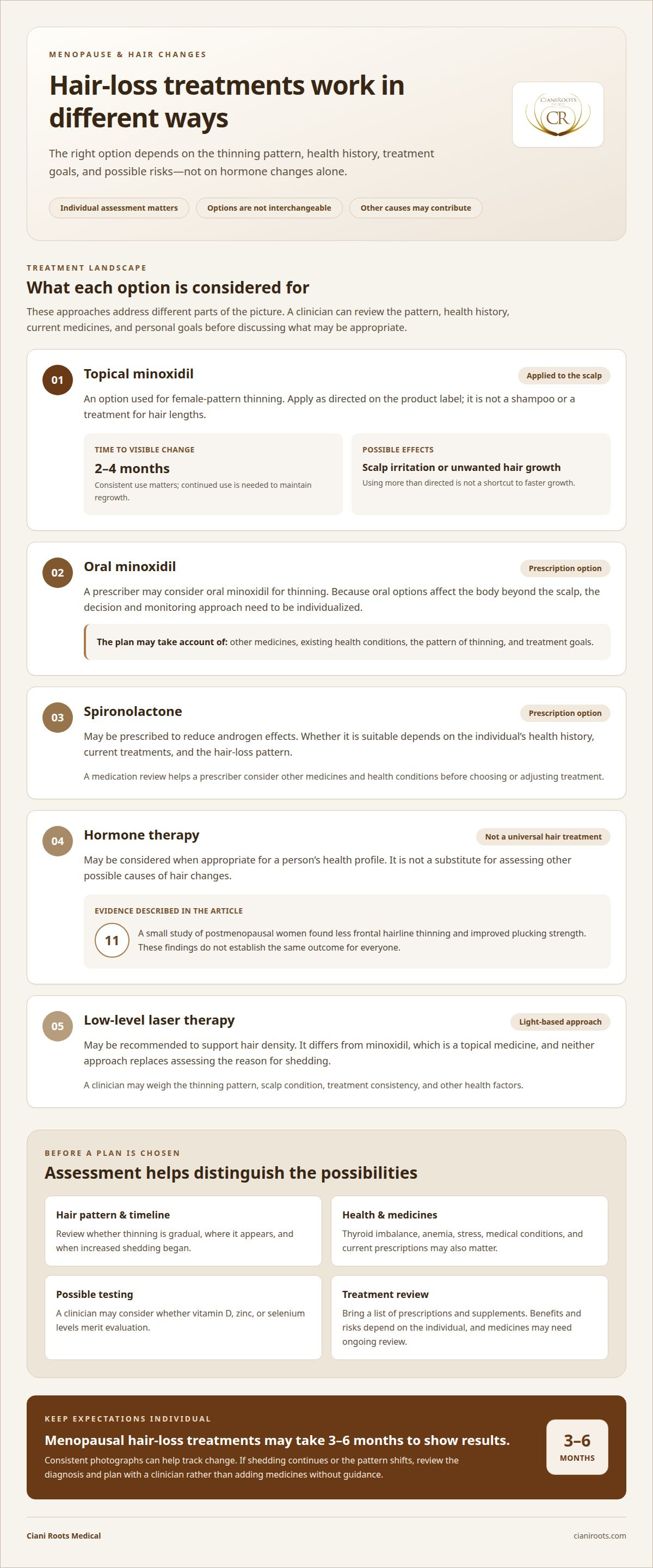
Hormone therapy and hair-loss medicines address different parts of the picture. Menopause changes hormone levels, but treatment decisions also depend on overall health and individual risks. Hormone therapy may be considered when appropriate for a person’s health profile. It isn’t a universal hair treatment or a substitute for assessing other possible causes.
Evidence specific to hair remains limited. A small study involving 11 postmenopausal women found less frontal hairline thinning and improved plucking strength with hormone replacement therapy. Those findings are encouraging, but they don’t establish the same outcome for every person. A clinician considers menopausal symptoms, health history, and risks before weighing hormone therapy.
Prescription options for thinning
Topical minoxidil is one treatment used for female-pattern thinning. A prescriber may also consider oral minoxidil. Spironolactone may be prescribed to reduce androgen effects. These medicines work differently, so the choice depends on the thinning pattern, health history, and treatment goals. Because oral options affect the body beyond the scalp, individualized prescribing matters.
Medication plans aren’t interchangeable. A prescriber considers other medicines, existing health conditions, and whether the pattern suggests female-pattern hair loss. Increased shedding can also be linked to thyroid imbalance, anemia, or stress. A targeted assessment helps distinguish these possibilities instead of assuming hormones explain every change.
Personalized oral medication plans
For oral prescription medications, personalization means matching the medicine and monitoring approach to the individual. A clinician reviews the shedding timeline, scalp pattern, medical history, and current treatments. They may also consider whether testing vitamin D, zinc, or selenium levels is appropriate. These details help guide decisions; supplements aren’t a substitute for identifying the cause.
Hormone therapy and hair-loss medication shouldn’t be started or adjusted solely to encourage hair growth. Benefits and risks depend on the individual, and medicines may need ongoing review. Bring a list of current prescriptions and supplements, including vitamins, to a medication discussion. This helps the clinician assess possible interactions and tailor the plan.
Allow time to assess a treatment. Menopausal hair-loss treatments typically take 3-6 months to show results. Tracking changes with consistent photographs can help distinguish gradual progress from day-to-day variation. If shedding continues or the pattern changes, the next step is reviewing the diagnosis and plan, rather than adding medicines without guidance.
What is hair loss in women?
Hair loss in women describes more than a temporary increase in loose strands. Normal shedding is part of the growth cycle, with 50 to 100 hairs typically shed each day. A change becomes more noticeable when shedding increases, strands grow finer, or the part gradually widens. The pattern and timeline help distinguish diffuse shedding from gradual female-pattern thinning.
Topical minoxidil may be an option for female-pattern hair loss. It’s applied to the scalp as directed on the product label, rather than used as a shampoo or hair-length treatment. Consistent use matters: visible changes may take 2 to 4 months, and continued use is needed to maintain regrowth. Stopping treatment can mean losing the benefit it provided.
Minoxidil, side effects, and other options
Topical minoxidil can cause scalp irritation or unwanted hair growth. If a reaction develops, pause use and seek medical guidance about next steps. Don’t apply more than directed; using more isn’t a shortcut to faster growth. A clinician can review scalp sensitivity, other medicines, and the thinning pattern before discussing whether minoxidil may suit you.
Finasteride products may also come up in discussions about female hair loss. Their use requires an individualized medical assessment, rather than assuming a product is appropriate because it’s used for thinning. A treatment discussion should account for health history, possible pregnancy, and other medications. The right choice depends on the individual and the specific product.
Low-level laser therapy is another option that may be recommended to support hair density. It differs from minoxidil: one is a topical medicine, while the other uses light-based treatment. Neither replaces an assessment of the reason for shedding. A clinician may consider the thinning pattern, scalp condition, treatment consistency, and other health factors before weighing these approaches.
Nutrition can also affect hair health. Protein supports the body’s normal tissue needs, while iron and other nutrients matter when levels are low. Supplements aren’t automatically helpful, and taking them without a demonstrated need may not address the cause. A healthcare provider can consider whether vitamin D, zinc, or selenium levels merit evaluation.
Track changes with consistent scalp photographs and note when shedding began. This record can help distinguish gradual widening of the part from a sudden change after illness, stress, or a medication adjustment. If thinning continues, a personalized hair and scalp assessment can clarify the pattern and guide a discussion of treatment options.
Hair-care approaches during menopause
Hair-care habits can reduce avoidable strain on fragile strands. Tight ponytails, harsh chemical processing, and frequent hot-tool use can weaken hair. Loosen styles that pull at the roots, reduce heat styling, and handle wet hair gently. These changes won’t address every cause of thinning, but they can limit breakage that makes reduced volume more noticeable.
Choose gentle products to support a comfortable scalp and stronger-feeling hair. Sulfate-free shampoos and conditioners containing biotin, keratin, or caffeine may support strength and fullness. Shampoo alone won’t correct menopause-related thinning, even if the right formula improves how your hair feels. Pumpkin seed, coconut, and rosemary oils are also used as scalp-nourishing options. Stop using a product if it irritates your scalp.
Styling can create the appearance of more volume while you assess changes. Adjusting your part or choosing a lighter styling product can help avoid weighing down fine strands. Avoid styles that repeatedly pull the same areas, such as tight buns or braids. If breakage is the main concern, reducing chemical treatments and hot tools is more useful than adding several new products at once.
Food and supplements deserve thoughtful consideration. A balanced diet can include protein, iron, and omega-3 fatty acids. A study suggests nutraceutical hair supplements may improve hair growth and quality after 6 months. That finding doesn’t mean every supplement suits every person. Ask a healthcare provider whether checking vitamin D, zinc, or selenium levels is appropriate before starting supplements. Review medicines such as spironolactone with a prescriber rather than adding supplements on your own.
Consider dermatology care if thinning is sudden, patchy, continuing, or accompanied by scalp discomfort or visible irritation. A dermatologist can examine the scalp and hair pattern, review when changes began, and consider possible contributors. Bring a list of hair products, supplements, and medicines, along with examples of recent styling changes. These details can help distinguish breakage from shedding and guide the assessment.
Keep a simple record with dated photographs taken under similar lighting. Note whether the part looks wider, the crown appears less dense, or shedding changes after a medication or health event. This can make a clinical conversation more specific. Gentle care supports the hair you have, while a professional assessment can help determine whether an underlying cause needs attention.
Menopause-related hormonal changes and hair thinning
During perimenopause, changing hormone levels can shift the hair-growth pattern. Estrogen and progesterone decline, while androgens become more dominant.
Hormonal Changes During Perimenopause
Perimenopause is the transition when estrogen and progesterone levels decrease and androgens become more dominant. It can last an average of 5 to 10 years, so hair changes may develop gradually rather than all at once. This matters because a widening part or slower growth can emerge alongside other symptoms, making the timeline useful during an assessment.
The average age at menopause is 52 years, but perimenopause may begin earlier. Hormone levels fluctuate during the transition, so a single period of shedding doesn’t establish its cause. Note when changes began and whether they progress. That history helps distinguish a gradual pattern from a short-lived increase in shedding.
Common Hair Changes During Menopause
Menopausal hormonal changes can contribute to thinning and slower hair growth around the crown and temples. Some research suggests 2 out of 3 people experience thinning and increased shedding during menopause. The pattern may appear as a broader part, reduced fullness near the crown, or less density at the temples. These signs can develop at different rates.
Increased shedding and gradual thinning aren’t the same. Shedding means more hairs are released, while thinning may reflect reduced density or finer strands over time. Noting whether the change is diffuse or concentrated around the crown and temples adds useful context. Hormonal shifts are one possible contributor, not proof of a single cause.
Thinning and Texture Changes
Thinning hair may feel less substantial and hold less volume during familiar styling. Individual strands can seem finer, and the scalp may become more visible along the part. Slower growth can also mean it takes longer for hair to regain its previous length after a trim. These changes can happen gradually, making comparison with older photographs helpful.
Texture and density changes can overlap, but they describe different features. Texture refers to how strands feel or behave; density describes how much hair covers an area. Hair, for example, may feel finer before the part looks wider. Consider both observations when describing changes, rather than relying on styling difficulty alone.
Photograph the crown, temples, and part consistently in similar lighting. Note whether shedding, texture, or visible coverage changes over time. A clinician can use those details alongside scalp findings and health history. Thyroid imbalance and anemia can also worsen hair loss, so don’t automatically attribute every change to the hormonal transition.
Common patterns and signs of hair loss
Hair changes may appear as gradual thinning, increased shedding, or both. Location and pace matter: a part that widens over time differs from a sudden patch of missing hair. Noting where density changes can help you describe the pattern clearly during an assessment.
Female-pattern thinning often becomes visible along the part, crown, or temples. Hair may look less dense in those areas while the frontal hairline remains relatively preserved. By contrast, shedding can feel diffuse, with more loose strands appearing across the scalp. These patterns can overlap, so location alone doesn’t identify the cause.
The hair-growth cycle helps explain why changes may not appear immediately. The anagen, or growing, phase can last two to eight years, and 85% to 90% of scalp hair is generally in this phase. Catagen, the transition phase, takes about two to three weeks. Telogen, the resting phase, lasts about two to four months before hair sheds.
Because each strand follows its own cycle, shedding today may reflect a change that began earlier. A period of stress or illness can precede a noticeable increase in loose hairs. Gradual thinning may instead appear as reduced coverage along the crown or a wider part. Recording when changes began can help distinguish these patterns.
Look for changes that persist across your usual routine. Examples include a part that appears wider in repeated photographs, less coverage at the crown, or a ponytail that feels smaller than before. A single day of extra shedding doesn’t show the overall balance between growing and resting hairs. Compare changes over time rather than relying on one wash or brushing.
Patchy loss, scalp irritation, or a rapidly changing pattern calls for clinical assessment. A clinician can examine the scalp, distribution, and strand condition, then consider possible contributors such as thyroid imbalance or anemia. These factors can worsen hair loss, so attributing every change to menopause may overlook another treatable issue.
Regrowth also follows the hair cycle, not an overnight schedule. Photograph the part, crown, and temples in similar lighting, and note any changes in shedding or scalp comfort. Bring that timeline to an assessment. It gives the clinician concrete examples to compare with scalp findings and helps guide the next discussion.
EXPLORE YOUR OPTIONS for a personalized discussion of thinning patterns and hair restoration approaches.
Ciani Roots Medical
Ciani Roots Medical serves patients in Vacaville and Alamo with personalized hair-loss evaluation and treatment planning. A complimentary consultation and scalp analysis can help clarify the pattern and inform next steps, including whether medical hair-loss management or regenerative care may be appropriate.
Available approaches include CR signature regenerative hair-loss treatments and KeraLase® with LASEmd® Ultra and KeraFactor MD. Personalized regenerative therapy using Acorn Secretome is created from a patient’s own stored cells and biology. Treatment planning reflects individual concerns and assessment; not every patient needs every option.
Take the Next Step With Confidence
Menopause hair loss can feel personal, but you don’t have to be unsure about what to do next. A thoughtful evaluation can help connect the changes you’ve noticed with an approach that fits your hair, scalp, and health history. The goal isn’t to pursue every available treatment, but to identify a considered next step based on your needs.
Ciani Roots Medical offers individualized hair restoration planning informed by consultation and scalp analysis. Your conversation can focus on what has changed, what you hope to address, and which options may suit your circumstances. Treatment response varies, so a personalized plan matters.
If you’re ready to discuss your concerns, schedule a complimentary consultation with Ciani Roots Medical. A clear first conversation can help you move forward with greater understanding and care.
Frequently Asked Questions
What are the cycles of hair growth?
Scalp hair moves through growing, transition, and resting phases. The anagen growing phase can last two to eight years, and about 85% to 90% of scalp hair is generally in that phase. Catagen, the transition phase, takes two to three weeks. Telogen, the resting phase, lasts two to four months. Because follicles cycle independently, shedding and regrowth don’t happen uniformly across the scalp.
Are there side effects of minoxidil?
Yes, minoxidil can cause side effects, and possible effects vary by formulation and individual response. Use topical products only as directed on the label, and don’t apply more in hopes of speeding results. If you notice an unexpected reaction, stop and seek medical guidance. Before starting, discuss your scalp health, other medicines, and any previous reactions with a healthcare provider.
Does it work?
Topical minoxidil may stimulate new growth for female-pattern hair loss, but results vary. Consistent use may take 2 to 4 months to show changes, and continued use is needed to maintain regrowth. It may not address shedding caused by another factor, such as a thyroid imbalance or anemia. A clinician can help determine whether the pattern fits and whether minoxidil is appropriate.
How does menopause affect your hair?
Hormonal changes during menopause can affect hair density, growth, and texture. You may notice a wider-looking part, finer-feeling strands, or less fullness when styling. These changes can affect confidence as well as everyday choices, such as how you part or tie back your hair. Tracking when and where changes appear can make a healthcare discussion more specific.
When should I see a healthcare provider?
Arrange an assessment if hair loss is sudden, patchy, continuing, or accompanied by scalp discomfort or visible irritation. It’s also useful to seek care when thinning progresses despite changes to hair-care habits. A provider can review the timeline, scalp condition, medicines, and relevant health history. Mention new symptoms, such as fatigue, which may help identify contributors beyond menopause.
How does menopause cause hair loss?
During the menopausal transition, estrogen and progesterone levels decrease, while androgens become more dominant. This shift can contribute to finer strands, slower growth, or reduced density. Hormones aren’t the only possible influence: thyroid imbalance, anemia, and stress can also affect hair health. The timing and pattern of change help distinguish a hormonal contribution from other possible factors.
What does menopause-related hair loss look like, and how is it different from other types?
Menopause-related thinning often appears gradually around the crown, temples, or part, while increased shedding may affect the scalp more diffusely. Sudden patchy loss differs from a gradually widening part and deserves assessment. These appearances can overlap, so they don’t confirm a cause on their own. A scalp examination and health history can help distinguish pattern thinning from breakage or other forms of loss.
How common is hair loss during menopause?
Some research suggests 2 out of 3 people experience hair thinning and increased shedding during menopause. That estimate describes a broad experience, not an individual prediction. The degree and pattern differ, and changes can reflect more than hormonal shifts alone. If you notice a persistent change in your part, crown, or overall density, recording when it began can support a focused evaluation.
Article by
Adriane McDonald BSN,RN
Adriane McDonald, BSN, RN, is a hair restoration specialist with nearly 40 years of experience working with men and women experiencing hair loss and thinning. As the Founder and Practice Director of Ciani Roots Medical, she works alongside the practice’s Medical Director to provide personalized hair restoration, scalp health, regenerative therapies, and advanced skin rejuvenation.
Her approach combines extensive hands-on experience with detailed scalp analysis, medical collaboration, and individualized treatment planning. Adriane is currently completing advanced training toward certification in trichology, further expanding her expertise in hair and scalp health.
Disclaimer
This content is provided for general educational and informational purposes only and is not intended to serve as medical advice, diagnosis, or treatment. Individual needs, treatment recommendations, and results vary. A consultation and appropriate evaluation are necessary to determine which treatment options may be suitable for you. Viewing or interacting with this content does not establish a healthcare professional-patient relationship with Ciani Roots Medical.
Individual results may vary, and no specific outcome can be guaranteed. Before-and-after images, testimonials, or treatment experiences represent individual results and should not be considered a guarantee of similar results.


