
Melasma care rarely comes down to one cream or procedure. Melasma skin treatments often combine sun protection with topical medication and, in selected cases, a procedure. Improvement can take time, and discoloration may return. The right approach depends on your skin and pigmentation pattern.
When dark patches are difficult to manage, sorting through products and treatment claims can feel frustrating. A thoughtful plan addresses both existing discoloration and the triggers that may bring it back. Melasma can appear differently across skin tones, so understanding how it presents and how treatments may affect your complexion matters.
This guide covers common prescription options and over-the-counter ingredients, what they may contribute, and how sun protection helps limit triggers. It also explains when procedures may be considered and how melasma can appear on darker skin. The aim is to help you understand the options and the value of consistent, personalized care.
Key Takeaways
- Melasma care may combine prescription creams, sun protection, and, in some cases, procedures such as chemical peels.
- Over-the-counter ingredients can support a skin-care plan, but introduce products gently to reduce the risk of irritation.
- Consistent broad-spectrum sunscreen and steps to limit sun exposure can help manage factors that may worsen discoloration.
- Melasma can appear as darker patches on the face and may look different across skin tones, so careful assessment matters.
- Learn how product choices and procedures are considered together to support a thoughtful, personalized approach to skin care.
Melasma: What are the best treatments?
Melasma causes brown or gray-brown patches through increased pigment production. Ultraviolet light, hormonal changes, heat, and irritating products can trigger or worsen it.
Treatment typically combines sun protection and topical medication, with procedures considered in selected cases. The appropriate plan depends on the pigmentation and how your skin responds.
Topical and Procedure-Based Options
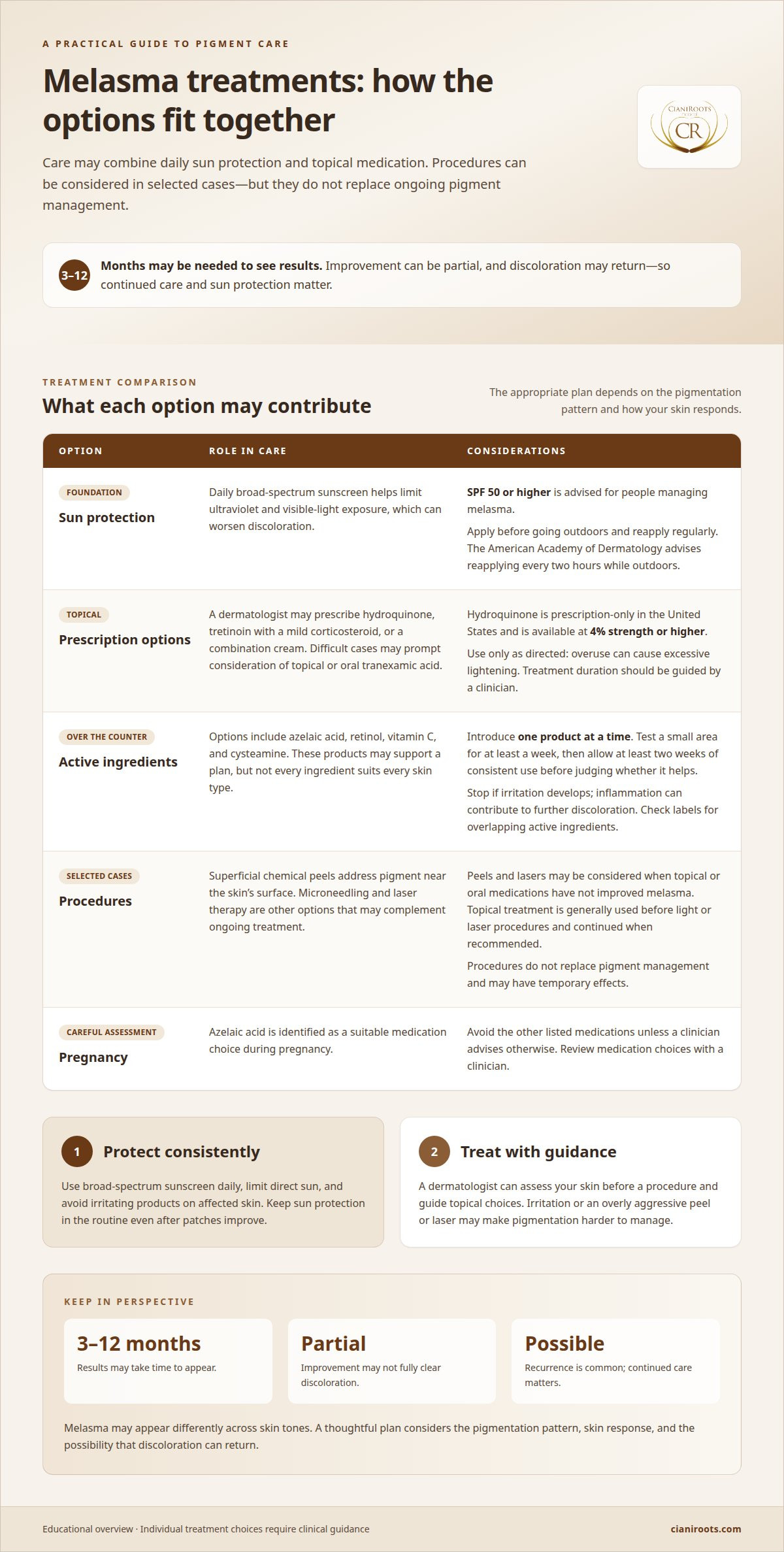
Topical medications, chemical peels, microneedling, and laser treatments play different roles in melasma care. Procedures may complement ongoing pigment management, but they do not replace it. Dermatologists may prescribe hydroquinone, tretinoin with a mild corticosteroid, or a combination cream. For difficult cases, they may consider topical or oral tranexamic acid.
Hydroquinone may be used for an initial period of up to six months, then occasionally if needed. Superficial chemical peels address pigment near the skin’s surface; microneedling and laser therapy are other procedure options. Topical treatment is generally used before light or laser procedures and continued when recommended, helping address the risk of relapse.
Risks of Peels and Laser Treatments
Risks include inflammation-related darkening or excessive lightening in treated areas. Irritation can make pigmentation harder to manage, particularly if a peel or laser is too aggressive for your skin.
Chemical peels may reduce superficial pigment, but their effects can be temporary. They do not reduce pigment production in deeper skin layers that regenerate. Peels and laser treatments may be considered when topical or oral medications have not improved melasma. A dermatologist should assess your skin before a procedure, since the right option depends on the pigmentation and treatment response.
Treatment Timelines and Maintaining Results
Melasma plans often take time: dermatologists typically say results may take 3 to 12 months. Discoloration may improve only partially, and recurrence is common, so continued care matters after patches fade.
Sun protection remains central during treatment and after improvement. When light or laser procedures are used, keep recommended topical medication in the plan rather than relying on a procedure alone. If melasma develops during pregnancy or while taking medication, it may fade after childbirth or after the medication is stopped. A clinician can help weigh these factors and medication choices.
Over-the-counter topical ingredients
Topical options include azelaic acid, retinol, vitamin C, and cysteamine. A dermatologist may prescribe hydroquinone or a retinoid-based combination. During pregnancy, azelaic acid is identified as a suitable medication choice; avoid the other listed medications unless a clinician advises otherwise.
Over-the-counter products may support a treatment plan, but ingredient strength and irritation risk matter. Introduce one product at a time to see how your skin responds.
Over-the-Counter Lightening Ingredients
Nonprescription lightening ingredients are intended to reduce visible discoloration. Choose carefully: irritation can aggravate pigmentation, and products may combine two or three active ingredients.
Retinol may help treat melasma, while vitamin C can be a short-term option. Cysteamine cream also showed greater effectiveness than placebo in a small study of 50 people. These findings don’t mean every ingredient will suit every skin type, so check product labels for overlapping actives that could irritate your skin.
To try a product, apply a small amount to one area for at least a week. If your skin tolerates it, follow the label directions and use it consistently. Allow at least two weeks of consistent use before judging whether it helps. Stop if irritation develops, since inflammation can contribute to further discoloration.
Hydroquinone availability differs by formulation: in the United States, it’s no longer available in products that can be bought without a prescription. Prescription hydroquinone is available at 4% strength or higher, so a dermatologist can decide whether it belongs in your plan.
Hydroquinone Use and Risks
Hydroquinone is a prescription skin-lightening medication used to reduce excess pigment. Overuse can cause excessive lightening, so follow a clinician’s instructions on treatment duration.
Hydroquinone may be used for only a few weeks at a time to help prevent over-lightening. A dermatologist may combine it with a retinoid or another topical medication, adjusting the plan to your skin’s response. Do not extend or restart treatment on your own; changes in skin tone warrant clinical review.
Pregnancy affects which topical options are appropriate. Azelaic acid is identified as a safe medication choice during pregnancy, while pregnant women should avoid most other listed medications. Breastfeeding safety isn’t addressed by these treatment facts, so review active ingredients with a clinician before use.
For personalized guidance on topical options and pigment care, explore skin analysis and renewal treatments.
Can melasma be prevented?
Prevention focuses on limiting triggers, especially ultraviolet and visible-light exposure. Use broad-spectrum sunscreen daily, limit direct sun, and avoid irritating products on affected skin.
Sun Protection for Melasma
Sun protection is a daily routine that limits light exposure and helps reduce flares. Dermatologists often recommend broad-spectrum sunscreen with SPF 30 or higher; people managing melasma are advised to use SPF 50 or higher daily. Apply sunscreen before going outdoors and reapply regularly. The American Academy of Dermatology advises reapplying every two hours while outdoors.
Consistency matters even after patches improve, because strict sun protection remains a mainstay of care. Ultraviolet light can trigger pigmentation, while heat and hormonal fluctuations may also contribute. Shade, hats, and less time in direct sun add practical layers of protection.
Tinted Sunscreen and Visible-Light Protection
Tinted sunscreen containing iron oxide helps protect against visible light as well as UVA and UVB rays. This broader coverage matters because visible light can pass through windows and trigger flares while driving or sitting near a bright window.
Choose broad-spectrum tinted sunscreen with iron oxide for daily use, including time spent near windows. Sunscreens with zinc oxide or titanium dioxide offer physical blockers. Reapply outdoors every one to two hours, and use shade during peak sun exposure from 10 a.m. to 4 p.m.
Daily habits can lower avoidable exposure. Apply sunscreen 15 to 30 minutes before going outside, then reapply while outdoors. A wide-brimmed hat and shade can help reduce direct sunlight on the face. Visible light may still reach skin through car or home windows, so consider protection during those activities, too.
Hormonal changes, including pregnancy and hormonal medications such as birth control pills, can trigger melasma. If pigmentation begins or worsens while you use birth control, discuss the timing with the prescribing clinician. Melasma linked to medication may fade after it is stopped, but medication decisions should be made with the prescriber.
Heat and certain irritants can also contribute to flares. Keep skin care gentle and avoid products that sting or cause redness. Waxing affected areas may irritate the skin, so consider a different approach to facial hair removal. If a topical product causes irritation, pause it and seek clinical guidance before restarting.
Prevention works best as a steady routine, not occasional sun care. Keep broad-spectrum sunscreen accessible for outdoor time, driving, and window exposure. Continue protecting your skin after discoloration improves, since recurrence is common. A clinician can help identify personal triggers, including hormonal changes, heat, or a topical product that repeatedly irritates your skin.
Melasma symptoms and appearance on darker skin
Melasma usually appears as flat, darker patches on the face. Common locations include the cheeks, forehead, bridge of the nose, above the upper lip, and chin. Patches may occur in multiple locations, creating a broader area of uneven pigmentation rather than one isolated spot.
On darker skin, assess a patch against your usual skin tone and the surrounding area. Contrast varies, so the same pigment change may be more or less noticeable across different complexions. Describing where patches began, how they changed, and whether new areas appeared helps clarify the pattern.
Melasma can affect more than the central face. In people aged 50 or older, it can appear on all sides of the neck. Noting whether pigmentation is limited to the cheeks or also involves the forehead, upper lip, chin, or neck gives a fuller picture of its distribution.
Location alone cannot confirm the cause. Other skin conditions can resemble melasma, so a dermatologist should evaluate new facial pigmentation. This is especially important if a patch changes, spreads, or looks unlike other areas. An assessment considers appearance and location together, rather than relying on one visible feature.
Age and personal history add context. Melasma usually starts between 20 and 40 years of age, but age alone doesn’t identify it. Pregnancy-related hormonal changes can coincide with patches, and melasma may fade after delivery. A timeline that records when pigmentation appeared and any related life changes can help clarify the pattern.
Melasma is more common in women, but men can develop it too. A family history may also be relevant: about 33% to 50% of people with melasma report another affected family member. These details provide context, not a diagnosis; a relative’s pigmentation does not establish that a new patch is melasma.
For a useful skin-history update, note the first affected area, later locations, and whether patches have changed. For example, record whether pigmentation on your cheeks later appeared above the upper lip or on the forehead. Include pregnancy or medication changes when relevant. This timeline, location, and history can help a dermatologist assess new pigmentation and distinguish melasma from other conditions.
Recommended skin-care products and procedures
Effective melasma skin treatments pair pigment-focused products with sun protection and, in selected cases, procedures. The right plan depends on your skin’s response, the discoloration pattern, and whether irritation develops. A coordinated approach helps prevent a procedure or active ingredient from becoming a standalone fix.
For daily skin care, choose gentle products and avoid ingredients that repeatedly cause stinging or redness. Sunscreens containing zinc oxide, titanium dioxide, or iron oxide are options dermatologists may recommend. Vitamin C may serve as a short-term treatment option. These products can support a broader plan, but one topical ingredient rarely addresses every factor affecting pigment production.
Hydroquinone is one topical option; retinoids and other lighteners may have a role in maintenance. After melasma improves, skin lighteners other than hydroquinone may be combined with retinoids, while hydroquinone may be used intermittently if needed. Follow your treatment plan instead of layering multiple active products on your own. This makes it easier to identify irritants and discuss adjustments.
Cosmetic coverage can fit into the same routine. Apply melasma medication first, sunscreen next, and camouflage makeup afterward. This order keeps makeup from replacing sun protection or topical treatment. Choose gentle products that do not irritate affected areas, and avoid waxing patches, which can provoke irritation. These details make melasma skin treatments easier to coordinate with daily care.
Procedures may be considered when topical or oral medication hasn’t improved pigmentation. Options include superficial chemical peels, microneedling, laser resurfacing, and light treatments. Chemical peels remove pigment near the surface, but don’t reduce pigment production in deeper regenerating skin. A fractional nonablative laser can target as little as 5% of the skin. A thulium fiber 1927-nm laser is another option described as promising for melasma on darker skin.
Choose procedures carefully. Chemical peels and laser treatments can cause inflammation-related darkening or excessive lightening. A board-certified dermatologist should perform procedures such as peels, microneedling, laser and light treatments, or platelet-rich plasma for melasma. Use topical treatment before light or laser procedures and continue it when recommended to help reduce relapse risk.
The practical takeaway is to coordinate products and procedures rather than treat them as competing choices. A plan can pair an appropriate topical product with sun protection, then consider a procedure if medication alone has not helped. Skin response, irritation, and pigment pattern all inform that decision. Reviewing these factors helps make melasma skin treatments more consistent and easier to adjust over time.
Ciani Roots Medical
Ciani Roots Medical offers skin analysis and individualized planning for people exploring options for uneven tone and visible pigment. For patients in Vacaville, Alamo, and nearby communities, a skin assessment with the AURA 3D Skin Analyzer can help inform a personalized approach based on skin concerns and history.
Ciani Roots Medical offers pigment, tone, texture, and skin renewal treatments, including skin rejuvenation with LASEmd® and regenerative therapy. These services do not replace an assessment of new or changing pigmentation, which may have causes beyond melasma.
A personalized skin assessment can help clarify which skin-care options may suit your goals and whether further evaluation is appropriate. Schedule a complimentary consultation or skin analysis to discuss your concerns and skin rejuvenation options.
Take the Next Step Toward a Personalized Plan
Choosing melasma skin treatments is not simply a matter of picking a cream or procedure. Your pigmentation, skin response, and daily routine all shape which options may suit you. If discoloration is new or changing, an appropriate assessment can also help distinguish melasma from other skin concerns.
Rather than adding several active products at once, bring your questions and current skin-care routine to a professional discussion. A clear starting point makes it easier to consider suitable care and adjust thoughtfully over time. Ciani Roots Medical can discuss personalized skin rejuvenation options in relation to your concerns.
Schedule a complimentary consultation or skin analysis and take a considered next step toward skin care that feels informed and manageable.
Frequently Asked Questions
What causes melasma?
Melasma results from excess pigment production, often influenced by several factors rather than one isolated cause. Ultraviolet and visible light, hormonal changes, heat, and skin irritation can contribute. A useful clinical history includes when discoloration began and whether it followed a medication change, pregnancy, or a new irritating product. That timeline can help identify possible contributors without assuming one trigger explains every patch.
Who is at risk of melasma?
Risk is higher for people with darker skin, a family history, or hormonal influences, although melasma can affect different skin tones and genders. About 10% of people with melasma are men and 90% are women. Pregnancy is another relevant context: melasma affects 15% to 50% of pregnant women. These patterns indicate risk, not certainty; a person’s skin history and pigmentation still need individual assessment.
Is melasma permanent?
Melasma can persist for years or even a lifetime, and there is currently no cure. Treatment may partly improve discoloration, but recurrence is common. Rather than judging progress from memory, note changes over time and discuss them during follow-up care. Photographs taken in consistent lighting can make visual comparisons more useful, while a clinician can help interpret changes and plan ongoing care.
What is melasma (hyperpigmentation)?
Hyperpigmentation is a broad term for darker areas of skin; melasma is one possible cause. The distinction matters because a dark mark does not automatically mean melasma. Other skin conditions may look similar, so a dermatologist’s assessment is valuable when facial pigmentation is new or changing. Evaluation considers the pattern and skin history rather than relying on the word “hyperpigmentation” alone.
What is melasma and what does it look like?
Melasma usually appears as flat brown or gray-brown patches, with contrast varying across skin tones. Its appearance can overlap with other pigment changes, so a photograph or visual comparison alone cannot confirm the cause. If a patch changes or new discoloration develops, note when it started and whether other areas changed too. That information gives a dermatologist useful context for evaluating the concern.
Where does melasma most commonly occur?
Melasma commonly affects facial areas, and its distribution can help describe the pattern during an assessment. Note whether discoloration is limited to one area or appears across several regions, and whether the neck is involved. In people aged 50 or older, melasma can appear on all sides of the neck. Recording the affected areas helps distinguish a changing pattern from a single localized mark.
Why do women get melasma when they’re pregnant?
Hormonal changes during pregnancy can contribute to increased pigment production, making melasma more likely to develop. Timing varies, and not every pregnant person develops patches. If pigmentation appears during pregnancy, discuss skin-care ingredients with a clinician before starting treatment. Azelaic acid is identified as a safe medication choice during pregnancy, while pregnant women should avoid most other listed medications.
Can azelaic acid, tretinoin, or tranexamic acid help melasma?
These medications may be considered in different situations, but pregnancy and health history affect the choice. Azelaic acid is identified as a safe medication choice during pregnancy; tretinoin is among the medications generally avoided then. For difficult cases, a clinician may consider topical or oral tranexamic acid. Tell your dermatologist about any history of blood clots before being prescribed tranexamic acid.

Article by
Adriane McDonald BSN,RN
Adriane McDonald, BSN, RN, is a hair restoration specialist with nearly 40 years of experience working with men and women experiencing hair loss and thinning. As the Founder and Practice Director of Ciani Roots Medical, she works alongside the practice’s Medical Director to provide personalized hair restoration, scalp health, regenerative therapies, and advanced skin rejuvenation.
Her approach combines extensive hands-on experience with detailed scalp analysis, medical collaboration, and individualized treatment planning. Adriane is currently completing advanced training toward certification in trichology, further expanding her expertise in hair and scalp health.
Disclaimer
This content is provided for general educational and informational purposes only and is not intended to serve as medical advice, diagnosis, or treatment. Individual needs, treatment recommendations, and results vary. A consultation and appropriate evaluation are necessary to determine which treatment options may be suitable for you. Viewing or interacting with this content does not establish a healthcare professional-patient relationship with Ciani Roots Medical.
Individual results may vary, and no specific outcome can be guaranteed. Before-and-after images, testimonials, or treatment experiences represent individual results and should not be considered a guarantee of similar results.


