
Plasma hair restoration begins with a blood sample. Centrifuging separates the sample into layers, and the platelet-rich portion is prepared for scalp treatment. At a hair restoration clinic, this may be discussed alongside other non-surgical options for men and women experiencing thinning or hair loss.
It’s understandable to want to know what a treatment involves before deciding whether it feels right for you. This guide explains how plasma therapy works, what low-level laser therapy and other non-surgical treatments involve, and how clinicians assess hair changes and treatment progress. You’ll also learn why the causes and patterns of hair loss can differ between men and women, and why scalp analysis and an individualized plan matter when exploring your options.
Key Takeaways
- Understand how plasma therapy uses a blood sample and why treatment planning depends on the pattern and causes of hair loss.
- Compare low-level laser therapy with other non-surgical approaches, including what is known about how laser treatment may affect hair growth.
- Learn how medication options differ: minoxidil may be used by men and women, while finasteride is used for men.
- Use progress photos and consistent follow-up to assess changes over time, rather than relying on a single snapshot.
- Explore why hair restoration plans can differ for men and women and how scalp analysis can help guide the next step.
How Does Plasma Hair Restoration Work?
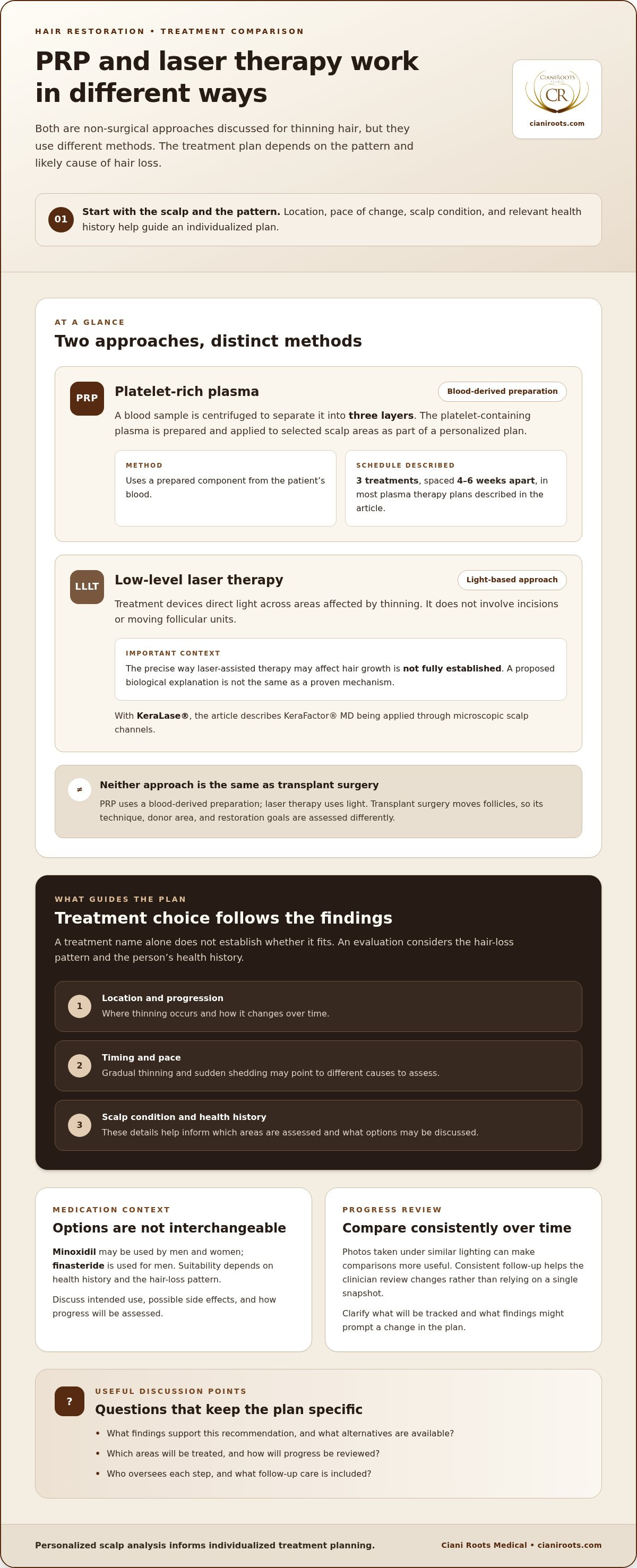
Plasma hair restoration starts with a blood sample, which is centrifuged to separate it into three layers. The platelet-containing plasma is then prepared for scalp treatment. The procedure aims to deliver concentrated platelets to targeted areas, but the plan depends on the pattern and likely cause of hair loss.
Hair loss has several possible causes, including genetics, pregnancy, age, stress, and depression. Nearly half of men experience hair loss by age 50. A clinician considers the timing, location, and pace of thinning because gradual changes across the scalp may suggest a different cause than sudden shedding.
Medication may also be part of treatment planning. Minoxidil may be used by men and women, while finasteride is used for men. These medications aren't interchangeable, and suitability depends on health history and hair-loss pattern. Ask about intended use, possible side effects, and how progress will be assessed.
Supplements and prevention products need a clear purpose. A clinician can assess whether a nutritional deficiency may be relevant before recommending supplements. Shampoos, fibers, and styling products can support scalp care or make thinning less noticeable, but they don't identify why shedding began. Bring a list of products and medications to your assessment.
When choosing a hair restoration clinic, look at who oversees care, how the proposed treatment fits your needs, and how progress will be reviewed. At Ciani Roots Medical, a physician-owned, medically operated practice in Vacaville and Alamo, care is guided by medical director oversight and personalized scalp analysis.
Dermatologists diagnose and treat conditions affecting the skin, scalp, and hair. Hair restoration clinics focus on evaluating hair loss and discussing restoration options, while medical practices may also offer selected aesthetic treatments. Compare the clinician’s qualifications, oversight, and the services provided rather than relying on the setting’s label.
There is no single U.S. price for hair restoration. Surgical estimates depend on the technique, treatment area, and amount of hair involved. A written estimate should clearly explain what the proposed care includes.
Insurance coverage depends on the plan and reason for treatment, while financing terms vary. Review your plan’s coverage rules and any written financing terms before committing.
Hair transplant surgery generally involves assessing the donor and recipient areas, selecting a technique, and moving follicles. The procedure can take three to eight hours; transplanted follicles typically begin growing three to four months after treatment and mature over six months to a year. Surgical preparation and recovery instructions should be individualized.
Before booking, ask what findings support the recommendation, what alternatives are available, who oversees and performs each step, and how progress is measured. Request a clear outline of follow-up care, medication guidance, and what is included in the treatment plan.
Low-level laser therapy
Low-level laser therapy uses light directed at the scalp without incisions or follicular-unit removal. Treatment devices deliver light across areas affected by thinning. The approach differs from transplant surgery, which moves follicles, and from platelet-rich plasma therapy, which uses a blood-derived preparation.
The precise way laser-assisted hair therapy affects hair growth is not fully established. A proposed biological explanation is not the same as a proven mechanism. During a consultation, ask what the treatment is intended to address, how progress will be assessed, and whether your hair-loss pattern is appropriate for this approach.
PRP follows a separate process. A blood sample is centrifuged to separate its components, and the platelet-rich portion is prepared for scalp treatment. It may then be applied to selected scalp areas as part of an individualized plan. The pattern of thinning helps guide which areas are assessed.
PRP and laser-assisted hair therapy are different treatments. PRP uses a prepared blood component, while laser therapy uses light and, with KeraLase®, applies KeraFactor® MD through microscopic scalp channels. A clinician may discuss them separately or as parts of a broader plan, but one should not be assumed to replace the other.
During an evaluation, the clinician considers the location and progression of thinning, scalp condition, and relevant health history. Diffuse shedding and a gradually widening part, for example, are different patterns to assess. These details help shape a personalized plan rather than selecting a procedure based on its name alone.
A follicular unit is a natural grouping of hairs, relevant to surgical transplantation. Laser-assisted hair therapy doesn’t relocate follicular units. If surgery is being considered, discuss how the proposed technique, donor area, and restoration goals differ from non-surgical care.
Ask practical questions before beginning: which areas will be treated, how appointments are organized, and what changes will be tracked? Consistent photographs under similar lighting can make comparisons more useful. Clarify how the clinician will review progress and what may prompt a change in the plan.
Plasma therapy and laser care address the scalp through different methods, so a consultation can help connect the treatment choice to your needs. A complimentary consultation can include discussion of scalp analysis and possible next steps.
If plasma therapy is also being considered, keep its schedule distinct from the plan for light treatment. Most plasma therapy hair-loss treatment plans involve three treatments spaced 4-6 weeks apart. Ask the clinician to explain how that schedule relates to the goals being discussed, and whether the proposed plan is focused on plasma, low-level laser therapy, or both. This can help prevent expectations about one approach from being carried over to another.
Before agreeing to an approach, ask what outcome will be reviewed, when the review will take place, and what might lead the clinician to continue, adjust, or stop treatment. You can also ask how the method fits the hair-loss pattern and history already discussed, and how progress will be documented consistently. Clear answers help you compare options without assuming that different treatments follow the same schedule or that combining them is necessary.
Non-surgical hair restoration treatments
Options include PRP, low-level laser therapy, and medication management, while FUE and FUT are surgical transplant techniques. The right direction depends on the pattern of thinning hair, the treatment goal, and whether surgery is being considered.
Available Nonsurgical Treatments
PRP uses a platelet-rich preparation made from the patient’s blood. Laser-assisted hair therapy uses light, while medications such as minoxidil may also be considered. These options differ in method and purpose, so compare what each involves, how progress will be assessed, and whether it suits your individual hair-loss pattern.
FUE and FUT involve transplantation rather than non-surgical care. FUE removes follicular units individually, while FUT uses donor tissue that is dissected into units containing one to four hairs. Ciani Roots Medical focuses on non-surgical options, including PRP, laser-assisted therapy, and medication management.
Personalized Treatment Planning
A personalized plan begins with reviewing the pattern, timing, and areas of hair loss. For example, a widening part, a receding hairline, and diffuse thinning can call for different considerations. Health history and current medications also help shape the discussion, including whether nonsurgical treatments or a transplant should be explored.
Ask how the clinician will measure change, such as through consistent photographs and scalp assessments. A clear plan should explain the selected treatment’s role, how follow-up fits in, and what would prompt an adjustment. Combining treatments should have a specific rationale, not be treated as a default.
Treatment Duration and Schedule
Most plasma therapy treatment plans involve three treatments spaced four to six weeks apart. The schedule is a starting framework, not a universal timetable; the treatment plan and response guide follow-up. Ask how appointments are spaced and when progress will be reviewed, so you understand the sequence before beginning.
PRP benefits require ongoing maintenance; without maintenance treatments, hair density returns to pre-treatment levels. Discuss how maintenance fits your priorities and schedule. Laser therapy and medication follow different routines, so ask for clear instructions on use and follow-up rather than assuming their schedules match PRP.
For men and women with thinning hair, nonsurgical options may focus on supporting existing follicles rather than moving donor hair. A transplant instead relocates follicles, and surgical planning considers the donor and recipient areas. Comparing these approaches helps define whether the goal is fuller coverage, addressing ongoing loss, or considering both.
Before choosing, ask what each recommended treatment is intended to address, how appointments are organized, and how outcomes will be tracked. These details help distinguish a plan built around your needs from a list of procedures without a clear rationale.
Patient testimonials and before-and-after results
Testimonials can describe a person’s experience, but they don’t predict another patient’s outcome. Use them alongside consistent before-and-after photographs, treatment details, and follow-up timing. For example, a photograph labeled “18 months after FUE” gives more context than an image without a date or procedure name.
Hair transplant outcomes are assessed over time, not immediately after surgery. Transplanted follicles typically begin growing three to four months after treatment, then mature over six months to a year. Long-term appearance varies, and hair loss may continue in areas that weren’t transplanted.
PRP and other non-surgical treatments have different goals and timelines from transplantation. A testimonial about PRP should identify the treatment received and follow-up period. One person’s fuller-looking hair does not establish that another person will experience the same change.
Look for useful context in each testimonial. Does it name the treatment, describe the starting pattern of thinning, and use comparable lighting and angles? A close-up under bright light can look different from a full-scalp image. Consistent parting, camera distance, and styling make comparisons easier to interpret.
Testimonials can also help you identify questions for a consultation. If someone describes a change in hairline appearance, ask how the plan addressed the hair and scalp concerns involved. If a story focuses on confidence, remember that it describes personal experience, not a clinical measure of treatment effectiveness.
For local care, Ciani Roots Medical has clinics in Vacaville and Alamo, serving people from Fairfield, Dixon, Suisun City, Benicia, Vallejo, Napa, Winters, Davis, Woodland, Solano County, Yolo County, Napa Valley, Danville, Walnut Creek, San Ramon, Blackhawk, and Lafayette. Virtual consultations are also available. Plan around the appointments and follow-up outlined in your individual care plan.
Suitability depends on factors such as the pattern of hair loss, donor-hair availability for transplant surgery, and relevant health history. A consultation helps establish whether a surgical or non-surgical approach fits the goals and scalp findings. Surgery also involves recovery and potential risks, so discuss those directly before making a decision.
When reviewing results, distinguish what photographs show from what testimonials say. Images document visible appearance under particular conditions; personal stories describe individual experiences. Neither replaces a clear explanation of treatment, follow-up, and the factors shaping your plan. Ask how progress is tracked and how changes in thinning will be considered over time.
Hair restoration for men and women
Hair restoration can be considered by men and women, but the pattern and possible causes of thinning shape the plan. A receding hairline or crown changes may raise different questions than a widening part or diffuse shedding. An evaluation begins by identifying where hair is thinning and how the changes have progressed.
Genetics can contribute to hair loss in people of any sex. Pregnancy, menopause-related changes, stress, and other health factors may also be relevant for some patients. During an evaluation, the clinician reviews when shedding began, which areas changed, and whether the pattern is stable or progressing. Those details help shape realistic goals for appearance and care.
A hair transplant moves follicles from a donor area to a recipient area. Transplant procedures may be considered by men and women, but candidacy depends on donor supply, areas needing coverage, and the anticipated pattern of continued loss. Surgical planning should account for the hairline’s shape and how it may look as surrounding hair changes.
For example, someone concerned about a changing hairline may prioritize natural-looking framing, while a person with diffuse thinning may first need an evaluation of scalp and hair density. These examples describe different concerns, not a rule that any person needs a particular procedure. The aim is to choose an approach that fits the individual findings.
Non-surgical treatments offer another path for people who aren’t pursuing transplantation. PRP uses a platelet-rich preparation from the patient’s blood, while other options may include KeraLase® Hair Therapy and medication management. Each approach works differently. A clinician can explain how a proposed treatment relates to your pattern and whether combining options has a clear purpose.
Hair growth after a transplant takes time. Transplanted follicles typically begin growing three to four months after treatment, then mature over six months to a year. During that period, consistent photographs can help compare the hairline and coverage. Results vary with the plan and individual factors, so progress should be reviewed over time rather than judged from an early image.
Discomfort and recovery deserve a direct conversation before surgery. Ask what sensations may occur during the procedure, what recovery instructions apply, and how follow-up is arranged. A personalized consultation should also clarify whether your goals are better served by transplantation, non-surgical care, or a staged plan.
To discuss options for your hair-loss pattern, EXPLORE YOUR OPTIONS through a personalized consultation and scalp analysis.
Ciani Roots Medical: CR signature with regenerative hair loss treatments
Ciani Roots Medical offers personalized hair-loss care in Vacaville and Alamo for people exploring non-surgical options after noticing thinning or changes in scalp health. The CR signature approach includes regenerative hair-loss treatments, with planning guided by consultation and scalp analysis.
Depending on individual needs, options include KeraLase hair therapy with LaseMD and KeraFactor, or personalized Acorn Secretome therapy, created from the patient’s own stored cells and biology. These approaches are considered within an individualized plan, not as guaranteed outcomes.
If you’re weighing treatment options or want a clearer understanding of your hair and scalp, contact Ciani Roots Medical to schedule a complimentary consultation.
Take the Next Step With a Personalized Plan
Choosing a hair restoration clinic can help you move from general research toward a decision that reflects your priorities. Consider what matters most to you: understanding the cause of change, exploring non-surgical care, or learning whether a transplant is relevant. You can also think about the pace of care that feels manageable and the questions you want answered before deciding.
A focused conversation can help you understand the reasoning behind a recommendation and how progress would be reviewed. It’s reasonable to take time to consider your options, clarify what each approach involves, and decide what aligns with your needs. You don’t have to arrive with a treatment choice already made.
For a personal discussion about your next step, EXPLORE YOUR OPTIONS with Ciani Roots Medical. A thoughtful plan begins with your concerns and goals, and you can move forward at a pace that feels right for you.
Frequently Asked Questions
How long does the procedure take?
A hair restoration appointment’s duration depends on the treatment type and area being addressed. Transplant surgery takes longer than an in-office non-surgical treatment. During planning, ask how much time to reserve, whether preparation or monitoring adds time, and what to arrange afterward. This helps you plan transportation, work, and other commitments.
Is plasma therapy for hair loss painful?
PRP therapy involves preparing a blood sample and treating selected scalp areas, so the appointment can include both a blood draw and scalp treatment. Sensation varies with the method and individual sensitivity. Before the appointment, tell the treating professional about past reactions to blood draws, scalp sensitivity, or anxiety about needles. Ask what comfort measures are appropriate and what sensations to expect at each step.
What should I expect during a hair transplant consultation and candidacy evaluation?
A consultation typically reviews your hair-loss history, health background, medications, goals, and scalp condition. The clinician examines the thinning pattern and donor area, then discusses whether transplantation fits your needs or another approach is more appropriate. Bring a medication list and note when you first noticed changes. Ask who would perform the procedure, what follow-up involves, and how the plan accounts for continuing hair loss.
What are the risks, side effects, and complications of hair restoration procedures?
Potential risks depend on whether treatment is surgical or non-surgical and on your health history. Before proceeding, ask the clinician to explain procedure-specific side effects, recovery instructions, and signs that need prompt medical attention. Share relevant conditions, medications, and previous treatment reactions during your evaluation. A responsible discussion should cover how risks are managed, what follow-up is planned, and whether your goals and scalp findings make the proposed treatment suitable.
Article by
Adriane McDonald BSN,RN
Adriane McDonald, BSN, RN, is a hair restoration specialist with nearly 40 years of experience working with men and women experiencing hair loss and thinning. As the Founder and Practice Director of Ciani Roots Medical, she works alongside the practice’s Medical Director to provide personalized hair restoration, scalp health, regenerative therapies, and advanced skin rejuvenation.
Her approach combines extensive hands-on experience with detailed scalp analysis, medical collaboration, and individualized treatment planning. Adriane is currently completing advanced training toward certification in trichology, further expanding her expertise in hair and scalp health.
Disclaimer
This content is provided for general educational and informational purposes only and is not intended to serve as medical advice, diagnosis, or treatment. Individual needs, treatment recommendations, and results vary. A consultation and appropriate evaluation are necessary to determine which treatment options may be suitable for you. Viewing or interacting with this content does not establish a healthcare professional-patient relationship with Ciani Roots Medical.
Individual results may vary, and no specific outcome can be guaranteed. Before-and-after images, testimonials, or treatment experiences represent individual results and should not be considered a guarantee of similar results.


