
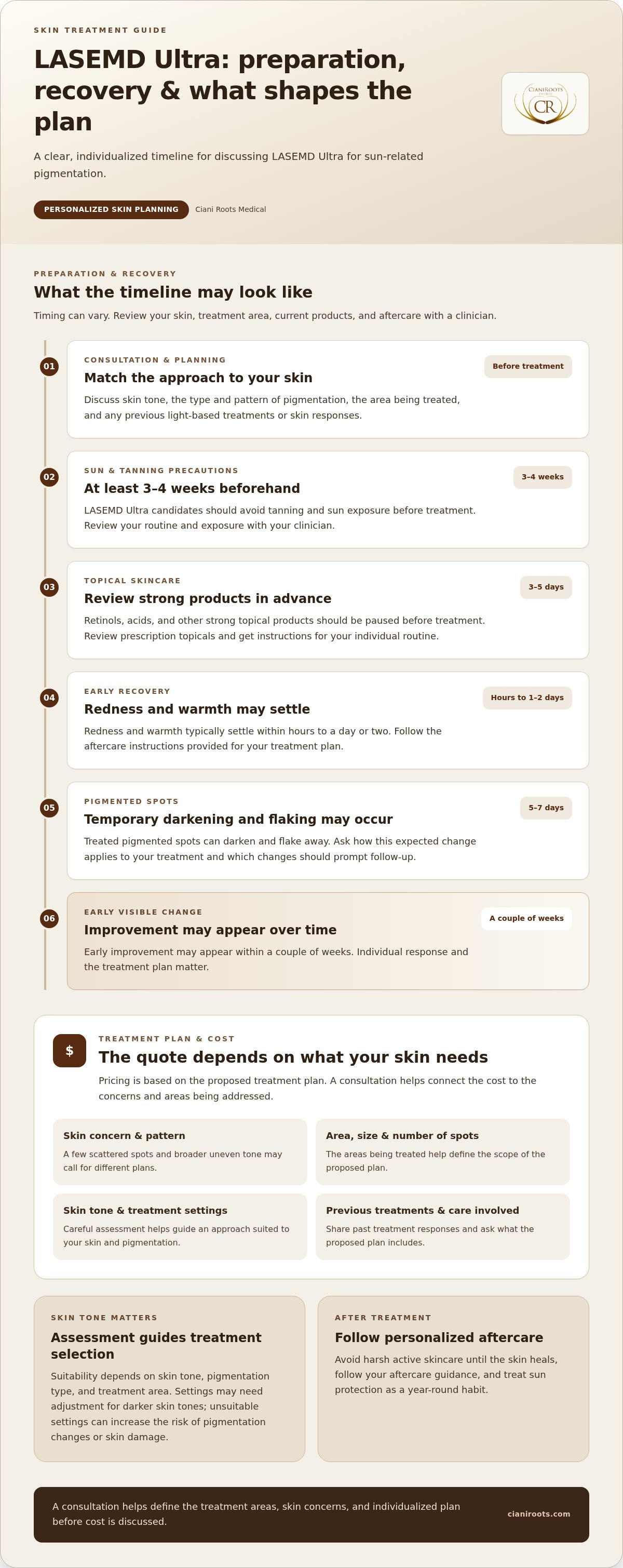
With LaseMD for sun damage in Walnut Creek, early improvement may appear within a couple of weeks, while treated pigmented spots can darken and flake away over 5-7 days after treatment. Redness and warmth typically settle within hours to a day or two. It’s natural to want a clearer sense of the timeline, recovery, and cost before choosing a skin treatment.
This guide explains what can affect the cost of LASEmd for sun damage in Walnut Creek, what recovery may look like, and how LASEmd compares with other approaches. Pricing depends on the treatment plan and skin concerns, so a consultation helps define the areas and goals before discussing cost. You’ll also learn what to consider when deciding whether laser treatment may suit your skin, so you can take the next step with realistic expectations.
Key Takeaways
- Skin tone and the type of pigmentation matter when selecting laser settings; careful assessment helps guide a suitable treatment approach.
- The treatment plan and cost depend on the skin concerns being addressed and the care involved.
- Sun exposure can contribute to visible pigmentation over time, including through windows during driving or sitting nearby.
- Compare laser treatment with other technologies based on the type of discoloration, skin needs, and recovery preferences.
- After LaseMD Ultra, avoid harsh active skincare until the skin heals, and follow personalized aftercare guidance.
Is it safe for darker skin tones?
Laser treatment may be considered for darker skin, but suitability depends on careful assessment and appropriate settings. A consultation should consider skin tone, the type of pigmentation, and the treatment area.
Treatment Selection by Skin Tone and Damage Type
At your consultation, describe whether the concern is a flat brown sun spot, uneven pigmentation, or another visible change. Skin tone matters because settings for some laser treatments may need adjustment for darker skin. The goal is to match the approach to both your skin and your concern, rather than choosing a treatment based on the spot alone.
A single brown spot and widespread facial discoloration, for example, call for different treatment planning. Explain when each area appeared, whether it has changed, and how you responded to any previous light-based treatment. This context helps shape the discussion of treatment area, settings, and recovery. An examination can also help distinguish sun-related pigmentation from redness or other skin changes.
Risks and Treatment Choices
Laser treatment can damage skin if performed incorrectly. In darker skin tones, unsuitable settings may increase the risk of pigmentation changes. The device, settings, and treatment approach are therefore important parts of the consultation. Discuss the specific area, type of pigmentation, and how your skin may respond.
Some spots may look darker before fading after light-based treatment. Ask how that temporary change fits the expected recovery and which changes should prompt follow-up. Treatments are not interchangeable across all skin tones and concerns. The plan should reflect your individual treatment area and pigmentation pattern.
How a laser interacts with skin depends on the device and its settings. Light-based treatment for sun spots targets visible pigment, while the surrounding skin also needs consideration. A clinician can explain the intended target and how settings are selected for the treatment area. A facial treatment plan may differ from one focused on an isolated spot.
Discuss redness before treatment, especially if redness and pigmentation occur together. Clarify which concern the session is intended to address and whether treating one area could affect nearby skin. This helps set practical expectations and explains why a particular approach may suit a specific pattern.
Clinician experience with laser treatments matters because incorrect treatment can damage skin. Discuss how your skin tone is assessed, how settings are selected, and how previous pigmentation changes inform the plan. Relevant experience means understanding that skin tones can respond differently, not simply knowing how to operate a device. These questions help make the consultation specific to your skin.
If you’re considering LaseMD for sun damage in Walnut Creek, the consultation should connect your concern to a treatment plan. Describe the areas you want addressed and any past light-based treatments. Ask how the treatment targets pigmentation, how skin tone informs settings, and what changes to expect afterward. These steps support an informed decision.
How much do laser skin treatments cost in Walnut Creek?
The clinic featured in this article offers LaseMD treatment in Walnut Creek. The cost depends on the individual treatment plan, including the areas addressed and the skin concerns being evaluated. Pricing is provided after a quote request, once the proposed treatment can be matched to your goals.
A consultation helps clarify what treatment is intended to address. Mention specific concerns, such as scattered brown spots, uneven tone across the cheeks, or pigmentation on the hands. The size and number of areas, discoloration pattern, and selected approach all shape the plan. Skin analysis can help organize your priorities before discussing cost.
Ask what the proposed plan covers and how it addresses your concerns. A plan focused on a few spots, for example, may differ from one targeting broader uneven tone. Share your preferred outcome and any previous treatments. That context makes it easier to understand the proposed treatment and cost, rather than relying on an estimate that may not reflect your needs.
Preparation also matters. LaseMD Ultra candidates should avoid tanning and sun exposure for at least 3-4 weeks before treatment. Retinols, acids, and other strong topical products should be paused 3-5 days beforehand. Use the consultation to review your current products, including prescription topicals, and get clear instructions for your individual routine.
Treat sun protection as a year-round habit, not just a treatment-day precaution. Consistent protection can help limit further exposure that contributes to visible pigmentation. If your work or routine involves frequent time outdoors, mention it during the consultation. This practical context can help shape your care plan and skin routine.
Aftercare guidance should match your treatment plan. Before proceeding, understand which skincare products to pause, what routine to follow, and when to resume your usual products. Keep the instructions accessible at home. A written plan can help you follow recommendations, especially if your routine includes several products or active ingredients.
For a more useful cost discussion, bring your main skin concerns, product list, and questions about the treatment area. Ask how those factors shape the quote and what the plan includes. This connects cost to the proposed care, rather than comparing figures without knowing what each plan addresses.
A skin consultation can help you discuss your goals and treatment scope. Explore skin treatment options as you consider your next step.
How cumulative sun exposure causes visible pigmentation
Sun-related pigmentation can reflect exposure accumulated over time. The pattern of visible spots helps frame the treatment discussion.
LaseMD Ultra for Sunspots and Pigmentation
Solar lentigines are flat brown spots associated with sun exposure. LASEmd® Ultra may be considered for sun spots and pigmentation, with the treatment area and concern guiding the plan. Someone focused on a few spots, for example, has different coverage goals from someone concerned about broader uneven tone. A consultation can define the areas and intended treatment focus.
Expected Pigment Changes and Gradual Clearing
After light-based treatment, pigmented spots may temporarily look darker before fading. Changes can unfold gradually, so assess treated areas over time rather than expecting an immediate difference. Avoid picking at spots as they change during recovery, and follow the aftercare instructions for your treatment area.
Sun exposure can contribute to visible pigmentation over time. Solar lentigines are harmless, flat brown spots associated with sun exposure. They can appear on areas that regularly receive sun, such as the face or hands. Not every brown mark has the same cause, so have a new or changing spot assessed rather than assuming it is sun damage.
Session planning depends on the extent and distribution of pigmentation, the treatment area, and your goals. There is no single session count that suits everyone. A plan for a limited area, for example, may differ from one addressing multiple zones. The consultation should explain how the proposed sessions relate to the areas being treated.
ClearSilk may be considered when concerns include pigmentation and vascularity. During assessment, it helps to distinguish brown discoloration from visible redness. If both appear in the same area, explain which change matters most to you. Clarifying your primary concern makes the technology discussion more specific and avoids treating all color variation as one issue.
Before choosing an approach, note where spots appear and how their distribution relates to your skin goals. One person may have scattered facial marks, while another may want to discuss pigmentation on the hands. Bring your priorities to the consultation and ask what the proposed treatment is intended to address. This keeps the discussion focused without assuming every spot needs the same approach.
Choosing between laser and other technologies
Start by identifying your main concern: brown spots, redness, uneven texture, or wrinkles. A treatment designed for one concern may not address the others equally. Someone focused on scattered brown spots, for example, has different priorities from someone concerned about facial redness. Naming your goal makes comparisons more useful.
LASEmd® Ultra is a laser option for discussion when sun-related pigmentation is the concern. Other approaches may include light-based devices, topical skincare, or resurfacing treatments. These options differ in how they are delivered, which concerns they target, and what recovery involves. During consultation, compare the treatment target and aftercare, not just the device name.
ClearSilk may be part of the discussion when concerns include pigmentation and vascularity. Consider whether the primary visible issue is brown discoloration, redness, or both. A clinician can assess the pattern and explain which concern a proposed technology addresses. If wrinkles or texture are also priorities, mention them rather than assuming one treatment covers every goal.
- Concern: List the areas and changes you want assessed, such as brown spots on the cheeks or redness around the nose.
- Approach: Ask whether the proposed option targets pigment, redness, texture, or another concern.
- Recovery: Compare expected skin changes and aftercare for each option.
- Plan: Clarify whether the recommendation addresses one concern or combines approaches.
Topical skincare differs from an in-office device treatment because it becomes part of your home routine. Product choices should account for skin sensitivity and the other products you use. If you use retinol or acids, for example, discuss them before adding another active ingredient. A clear plan explains which concern each step is intended to address.
Ask how your skin will be assessed before a technology is selected. The consultation should consider skin tone, the location and pattern of discoloration, redness, texture, and treatment history. These details can affect which approach is suitable. A face with several concerns may need a different plan from one isolated sun spot.
Set your priorities before choosing an approach. If visible pigmentation is your main concern, ask how the proposed treatment addresses those spots. If redness or wrinkles matter more, say so. Then compare the treatment target, preparation, recovery, and follow-up plan. This step-by-step discussion helps explain the recommendation and whether it fits your goals.
Expected downtime and recovery
Recovery planning starts with knowing the treatment depth. Deeper laser resurfacing in Walnut Creek can involve downtime of 1-2 weeks. That timeframe differs from lighter treatment approaches, so clarify which recovery profile applies to your planned session before arranging work, travel, or social commitments.
Use the consultation to map recovery against your calendar. Consider public-facing work, important events, and days when you can keep your schedule flexible. If an event falls close to treatment, discuss the timing and your priorities beforehand. Planning around the treatment depth gives you a more useful framework than assuming every laser session has the same downtime.
Skin response varies, and the treated area can shape what you notice day to day. Track how your skin feels and looks without comparing your recovery with someone else’s. A simple note about changes and when they occur can help you describe your experience accurately at follow-up.
During recovery, follow the care plan provided for your treatment. Avoid adding products or changing your routine based on advice meant for another procedure. If you have questions about a change in your skin, contact the treating practice for guidance rather than trying to address it with extra products or exfoliation.
Before treatment, make a practical plan for the days afterward:
- Keep your calendar flexible if deeper resurfacing is planned.
- Arrange work or social activities around the recovery window discussed in consultation.
- Keep your aftercare instructions accessible, and follow them consistently.
- Record questions or notable changes so you can discuss them clearly.
Recovery and visible improvement are separate parts of the process. Early changes may appear within a couple of weeks, while the skin continues to settle. Observe the treated area over time rather than judging it by how it looks on one day. Consistent lighting and photographs can help you compare changes more objectively.
Contact the treating practice if a skin change concerns you or differs from the instructions you received. Clear communication helps distinguish expected recovery from a change that needs attention. Ask in advance how to raise follow-up questions and which changes should prompt you to reach out. This makes your aftercare plan more actionable.
Recovery expectations are worth discussing alongside treatment goals, especially if your schedule is demanding. A personalized conversation can help you understand how treatment depth affects planning and what to prepare for afterward. EXPLORE YOUR OPTIONS.
Ciani Roots Medical: CR signature with regenerative hair loss treatments
Ciani Roots Medical offers skin rejuvenation with LASEmd® Ultra and regenerative therapy for people exploring skin renewal after sun exposure. If brown spots, uneven tone, or texture are your main concerns, a skin consultation can shape an individualized plan around those priorities. The discussion can clarify which areas matter most and what treatment approach fits your skin goals.
Ciani Roots Medical also offers treatments for concerns involving pigmentation, tone, texture, and skin renewal. Skin analysis can guide the conversation and treatment planning. This service is distinct from the CR Signature Protocol™, which addresses hair concerns.
Make a Thoughtful Next Step for Your Skin
Choosing LASEmd® Ultra for sun damage in Walnut Creek involves more than addressing visible spots. It’s also an opportunity to clarify what matters most to you, whether that’s more even-looking tone, skin texture, or a treatment plan that fits your comfort with recovery. Bring those priorities, the products you use, and any previous treatments to a consultation. A focused discussion can connect your goals with an individualized approach instead of treating every concern as the same.
Ciani Roots Medical offers LASEmd® Ultra skin rejuvenation with regenerative therapy. A skin analysis and consultation can help shape a plan around your concerns. Take the next step at your own pace and get a clearer understanding of the options that suit your skin goals.
Your skin goals deserve thoughtful, individualized care, and a conversation can be a comfortable place to begin.
Frequently Asked Questions
How soon will I see results from laser treatment?
Early changes may appear within a couple of weeks, though the first visible change may not reflect the full outcome. To assess progress, note the spots you want to track and compare them under similar lighting. A photo by a window, for example, can look different from one taken indoors. Focus on the same areas rather than relying on memory.
What is the best treatment for age spots?
The right option depends on whether the concern is mainly brown pigmentation, redness, or another skin change. Solar lentigines are flat brown spots associated with sun exposure, but a new or changing spot should be assessed rather than self-diagnosed. LASEmd® Ultra may be considered for sun-related pigmentation, while ClearSilk may be discussed for pigmentation and vascularity. Your treatment goal helps guide that comparison.
Are there any side effects?
Redness and warmth can occur after LASEmd® Ultra, and treated pigmented spots may temporarily look darker or flake. Laser treatment performed incorrectly can also cause pigmentation changes. Before a session, share any previous reactions to light-based treatments and describe changes you’ve noticed in treated areas. That history gives the clinician useful context when discussing risks and selecting an approach.
Can I have it done in summer?
Summer treatment may be possible if you can follow sun precautions before and after your session. Avoid tanning and sun exposure for at least 3-4 weeks beforehand. Consider your plans, too: a long outdoor event may make it harder to protect treated skin afterward. Sunscreen, shade, and a hat can help support sun protection during outdoor activities.
Do the spots get darker before they fade?
Yes, treated pigmented spots may darken before they fade. Brown specks can flake away over 5-7 days after treatment. Avoid picking at them, even if the darker appearance feels unexpected. If you’re tracking a particular spot, note its appearance before treatment and follow its changes during recovery. That record can make it easier to describe what you observe.
Does it hurt?
Sensations during a LASEmd® Ultra session can vary, so don’t assume everyone has the same experience. Ask during consultation what sensations to expect in your treatment area and what to do if you feel uncomfortable. Mention any sensitivity concerns before the session begins. Clear communication helps the treatment team understand your comfort needs.
How many sessions are required?
There is no single session count for everyone. The plan depends on the treatment area, the extent of visible pigmentation, and your goals for that area. Ask how progress will be assessed and how that assessment may shape the next step. Someone focused on a few isolated spots, for example, may have different priorities from someone addressing broader uneven tone.
What is LaseMD and how does it treat sun damage?
LASEmd® Ultra is a non-ablative fractional laser treatment designed to improve overall skin tone, texture, pigmentation, fine lines, and other visible signs of aging with minimal downtime. For sun-related concerns, the consultation should identify the areas and changes you want addressed. Bring questions about the treatment target, preparation, and recovery so the discussion can focus on your skin goals.
Article by
Adriane McDonald BSN,RN
Adriane McDonald, BSN, RN, is a hair restoration specialist with nearly 40 years of experience working with men and women experiencing hair loss and thinning. As the Founder and Practice Director of Ciani Roots Medical, she works alongside the practice’s Medical Director to provide personalized hair restoration, scalp health, regenerative therapies, and advanced skin rejuvenation.
Her approach combines extensive hands-on experience with detailed scalp analysis, medical collaboration, and individualized treatment planning. Adriane is currently completing advanced training toward certification in trichology, further expanding her expertise in hair and scalp health.
Disclaimer
This content is provided for general educational and informational purposes only and is not intended to serve as medical advice, diagnosis, or treatment. Individual needs, treatment recommendations, and results vary. A consultation and appropriate evaluation are necessary to determine which treatment options may be suitable for you. Viewing or interacting with this content does not establish a healthcare professional-patient relationship with Ciani Roots Medical.
Individual results may vary, and no specific outcome can be guaranteed. Before-and-after images, testimonials, or treatment experiences represent individual results and should not be considered a guarantee of similar results.


