
LaseMD Ultra takes a different approach from traditional ablative laser treatments. It uses non-ablative fractional energy to create microscopic channels beneath the skin without removing the outer layer. This can mean a different recovery experience, as ablative treatments that remove the outer layer may require weeks of recovery. LaseMD skin rejuvenation is designed to support gradual skin renewal rather than rely on surface removal.
It makes sense to compare the options carefully. The right choice depends on your skin concerns and goals, including whether you’re focused on uneven tone, texture, or signs of sun damage. A more intensive treatment may suit some concerns, while a non-ablative approach may better fit others.
This article explains how LaseMD Ultra differs from traditional lasers, what skin concerns it can address, and what recovery may look and feel like. You’ll also learn how results develop as collagen production increases over several weeks, and what a personalized skin assessment can help determine before treatment.
Key Takeaways
- Understand how LaseMD Ultra’s non-ablative fractional approach creates microscopic channels beneath the skin without removing its outer layer.
- Compare the treatment approach with traditional lasers and learn how skin concerns and goals shape the choice.
- Know what temporary redness, warmth, dryness, and changes in skin texture may look like during recovery.
- See how visible changes can emerge over time as collagen production increases over several weeks.
- Learn how personalized skin analysis can help guide a treatment plan suited to your skin and rejuvenation goals.
LaseMD Ultra vs Traditional Laser Treatments: What’s the Difference?
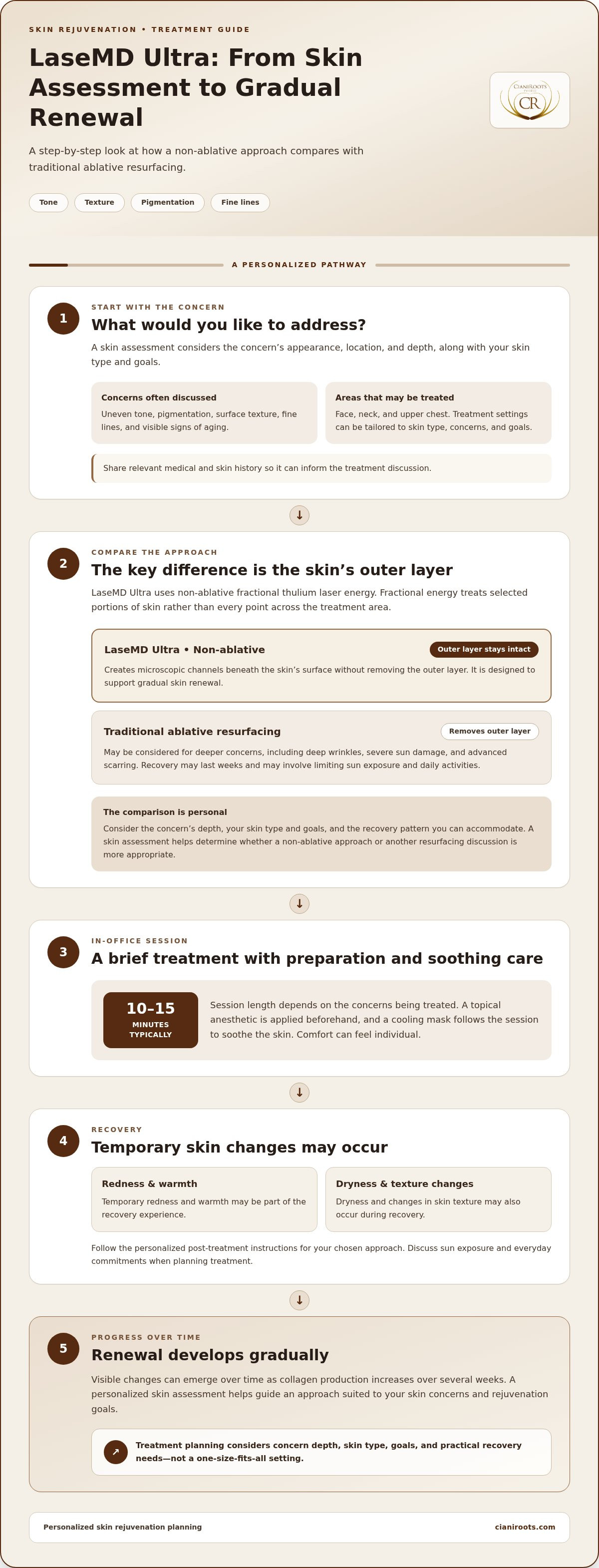
LaseMD Ultra uses non-ablative fractional laser energy, while traditional ablative lasers remove the outer skin layer. That difference affects how each approach resurfaces skin and what recovery may involve.
Non-Ablative Fractional Laser Technology
LaseMD Ultra is a non-ablative fractional laser treatment designed to improve overall skin tone, texture, pigmentation, fine lines, and other visible signs of aging with minimal downtime. It creates microscopic channels beneath the skin’s surface without removing the outer layer. For someone considering LaseMD skin rejuvenation, the key question is whether this approach suits their concerns and recovery preferences. Treatment settings can be customized to skin type, concerns, and goals.
Thulium Laser Resurfacing
Lutronic makes LaseMD, which uses a fractional thulium laser. “Fractional” means the energy treats selected portions of the skin rather than resurfacing every point across the treatment area. The non-ablative thulium approach forms microscopic channels beneath the surface without removing the outer layer. That mechanism distinguishes it from ablative resurfacing, which removes surface skin.
Traditional ablative lasers may be considered for deeper concerns, including deep wrinkles, severe sun damage, and advanced scarring. Because these treatments remove the outer skin layer, recovery may last weeks. Patients may also need to limit sun exposure and daily activities during healing. Stronger numbing or longer recovery protocols may be part of the treatment process.
Acne and acne marks are different concerns, so clarify which one you want addressed. Active breakouts aren’t the same as textural marks or advanced acne scarring. Traditional laser resurfacing may address advanced scarring, but that doesn’t mean every laser treats active acne or every type of mark. The depth and character of scarring help frame the comparison.
Choosing a Laser Treatment
Start by identifying the concern: uneven tone, surface texture, deeper wrinkles, or advanced scars. Then consider the recovery pattern you can accommodate. LaseMD Ultra doesn’t remove the outer layer, while ablative treatment does and may involve weeks of recovery. Skin type, treatment goals, and everyday commitments all help shape an appropriate approach.
A practical comparison is someone seeking a less disruptive resurfacing approach versus someone focused on deeper scarring. Neither description determines the choice by itself. A skin assessment should consider the treatment area, the concern’s depth, and the person’s goals. Those details help tailor LaseMD Ultra settings or determine whether another resurfacing approach better fits.
Skin concerns treated
LaseMD Ultra can be tailored to concerns involving skin tone, texture, and renewal. Treatment can address the face, neck, and upper chest, with settings adjusted to skin type, concerns, and goals. Naming a concern is only the starting point: its location, appearance, and depth also matter when planning a session.
Who may be a good candidate, and who should avoid it? LaseMD is described as suitable for all skin types when performed under plastic surgeon supervision, but the best fit depends on the concern and treatment goals. People seeking treatment for severe sun damage, deep wrinkles, or advanced scarring may need a different resurfacing approach, since traditional ablative lasers can address deeper concerns.
At an initial consultation, describe what you want to improve, such as uneven tone or rough texture. The practitioner can assess the treatment area and personalize the approach instead of relying on a one-size-fits-all setting. Skin type, concern, and goals all matter when customizing treatment. Share relevant medical and skin history so it can inform the discussion.
Comparing Treatment Approaches
Ablative treatments remove the outer skin layer and may involve recovery lasting weeks. LaseMD Ultra is non-ablative, so it creates microscopic channels beneath the surface without removing that layer. Fraxel is also a named laser platform, but comparing names alone doesn’t tell you which treatment suits a particular concern. Compare the treatment method, the depth of the concern, and expected recovery instead.
For example, someone focused on tone and surface texture may discuss a non-ablative approach, while advanced scarring may call for a different resurfacing conversation. “Optimal” should mean a plan that matches the concern and practical recovery needs, not a promise of a particular result. Ask how the treatment plan addresses your specific skin goals.
In-Office Comfort and Aftercare
A LaseMD session typically lasts 10 to 15 minutes, depending on the concerns being treated. A topical anesthetic is applied beforehand, and a cooling mask follows the session to soothe the skin. These steps help explain what the in-office experience includes, though comfort can feel individual.
Aftercare matters, too. Traditional ablative laser recovery may involve limiting sun exposure and daily activities. Follow the personalized post-treatment instructions for your chosen approach, and discuss sun exposure before scheduling if it affects your routine. How can you find a qualified LaseMD provider near you? Look for plastic surgeon supervision and a consultation that evaluates your skin concerns and goals; a skin analysis can guide that conversation. Explore a personalized skin rejuvenation approach as a next step.
Skin texture during recovery
Recovery after LaseMD Ultra may involve temporary redness, warmth, dryness, and texture changes. The procedure itself typically takes 10 to 15 minutes; visible skin effects can unfold over the following days.
Redness During Recovery
Mild redness may appear during the first few hours after treatment. Redness, mild swelling, or a warm sensation can also last 1-2 days. These effects can overlap, so the skin’s appearance may change rather than follow a single, exact timeline. A light suntanned look may appear as red and brown spots darken for 2-7 days.
Temporary darkening is distinct from the longer-term changes people seek from treatment. For example, a spot that looks darker during the early recovery period can be part of the reported post-treatment response. Notice how your skin changes over the days after your session, and follow the post-treatment guidance provided for your treatment.
Downtime and Healing
Dryness and a sandpaper-like texture may occur for 5-7 days after LaseMD Ultra. This rough feel is a temporary skin texture change, not a signal to scrub or pick at the treated area. Gentle handling matters while the skin is recovering; use the skincare instructions provided for your session rather than adding products or steps on your own.
Recovery is commonly described as involving mild effects that resolve within a few days, though dryness or roughness may last longer. Plan around the full range of possible changes, not only the first hours of redness. If your routine includes an important event, account for the possibility of visible redness, darkened spots, or a light suntanned appearance.
What the Procedure and Recovery Feel Like
What is the LaseMD procedure like, and how long is recovery? A session typically lasts 10 to 15 minutes, with topical anesthetic applied before treatment and a cooling mask afterward. Mild redness may last a few hours, while dryness or sandpaper-like texture may continue for 5-7 days.
Blistering is a rare possible effect of LaseMD Ultra treatment. If blisters occur, contact the treating office immediately. This differs from expected temporary dryness or redness, and prompt communication helps the treating team respond to the specific skin change.
Recovery and results are related but distinct: temporary texture changes describe the healing period, not the final appearance. Visible results may begin 1-2 weeks after treatment, while skin changes can continue for up to one month. Keep those milestones separate when assessing your skin, and use the personalized aftercare instructions to guide your recovery.
Progressive results and collagen production
LaseMD Ultra results develop over time rather than appearing all at once. Visible changes can begin 1-2 weeks after treatment, with improvements continuing for up to one month.
Progressive Results
The gradual course reflects the skin’s response after treatment, including collagen production that increases over several weeks. This means the first visible change isn’t necessarily the full result. For example, an early improvement at 1-2 weeks may continue developing toward the one-month mark. Assessing progress across this period gives a clearer picture than judging the outcome immediately after a session.
Think of the treatment course as a sequence: the session comes first, early visible changes may follow, and further improvement can develop over the next several weeks. Expect progressive change, not an instant transformation. The degree and timing of visible improvement depend on the treatment plan and the skin concerns being addressed. Keeping expectations aligned with that gradual process helps make follow-up assessment more meaningful.
Visible Results Timeline
Use the reported milestones as a guide: visible results can appear 1-2 weeks after treatment, and improvements can continue for up to one month. These are separate points in the timeline, not competing estimates. The earlier milestone describes when changes may first become noticeable; the later one describes continued development after that initial change.
For a practical comparison, note your skin’s appearance before treatment, then review it at the 1-2-week point and again near one month. Consistent lighting and similar angles make those observations easier to compare. Avoid using the immediate post-treatment appearance as your final assessment, since temporary redness or roughness belongs to recovery, while visible results develop progressively.
Collagen Production
Collagen production increases over several weeks as LaseMD Ultra results develop. That gradual activity helps explain why changes continue beyond the first days after a session. The treatment timeline therefore has two distinct stages: early skin recovery and a longer period of progressive results. Separating these stages supports a more realistic assessment of what is changing.
During follow-up, consider the timing alongside the concern being treated and the goals established before the session. An early observation at 1-2 weeks captures the beginning of visible change; a later review near one month reflects continued improvement. This timeline doesn’t mean every concern changes in the same way. It gives a structured way to observe development while collagen production increases over several weeks.
Skin microchannels and collagen stimulation
LaseMD Ultra’s fractional thulium laser creates microscopic channels beneath the skin’s surface without removing the outer skin layer. This distinguishes its approach from ablative resurfacing. The channels are the treatment pathway, while fractional delivery focuses energy on selected areas rather than treating every point across the surface. Understanding that distinction helps clarify how this laser supports skin renewal.
“Microchannels” describes tiny pathways created by laser energy within the skin. They aren’t the same as removing a continuous layer of skin. With LaseMD Ultra, the outer layer remains intact while the fractional laser creates channels below the surface. This non-ablative design connects the treatment’s physical action with its aim of stimulating a gradual skin response, rather than relying on broad surface removal.
Collagen production increases over several weeks as results develop. That process helps explain why skin changes can continue after the treatment session, rather than appearing all at once. For example, someone tracking texture may notice that the skin’s appearance keeps evolving after the initial recovery period. The practical takeaway is to distinguish temporary surface changes from progressive results as the skin responds.
Fractional treatment also makes customization relevant. LaseMD Ultra settings can be adjusted according to skin type, concerns, and goals. A plan focused on uneven tone may differ from one centered on texture, even though both use the same laser platform. The treatment area matters, too: LaseMD can be used on the face, neck, and upper chest. These factors shape how the microchannel approach is applied.
Microchannels and collagen stimulation describe related but distinct parts of the treatment. The channels are created during laser delivery; collagen production increases over the following weeks. Neither term should be read as a promise that every concern will respond identically. Together, they explain the treatment’s mechanism and progressive timeline. This distinction can help you assess what the laser does beyond focusing only on the device name.
At a skin assessment, connect your concern to the treatment mechanism. Describe whether tone, texture, or renewal is your priority, and identify the area you want addressed. A customized plan can then account for skin type, goals, and treatment location. If you’re considering this microchannel-based approach, EXPLORE YOUR OPTIONS for personalized skin rejuvenation with LASEMD.
Ciani Roots Medical: CR signature with regenerative hair loss treatments
Ciani Roots Medical offers skin rejuvenation with LaseMD and regenerative therapy, with skin concerns assessed using the AURA 3D Skin Analyzer. Patients in Vacaville and Alamo can discuss their skin goals and individualized treatment planning. For hair concerns, the CR signature combines regenerative hair loss treatments, while KeraLase hair therapy pairs LaseMD Ultra with KeraFactor.
These are distinct treatment paths for different concerns. A consultation can help clarify which approach fits your priorities. Contact Ciani Roots Medical or visit cianiroots.com to start a conversation.
Choose a Next Step That Fits Your Skin Goals
Your next step can be a conversation about what you want to change and how treatment planning can reflect your skin’s needs. A consultation for LaseMD skin rejuvenation can connect your concerns with an individualized approach rather than a preset plan. Whether this treatment is a fit depends on your skin assessment, goals, and relevant history.
Ciani Roots Medical offers skin rejuvenation with LaseMD and regenerative therapy, alongside its CR signature regenerative hair loss treatments. For those exploring regenerative care, its personalized Acorn Secretome is created from the patient’s own stored cells and biology. These are distinct paths for different concerns, and a consultation can help clarify which conversation is relevant to you.
Bring your questions about treatment planning, skin analysis, or recovery to the discussion. A thoughtful next step starts with understanding your priorities. EXPLORE YOUR OPTIONS and take the next step at a pace that feels right for you.
Frequently Asked Questions
What Does LaseMD Address?
LaseMD may be used to address visible concerns such as uneven tone, pigmentation, fine lines, sun damage, and changes in skin texture. To make a consultation more focused, identify the concern that matters most and where you notice it. For example, you might prioritize pigmentation on the face or texture on the neck. This helps shape a discussion around your specific goals.
Can Lasers Do More?
Yes. Laser treatments use different technologies and are selected according to the skin concern and treatment goals. The term “laser” alone doesn’t describe the approach or what it’s intended to address. In a consultation, describe the change you hope to see and any treatment priorities. That gives the practitioner a clearer basis for discussing whether a laser approach fits your needs.
How Does LaseMD Work?
LaseMD uses fractional laser energy as part of a skin-renewal treatment. Treatment planning can be adjusted to the area and concern being discussed. For instance, a plan for uneven tone may emphasize different goals than one focused on texture. Ask how the proposed settings and treatment area relate to the concern you want to address.
How Is LaseMD Administered?
LaseMD is administered in an office setting, with the treatment plan tailored to the skin concern and goals. Before scheduling, consider which areas you’d like assessed and what changes you hope to address. Share relevant skin history and discuss questions about comfort or treatment planning during the consultation. That conversation helps establish priorities for an individualized session.
What Happens After a LaseMD Session?
After a session, follow the aftercare instructions provided for your treatment and keep your routine simple according to that guidance. Before treatment, ask which of your usual skincare products to pause or resume, rather than making changes independently. If you notice an unexpected change, contact the treating office and describe when it appeared and how the area looks.
What are the results of LaseMD™?
Results are assessed in relation to the concern addressed and the goals discussed before treatment. For example, someone focused on pigmentation can consider whether that specific concern appears different, while a person focused on texture can evaluate that area. A focused review is more useful than judging several unrelated skin features at once. Discussing your observations during follow-up can help guide next steps.
What does LaseMD™ feel like?
The experience can vary by person and treatment area. If comfort is a concern, raise it before the session so the treatment team can explain the process and discuss available comfort measures. You can also describe any prior experiences with laser treatments. Sharing those details makes the conversation specific to you rather than relying on someone else’s description.
What is LaseMD skin rejuvenation and how does it work?
LaseMD skin rejuvenation is a personalized laser treatment used to address visible skin concerns such as tone, pigmentation, fine lines, and texture. The treatment plan is shaped around the person’s skin and goals, rather than assuming one approach suits everyone. Before proceeding, clarify which concern is the priority and what changes you hope to evaluate after treatment.
Article by
Adriane McDonald BSN,RN
Adriane McDonald, BSN, RN, is a hair restoration specialist with nearly 40 years of experience working with men and women experiencing hair loss and thinning. As the Founder and Practice Director of Ciani Roots Medical, she works alongside the practice’s Medical Director to provide personalized hair restoration, scalp health, regenerative therapies, and advanced skin rejuvenation.
Her approach combines extensive hands-on experience with detailed scalp analysis, medical collaboration, and individualized treatment planning. Adriane is currently completing advanced training toward certification in trichology, further expanding her expertise in hair and scalp health.
Disclaimer
This content is provided for general educational and informational purposes only and is not intended to serve as medical advice, diagnosis, or treatment. Individual needs, treatment recommendations, and results vary. A consultation and appropriate evaluation are necessary to determine which treatment options may be suitable for you. Viewing or interacting with this content does not establish a healthcare professional-patient relationship with Ciani Roots Medical.
Individual results may vary, and no specific outcome can be guaranteed. Before-and-after images, testimonials, or treatment experiences represent individual results and should not be considered a guarantee of similar results.


