
The most effective alternative to finasteride may not be another medication. It depends on what’s causing your hair loss. If you have concerns about side effects, medication suitability, or whether a device or procedure is supported by evidence, it’s understandable to want a clear comparison of alternatives to finasteride for hair loss.
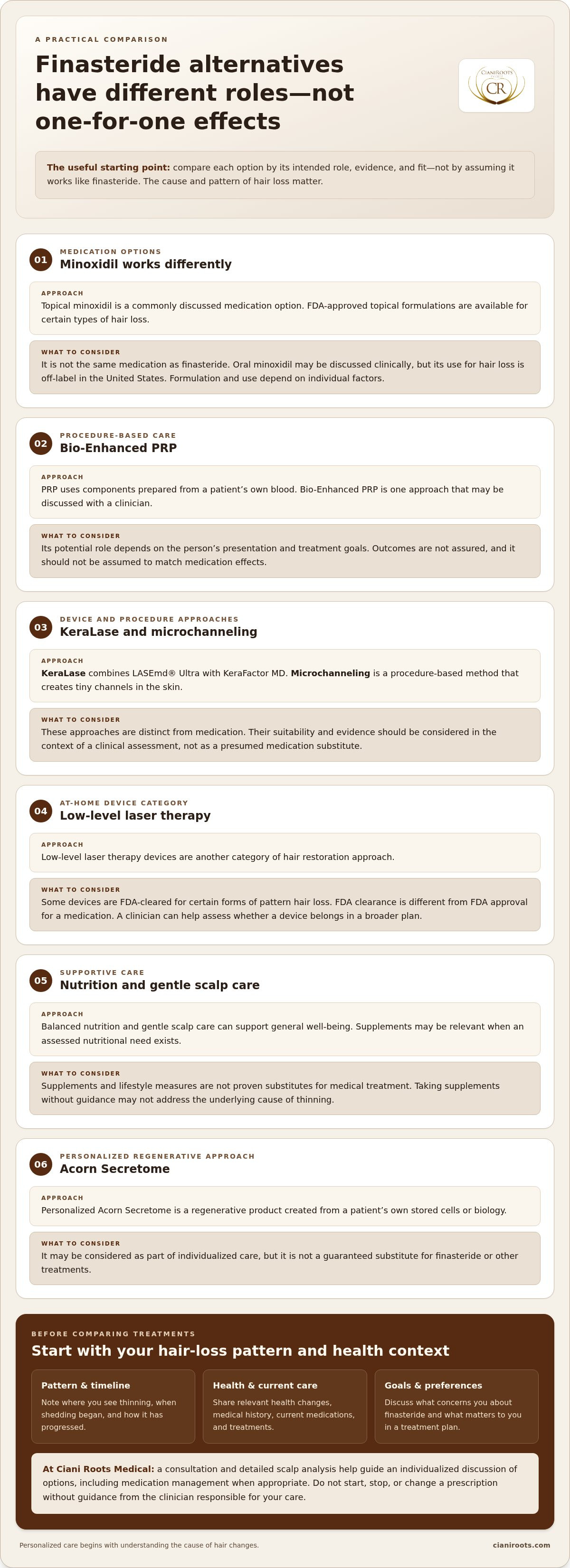
Different approaches have different roles. Minoxidil may be considered as a medication option, while low-level laser therapy, Bio-Enhanced PRP, and other regenerative treatments take a procedural approach. None is a universal substitute for finasteride. The right option depends on your diagnosis, health history, preferences, and goals. Medication management may also be considered alongside other treatments when appropriate.
This article explains how these options differ, what to consider about their evidence and limitations, and why identifying the cause of thinning matters before choosing a treatment. At Ciani Roots Medical, a consultation and detailed scalp analysis help guide an individualized plan, including whether KeraLase or personalized Acorn Secretome may be appropriate. The goal is to explore thoughtful next steps, not to promise a particular result.
Key Takeaways
- Alternatives to finasteride for hair loss include different treatment approaches, not guaranteed one-for-one replacements.
- Compare options by their intended role, evidence, and fit for your needs rather than assuming one approach is best for everyone.
- Clarify what concerns you about finasteride and note your shedding pattern, timeline, health changes, and current treatments.
- A scalp assessment can help distinguish possible causes of hair loss and guide a more relevant treatment discussion.
- A personalized plan may include medication management, Bio-Enhanced PRP, or KeraLase when appropriate, with follow-up to review your care.
What Does It Mean to Choose an Alternative to Finasteride?
There are valid reasons to explore options beyond finasteride. You may have questions about possible side effects, prefer not to use a particular medication, or be unsure whether it fits your health history. Learning about finasteride can help you understand its uses and how it works, but choosing a different approach is not simply a matter of swapping in an equivalent treatment.
No single alternative suits everyone. The right discussion depends on the pattern, duration, and possible cause of your hair loss. Alternatives to finasteride for hair loss can include other forms of medication management, procedures, devices, or supportive care. These approaches have different intended roles and evidence, and none should be assumed to produce the same effects as finasteride.
Why someone might explore hair loss treatments without finasteride
Medication concerns are personal. Some people want to understand potential risks, while others have health considerations that affect suitability. A clinician can review your medical history, current medications, and goals before discussing whether medication management or another approach may be appropriate. Don’t start, stop, or change a prescription without guidance from the clinician responsible for your care.
Start with the type and cause of hair loss
Gradual thinning at the temples, crown, or part may look different from a sudden increase in shedding across the scalp. The timing and distribution of hair changes can help shape the next questions, though appearance alone doesn’t establish the cause.
Genetics, hormonal changes, stress, and scalp health may all be relevant. Hair changes can also happen around major health or life changes. Noting when shedding began, where you notice it, and how it has progressed can make a consultation more useful. A detailed scalp assessment can guide the discussion and help identify what information may be needed next, but it doesn’t guarantee a diagnosis.
At Ciani Roots Medical, a consultation and scalp analysis provide a starting point for discussing your hair-loss pattern and potential next steps. A personalized plan may include medication management when appropriate or other hair restoration approaches, based on your assessment rather than a one-size-fits-all substitution.
How Non-Finasteride Hair Restoration Approaches Work
Hair restoration options can be grouped by how they’re used and what they’re intended to address. A treatment that supports hair growth may have a different purpose from one chosen to improve scalp health or complement medical management. Evidence also varies, so a treatment’s popularity or availability doesn’t establish that it’s right for every type of hair loss.
Medications, procedures, devices, and supportive care aren’t interchangeable. Each has a distinct role, and suitability depends on the individual.
Medication and non-prescription approaches
Topical minoxidil is a commonly discussed medication option, with FDA-approved topical formulations for certain types of hair loss. It works differently from finasteride, and the appropriate formulation and use depend on individual factors. Oral minoxidil may also be discussed clinically, but its use for hair loss is off-label in the United States. Make medication decisions with medical guidance.
Supplements and lifestyle measures are not proven substitutes for medical treatment. Supplements may be relevant when an assessed nutritional need exists, but taking them without guidance may not address the underlying cause of thinning. Balanced nutrition and gentle scalp care can support general well-being, but they shouldn’t be treated as a guaranteed hair restoration plan.
Procedures, devices, and regenerative approaches
Platelet-rich plasma (PRP) is a procedure that uses components prepared from a patient’s own blood. Bio-Enhanced PRP is one approach to discuss with a clinician. Its potential role depends on the person’s presentation and treatment goals, and outcomes aren’t assured.
KeraLase combines LASEmd® Ultra with KeraFactor MD as a hair restoration approach. Microchanneling is another procedure-based method that creates tiny channels in the skin. These approaches are distinct from medication. Consider their suitability and evidence in the context of a clinical assessment rather than assuming they match a medication’s effects.
Low-level laser therapy devices are another category. Some are FDA-cleared for certain forms of pattern hair loss. Clearance is different from FDA approval for a medication. A clinician can help place a device within a broader plan, if appropriate.
Personalized Acorn Secretome is a regenerative product created from a patient’s own stored cells or biology. It may be considered as part of individualized care, but it isn’t a guaranteed substitute for finasteride or other treatments.
Because these options differ in purpose and evidence, a consultation and scalp analysis can help clarify which approaches merit discussion. Explore a personalized scalp analysis as a starting point for comparing options.
Compare Finasteride Alternatives by Approach, Evidence, and Fit
Comparing alternatives to finasteride for hair loss means looking beyond a simple “works or doesn’t” label. Consider what each approach is intended to do, how relevant the supporting evidence is, and whether it fits your hair-loss pattern, health history, and preferences. The categories below aren’t ranked: they serve different purposes, and individual responses vary.
| Approach | Intended role | Evidence caveat | Discussion points |
|---|---|---|---|
| Medication management | Review medication options that may be appropriate for the individual and type of hair loss. | Evidence and approved uses differ by medication and formulation. Some uses may be off-label. | Personal health history, potential risks, suitability, and whether medication is a preference or concern. |
| Bio-Enhanced PRP | A clinic-based procedure using components prepared from the patient’s own blood. | PRP research findings vary across studies and treatment methods; results aren’t assured. | Goals, the clinician’s assessment, and how the procedure might fit into an individualized plan. |
| KeraLase | A hair restoration approach using LASEmd® Ultra and KeraFactor MD. | Evidence should be considered for the specific approach and in the context of the individual’s needs. | Scalp findings, treatment goals, and how progress would be reviewed. |
| Personalized regenerative approach | May be considered as part of a broader hair restoration plan. Acorn Secretome is created from the patient’s own stored cells or biology. | Regenerative approaches are not direct medication substitutes, and evidence can differ by method. | Individual suitability, the intended role in care, and realistic expectations. |
Medication management versus procedural treatment
Medication management involves reviewing whether a medication is appropriate and how it fits a person’s care. Procedures such as PRP or KeraLase are clinic-based approaches with different goals and considerations. A clinician may discuss using treatments in combination or in stages when appropriate, but a procedure shouldn’t be assumed to replace medication or provide equivalent effects.
How to interpret evidence and expectations
Study results can’t predict exactly how one person will respond. When weighing claims about effectiveness, duration, or adverse effects, consider whether the information applies to the specific treatment, formulation, and type of hair loss being discussed. Photographs taken consistently, scalp findings, and follow-up can help document changes and guide decisions about continuing or adjusting a plan.
A consultation and scalp analysis can connect this comparison to your individual presentation. The goal is a clear, medically guided discussion of potential fit and limitations, not a universal ranking or promise of a particular result.
How to Decide Which Finasteride Alternative to Discuss
A useful consultation starts with your experience, not a treatment name. Before comparing alternatives to finasteride for hair loss, gather a few details that can connect your concerns with your hair-loss pattern and care goals.
- Clarify your concerns. Note what you hope to avoid or understand about finasteride, such as medication suitability, possible side effects, or a preference to discuss non-medication approaches.
- Describe what you’ve noticed. Record where thinning or shedding occurs, when it began, and whether it has changed. Include relevant health changes and current treatments or medications.
- Compare your goals. Consider whether your main priority is addressing shedding, supporting hair density, or improving scalp health. Different approaches have different intended roles.
- Plan follow-up. Discuss how progress may be reviewed, what changes to track, and when your care plan might be reassessed. Response and timing vary between individuals.
A scalp analysis adds useful context by documenting visible scalp and hair findings. It can inform the next clinical discussion, but it doesn’t independently identify every possible cause or replace an appropriate medical evaluation.
Questions to bring to a hair restoration consultation
Ask how your hair-loss pattern and history shape the treatment discussion. You can also ask about each option’s intended benefits, limitations, potential risks, and follow-up needs. Review current medications and relevant health changes with the medical team, and share when the shedding began or whether it followed a significant life or health event.
Preparing for a hair consultation and learning about common causes of hair loss can help you organize questions. The details you bring are useful, even if you’re unsure how to interpret them.
Set realistic goals before comparing treatments
Be specific about what you hope to address, while keeping expectations flexible. A clinician can discuss whether medication management, Bio-Enhanced PRP, KeraLase, or a regenerative approach may fit your assessment and goals. None should be assumed to work the same way or produce a particular outcome. For broader context, review the earlier comparison of treatment approaches, evidence, and fit.
A complimentary consultation and detailed scalp analysis at Ciani Roots Medical can help shape an individualized discussion of next steps. Explore your options.
Personalized Finasteride Alternatives at Ciani Roots Medical
Choosing among hair-loss treatments is easier when the conversation starts with your concerns and scalp findings. At Ciani Roots Medical, a complimentary consultation and detailed scalp analysis help inform an individualized plan. The goal isn’t to replace finasteride with one standard alternative, but to discuss approaches that may suit your needs and goals.
A medically directed plan begins with assessment
Your consultation can include a review of your hair-loss history, current treatments, health considerations, and what you hope to address. Scalp findings add context, while your history helps clarify how changes have developed over time. Together, these details help guide a plan tailored to you rather than a one-size-fits-all package.
Depending on the assessment, the discussion may include medication management when appropriate, as well as procedural and regenerative approaches. Recommendations are individualized, and no option can promise a particular result. Bringing a list of medications, relevant health changes, and questions about treatment concerns can help make the conversation more useful.
Explore regenerative and medication-management options
Medication management may be considered as part of medically directed care. Bio-Enhanced PRP, which uses components from your own blood, and KeraLase with LASEmd® Ultra and KeraFactor MD are procedural approaches with different roles from medication. They aren’t direct substitutes for finasteride, and their suitability depends on your assessment and treatment goals.
Personalized Acorn Secretome is a regenerative product created from your own stored cells or biology. It may be considered within an individualized plan, without implying that it will produce hair regrowth or replace another treatment. These are among the approaches that may be discussed when exploring alternatives to finasteride for hair loss.
Ciani Roots Medical provides personalized hair restoration care in Vacaville and Alamo. If you’re weighing your options, a complimentary consultation and scalp analysis offer a thoughtful starting point for discussing next steps with the medical team.
Take a Thoughtful Next Step for Your Hair
The right alternatives to finasteride for hair loss depend on more than medication preference. Your hair-loss pattern, health history, and goals help shape which options are worth discussing. Medications, procedures, devices, and regenerative approaches have different roles, and none is a guaranteed one-for-one replacement.
A consultation and detailed scalp analysis can help connect those choices to your individual needs. At Ciani Roots Medical, care is provided with dedicated medical director oversight. Founder Adriane McDonald, BSN, RN, brings nearly 40 years of hair restoration experience to the practice’s personalized approach.
Whether you’re exploring medication management, Bio-Enhanced PRP, KeraLase, or a regenerative option, a clear clinical discussion can help you understand potential fit and limitations. Ciani Roots Medical serves patients in Vacaville, Alamo, and surrounding communities, including Fairfield, Dixon, Suisun City, Benicia, Vallejo, Napa, Winters, Davis, Woodland, Solano County, Yolo County, Napa Valley, Danville, Walnut Creek, San Ramon, Blackhawk, and Lafayette. Schedule a complimentary consultation to discuss a plan tailored to you.
Frequently Asked Questions
What is the best alternative to finasteride for hair loss?
There isn’t one best alternative for everyone. The right option depends on the type and possible cause of hair loss, your health history, and what you hope treatment will address. Options may include medication management, procedures such as PRP, or approaches like KeraLase. A clinical consultation and scalp analysis can help identify which choices are relevant to discuss, without promising a particular outcome.
Can minoxidil replace finasteride?
Minoxidil may be an option, but it doesn’t work in the same way as finasteride and isn’t automatically a direct replacement. Topical minoxidil is available in FDA-approved formulations for certain uses; oral minoxidil for hair loss is used off-label in the United States. The suitable formulation and treatment plan depend on individual factors. Discuss medication choices with a clinician, and don’t start, stop, or change a prescription without medical guidance.
Are there hair loss treatments without finasteride?
Yes. Alternatives to finasteride for hair loss may include other medication options, clinic-based procedures such as PRP, laser-based approaches such as KeraLase, and personalized regenerative treatments. These categories have different intended roles and evidence, so they aren’t interchangeable. Supplements or lifestyle measures shouldn’t be treated as proven substitutes for medical care. Supplements may be relevant when a specific need is identified and discussed with a clinician.
Is PRP an alternative to finasteride for hair loss?
PRP can be considered as a non-finasteride procedure, but it isn’t a medication and shouldn’t be assumed to have the same effects. It uses components prepared from a patient’s own blood, and its potential role depends on the individual’s assessment and goals. Evidence and treatment methods vary, and results aren’t guaranteed. A clinician can help explain whether Bio-Enhanced PRP is a reasonable approach to discuss in your care plan.
Can hair loss treatments be combined?
Some treatment plans may combine or sequence approaches, depending on the hair-loss pattern, health history, and goals. A clinician might discuss medication management alongside a procedure or regenerative approach when appropriate. Combining treatments doesn’t guarantee a better outcome, and one option shouldn’t be assumed to replace another. Review potential benefits, limitations, and follow-up needs with the medical team before making changes to medications or starting a new treatment.
What should I discuss before choosing an alternative to finasteride?
Share what concerns you about finasteride, when hair changes began, where you’re noticing thinning or shedding, and whether the pattern has changed. Bring a list of current medications and relevant health changes. Ask how your history and scalp findings inform the discussion, what each option is intended to do, and what follow-up may involve. This context helps make treatment planning more specific, though assessment alone may not identify every cause.
Does Ciani Roots Medical offer non-finasteride hair restoration in Vacaville or Alamo?
Yes. Ciani Roots Medical offers personalized hair restoration care in Vacaville and Alamo, including detailed scalp analysis, Bio-Enhanced PRP, KeraLase, regenerative approaches, and medication management when appropriate. A complimentary consultation helps inform an individualized plan. The practice serves surrounding communities, including Fairfield, Dixon, Suisun City, Benicia, Vallejo, Napa, Winters, Davis, Woodland, Solano County, Yolo County, Napa Valley, Danville, Walnut Creek, San Ramon, Blackhawk, and Lafayette.
Article by
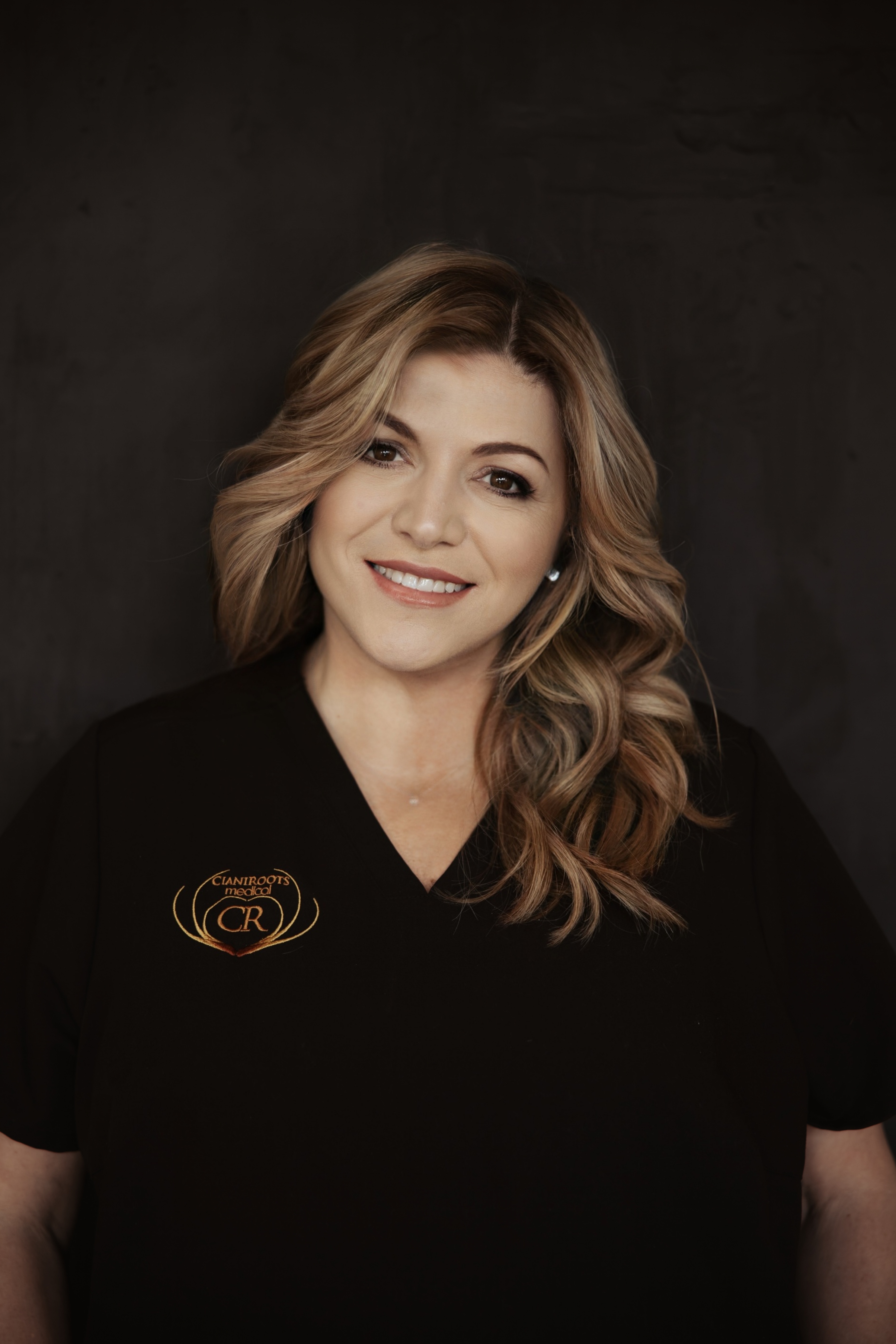
Adriane McDonald BSN,RN
Adriane McDonald, BSN, RN, is a hair restoration specialist with nearly 40 years of experience working with men and women experiencing hair loss and thinning. As the Founder and Practice Director of Ciani Roots Medical, she works alongside the practice’s Medical Director to provide personalized hair restoration, scalp health, regenerative therapies, and advanced skin rejuvenation.
Her approach combines extensive hands-on experience with detailed scalp analysis, medical collaboration, and individualized treatment planning. Adriane is currently completing advanced training toward certification in trichology, further expanding her expertise in hair and scalp health.
Disclaimer
This content is provided for general educational and informational purposes only and is not intended to serve as medical advice, diagnosis, or treatment. Individual needs, treatment recommendations, and results vary. A consultation and appropriate evaluation are necessary to determine which treatment options may be suitable for you. Viewing or interacting with this content does not establish a healthcare professional-patient relationship with Ciani Roots Medical.
Individual results may vary, and no specific outcome can be guaranteed. Before-and-after images, testimonials, or treatment experiences represent individual results and should not be considered a guarantee of similar results.


