
Could the sudden increase in hair in your brush be part of recovery after pregnancy rather than a sign that your follicles are permanently damaged? Postpartum hair loss can feel alarming, especially while you’re adjusting to life with a new baby. The shedding is often temporary, but understanding what’s typical and what deserves a closer look can help you decide what to do next.
After delivery, changing hormone levels can shift more hairs than usual into the resting phase, leading to noticeable shedding a few months later. This process is called telogen effluvium. It usually eases over time, though the experience and timeline vary. Breastfeeding itself isn’t considered the cause.
In this article, you’ll learn why postpartum shedding happens, which patterns are common, and how to care for your hair and scalp gently. We’ll also cover signs that may point to another scalp or hair condition, such as patchy loss or irritation, and when an assessment may be appropriate. If shedding is persistent or concerning, a personalized scalp analysis can help put the pattern in context and guide thoughtful next steps.
Key Takeaways
- Postpartum hair loss can follow different timelines, so notice how shedding changes rather than relying on a single deadline.
- Diffuse shedding differs from patchy loss or changing scalp symptoms, which may warrant professional assessment.
- Gentle handling and comfortable hairstyles can help reduce avoidable stress on your hair while it sheds.
- Persistent, unusual, or distressing changes can be discussed during a personalized hair and scalp assessment.
What Is Postpartum Hair Loss, and Why Can It Feel So Sudden?
Finding more hair than usual in your brush, shower, or hands can be unsettling, especially while you’re adjusting to life after birth. The change may seem to appear all at once, but it often reflects a shift in the hair-growth cycle that began earlier. The amount of shedding varies from person to person. Even when the scalp looks otherwise healthy, seeing extra hairs can feel distressing.
Postpartum hair loss is increased hair shedding after childbirth, commonly called telogen effluvium. Telogen effluvium is a temporary increase in shedding as more hairs leave their resting phase; it does not, by itself, mean the follicles have been permanently lost. This can be reassuring, though it doesn’t identify the cause of every person’s hair changes. Other conditions can also affect fullness or the scalp, so persistent or unusual changes deserve individual attention.
How the hair-growth cycle relates to postpartum shedding
Hair follicles move through repeating stages. In the growth phase, a strand lengthens. In a brief transition phase, growth stops. The follicle then rests before releasing the strand, and a new strand can grow as the cycle begins again. During pregnancy, hormonal changes may keep more hairs in the growth phase for longer than usual. After delivery, shifting hormone levels can prompt more of those hairs to enter the resting phase around a similar time, then shed later. This helps explain why visible shedding may occur months after birth. For a broader overview of telogen effluvium, the medical term for postpartum hair loss, see the linked reference. Not everyone experiences the same shift or amount of shedding.
Why the change can look more dramatic after birth
When a larger group of hairs sheds within a shorter period, the contrast with your usual routine can be striking. You might notice more strands caught in a brush, gathered in the shower, or visible on clothing. Hair can also seem less full around the temples or across the scalp, particularly when shed hairs are longer and easier to spot. The amount you see in a single wash or brushing can be alarming, but appearance alone can’t show how many follicles are active or explain why shedding is happening.
It’s reasonable to feel concerned. The visible change does not automatically mean permanent follicle damage, but persistent, uneven shedding or new scalp symptoms shouldn’t be dismissed. Notice the overall pattern and whether it changes over time, rather than judging your hair by a single wash or brushing. That context can help you describe what you’re seeing if you decide to seek an assessment.
When Does Postpartum Hair Loss Start, and How Long Can It Last?
There isn’t one timetable that fits everyone. Shedding may become noticeable weeks or months after childbirth, and the point when it starts to ease can vary. Differences between medical guidance often reflect whether it describes the period of heavier shedding or the longer process of hair returning toward its usual fullness.
Postpartum shedding commonly improves over time, but the timing and pace of change vary from person to person. A general timeline can offer context, but it can’t predict exactly what will happen to your hair.
A practical timeline without a guaranteed timetable
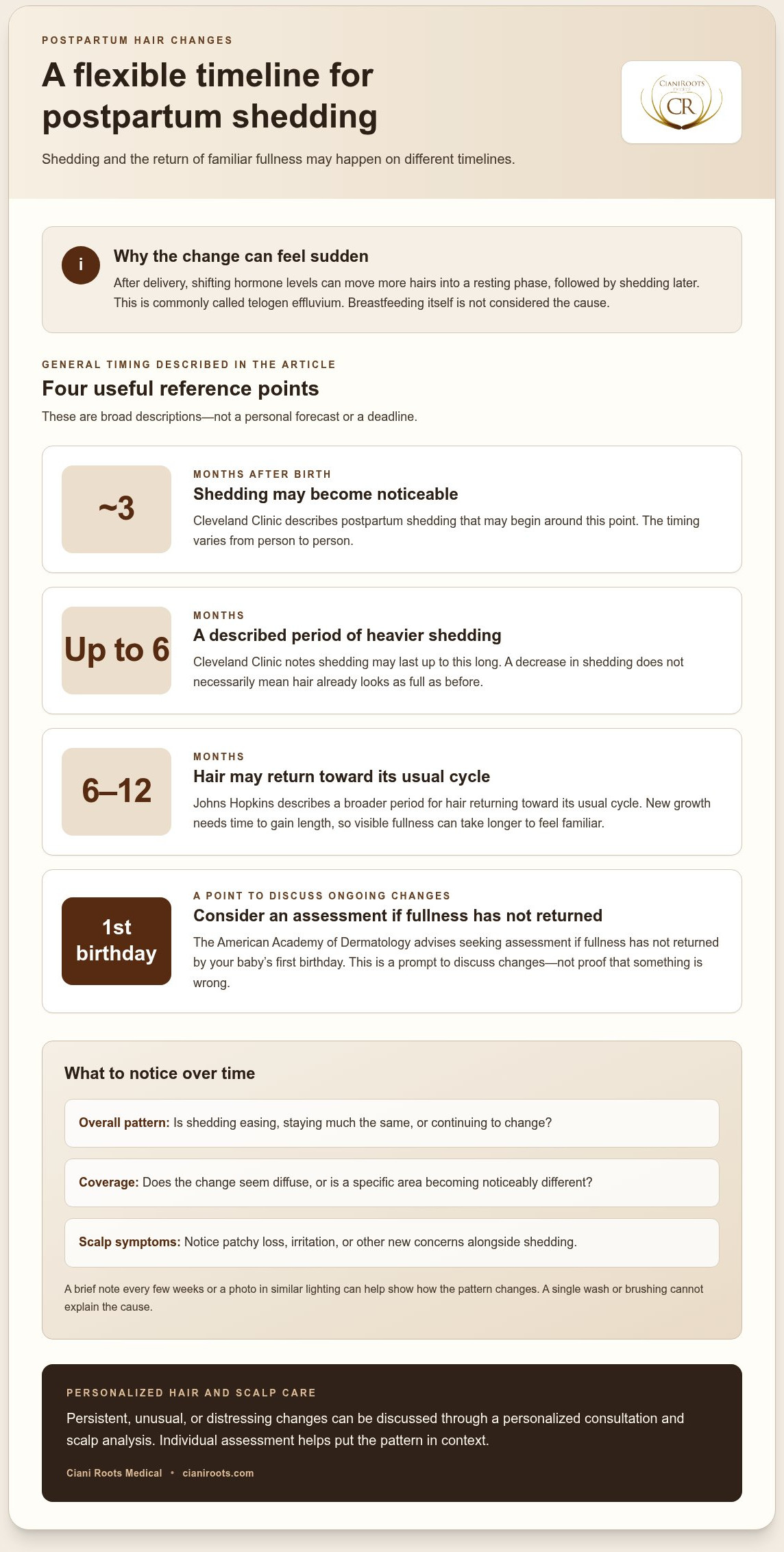
Cleveland Clinic describes shedding that may begin around three months after birth and last up to six months. Johns Hopkins describes a broader period, with hair returning toward its usual cycle over roughly six to twelve months. These ranges aren’t necessarily contradictory: shedding may slow before hair looks as full as it did before pregnancy. They describe general patterns, not a deadline for an individual.
The delay has a biological explanation. Hairs shifted into a resting phase don’t all release immediately, so visible shedding can follow hormonal changes after delivery rather than happen at once. The American Academy of Dermatology advises seeking assessment if fullness hasn’t returned by your baby’s first birthday. That’s a useful prompt to discuss ongoing changes, not a reason to assume something is wrong before then.
What to observe as shedding changes
Instead of counting strands each day, step back and notice the general pattern over time. Is the shedding easing, staying much the same, or continuing to change? A brief note every few weeks, or a photo taken in similar lighting, may help you compare without making hair monitoring another daily source of stress.
It can help to keep an eye on:
- Whether shedding seems to be increasing, easing, or staying steady.
- Whether overall coverage looks different, or a specific area seems to be changing.
- Whether scalp symptoms or other new concerns appear alongside the shedding.
Even as shedding settles, hair may not immediately feel or look familiar. New growth needs time to gain length, and short regrowing hairs can affect how your hair sits or styles. Density can take longer to appear restored than it takes for the number of shed hairs to decrease. If changes remain concerning, a scalp assessment can help put the pattern in context. Ciani Roots Medical provides personalized hair and scalp care in Vacaville and Alamo. Learn more or schedule a complimentary consultation.
How Can You Tell Typical Postpartum Shedding From Hair Loss That Needs Attention?
The pattern can help you decide what to monitor, but it can’t establish a cause. Postpartum hair loss often involves increased shedding across the scalp, while a distinct bare patch or noticeable scalp discomfort may call for a closer look. An unusual change doesn’t automatically mean a serious condition. It does mean your overall pattern, symptoms, and health history matter.
Use this comparison as a guide to what you might notice, not as a way to diagnose yourself. Hair can look different from one area to another, and more than one factor may contribute to a change in fullness.
| Pattern | What you may notice | What to consider |
|---|---|---|
| Diffuse shedding | More loose strands across the scalp, rather than one clearly defined area of loss. | This can fit postpartum shedding, particularly when the change follows childbirth, but appearance alone can’t confirm the cause. |
| Patchy loss | A distinct area looks thinner or bare compared with the surrounding scalp. | Because this differs from broad shedding, discuss it with a qualified clinician rather than assuming it is part of postpartum change. |
| Other changing scalp concerns | Scalp discomfort, irritation, or a noticeable change in coverage or hairline. | These details may help a clinician decide whether other hair, health, or scalp factors should be considered. |
Patterns that may fit diffuse postpartum shedding
Diffuse shedding means loose hairs appear to come from across the scalp instead of only one clearly defined spot. Some people notice less volume overall; others are especially aware of changes around the hairline or temples. These observations can help describe what’s happening, but they aren’t diagnostic thresholds. The amount and distribution of shedding can vary, and an individual pattern needs context.
Changes worth discussing with a clinician
Consider arranging an assessment if loss is patchy, worsening, persistent, or accompanied by scalp discomfort or other marked changes. That doesn’t mean a serious cause is likely; it means the pattern merits individual attention. A clinician may consider health history and possible hormonal, nutritional, or scalp-related contributors alongside the timing of shedding.
Patterns can also differ between temporary, broad shedding and gradual thinning that follows a more defined distribution. For an example of how a patterned form of hair loss may appear, see male pattern baldness signs and causes. That comparison isn’t a diagnosis, and hair-loss patterns don’t look identical in every person.
A description or photograph alone can’t determine why hair is shedding. If the change concerns you, a professional can review its course, examine scalp health, and consider whether further evaluation is appropriate. A detailed scalp analysis and personalized consultation can help organize those observations into thoughtful next steps, without assuming that every change has the same explanation.
Caring for Your Hair During Postpartum Shedding
While your hair is shedding, small adjustments can make daily care feel more manageable. The aim isn’t to stop the cycle with a styling trick or a special product. It’s to handle your hair gently, avoid unnecessary pulling, and choose routines that feel comfortable during a demanding season of life.
Gentle hair care can support comfort and appearance, but it doesn’t diagnose or treat an underlying cause of shedding.
Gentle styling and washing habits
Keep your routine simple and low tension. You don’t need to avoid washing your hair because you’re shedding; loose hairs may simply be more noticeable during washing. Detangle patiently, starting near the ends and working upward, and ease off if a brush catches or pulls. These habits can reduce avoidable tugging, though they won’t change the hair-growth cycle.
- Choose comfortable styles that don’t pull tightly at the hairline or scalp.
- Use a gentle touch when detangling, and avoid pulling through knots.
- Moderate heat styling if it leaves your hair feeling dry or fragile.
- If you use volumizing products, treat them as cosmetic options. What looks and feels comfortable can depend on your hair type and scalp.
There’s no need to force a new routine if your current one feels comfortable. The purpose is to limit added tension and breakage, not to make shedding disappear. Products that add body may change how full your hair looks temporarily, but appearance alone doesn’t reveal why shedding is happening.
Nutrition, supplements, and product claims
During postpartum recovery, regular nourishment can be one part of caring for your overall well-being. No single food or nutrient should be treated as a guaranteed way to prevent or reverse shedding. If you’re concerned about your diet, health, or a possible deficiency, discuss it with a qualified clinician rather than starting a restrictive eating plan or taking supplements on your own.
This is especially worth discussing if you’re breastfeeding. A clinician can consider your individual health and circumstances before advising on supplements. Be cautious of products promising rapid or guaranteed regrowth; confident marketing language doesn’t establish what’s causing your shedding or whether a product is appropriate for you.
If shedding feels persistent or you’re unsure whether your pattern is typical, a personalized consultation and scalp analysis can help clarify what to consider next. Ciani Roots Medical provides individualized hair and scalp care in Vacaville and Alamo. Read about personalized hair care options.
When Should You Consider a Postpartum Hair and Scalp Assessment?
You don’t have to wait until shedding feels severe to ask for guidance. Consider discussing it with a qualified professional if it’s persistent, worsening, patchy, accompanied by scalp discomfort, or causing significant concern. Your wellbeing matters, too. If uncertainty about your hair is adding to an already demanding period, that’s a valid reason to seek a thoughtful assessment.
An assessment can help distinguish a pattern that may fit temporary shedding from changes that deserve further evaluation. It doesn’t mean something is necessarily wrong, and it can’t promise a particular treatment or result. The goal is to understand your individual situation and determine whether any next steps are appropriate.
What a personalized scalp assessment can clarify
A consultation can review when the shedding began, how it has changed, and whether it appears diffuse or concentrated in particular areas. A clinician may also consider your health and hair history, current concerns, and scalp condition. Together, these details provide context that a photograph or brief description can’t capture on its own.
Assessment helps guide individualized next steps rather than guarantee regrowth. If further evaluation or medical management may be appropriate, decisions should be clinician-led and based on your circumstances. You can also share what you’ve already tried and what matters most to you, so the discussion stays focused on your concerns.
How Ciani Roots Medical approaches individualized hair care
Ciani Roots Medical is a medically directed practice offering personalized hair and scalp care. For ongoing or atypical shedding, the conversation can focus on your experience, relevant history, and what a scalp analysis may reveal. Care planning is based on those individual findings, rather than assuming that every change after childbirth has the same cause or calls for the same response.
Ciani Roots Medical’s hair restoration care may include detailed scalp analysis, Bio-Enhanced PRP, KeraLase® Hair Therapy with LASEmd® Ultra and KeraFactor MD, personalized Acorn Secretome created from your own stored cells and biology, or medication management when appropriate. These are options to discuss after a consultation and scalp analysis, not a standard package or a promise of regrowth. The relevance of each approach depends on your individual circumstances.
Ciani Roots Medical serves patients in Vacaville and Alamo, as well as Fairfield, Dixon, Suisun City, Benicia, Vallejo, Napa, Winters, Davis, Woodland, Solano County, Yolo County, Napa Valley, Danville, Walnut Creek, San Ramon, Blackhawk, and Lafayette. Before an appointment, you might note when you first observed a change, whether it has shifted, and any scalp symptoms or other health concerns. You don’t need to count every shed hair. A few observations can help make the conversation more useful and keep attention on the broader pattern.
If you’d like to discuss persistent or concerning shedding and explore an individualized approach, read about Ciani Roots Medical.
Take a thoughtful next step
Hair changes can bring uncertainty at a time when much of your attention is already focused on your baby. You don’t need to have every detail figured out before asking for guidance. It can be enough to recognize that the change concerns you and that you’d value a clearer understanding of what may be happening.
Give yourself room to make decisions at your own pace. Your concerns deserve to be heard without pressure to pursue a particular treatment. A conversation focused on your individual experience can help you think through practical next steps for postpartum hair loss with greater clarity.
When you’re ready, schedule a complimentary consultation with Ciani Roots Medical to discuss your concerns and explore whether a scalp analysis is appropriate.
Frequently Asked Questions
Can breastfeeding cause postpartum hair loss?
Breastfeeding itself isn’t considered the direct cause of postpartum hair loss. The hormonal changes associated with childbirth are the usual explanation, and individual experiences differ. Some research has observed an association between longer breastfeeding and shedding, but that doesn’t show breastfeeding is the cause or mean you should stop. If you’re concerned about persistent shedding, discuss your experience and any other changes with a qualified clinician.
Can postpartum hair loss happen after miscarriage or pregnancy loss?
Yes, increased shedding can follow pregnancy loss as the body adjusts after pregnancy-related hormonal changes. The possibility and timing can vary, and hair changes may be especially difficult to face while grieving. If shedding feels marked, continues, or comes with other symptoms, consider discussing it with a clinician. You deserve support for both your physical concerns and the emotional weight of this experience.
Can postpartum hair shedding affect my baby?
No, a parent’s hair shedding doesn’t affect a baby’s health or cause the baby to lose hair. It’s a change in the parent’s hair cycle, not something contagious or passed to the child. If loose strands collect on clothing or bedding, you can remove them as part of ordinary tidying, but there’s no need to change feeding or caregiving because of your shedding.
Can postpartum hair loss be prevented?
There isn’t a proven way to prevent shedding related to the body’s postpartum changes. Gentle detangling and avoiding tight hairstyles may reduce pulling or breakage, but they don’t stop hairs from cycling out. Be cautious of products claiming they can prevent or quickly reverse shedding. If changes are concerning, a clinician can help assess whether something beyond the postpartum transition may be contributing.
Should I take vitamins for postpartum hair loss?
Don’t start vitamins specifically for shedding without discussing them with a qualified clinician. Supplements may be useful in some situations, but the right choice depends on your health, diet, and whether a deficiency is present. This is especially relevant while breastfeeding, when you may want guidance on what’s appropriate. Ask about your current supplements and any symptoms that could help inform an individualized recommendation.
Can postpartum hair loss start during pregnancy?
Shedding that begins during pregnancy isn’t postpartum shedding in the usual sense, since it starts before delivery. Hair changes can still happen during pregnancy, but their cause may differ. Note when the change began and whether it’s diffuse or concentrated in one area. If shedding is sudden, patchy, or accompanied by scalp discomfort, raise it with your pregnancy care clinician rather than assuming it’s a normal postpartum pattern.
Is postpartum hair loss related to stress?
Stress can contribute to increased shedding, but it may not be the only factor after childbirth. Physical and emotional strain, disrupted sleep, and hormonal changes can overlap, making the cause difficult to identify from timing alone. Try not to blame yourself for shedding or assume that reducing stress will resolve it. If hair changes persist or worry you, a clinician can review the broader picture with you.
Article by
Adriane McDonald BSN,RN
Adriane McDonald, BSN, RN, is a hair restoration specialist with nearly 40 years of experience working with men and women experiencing hair loss and thinning. As the Founder and Practice Director of Ciani Roots Medical, she works alongside the practice’s Medical Director to provide personalized hair restoration, scalp health, regenerative therapies, and advanced skin rejuvenation.
Her approach combines extensive hands-on experience with detailed scalp analysis, medical collaboration, and individualized treatment planning. Adriane is currently completing advanced training toward certification in trichology, further expanding her expertise in hair and scalp health.
Disclaimer
This content is provided for general educational and informational purposes only and is not intended to serve as medical advice, diagnosis, or treatment. Individual needs, treatment recommendations, and results vary. A consultation and appropriate evaluation are necessary to determine which treatment options may be suitable for you. Viewing or interacting with this content does not establish a healthcare professional-patient relationship with Ciani Roots Medical.
Individual results may vary, and no specific outcome can be guaranteed. Before-and-after images, testimonials, or treatment experiences represent individual results and should not be considered a guarantee of similar results.


